Most homeowners in Sedgwick County love having mature shade trees around their property. A leafy oak or cottonwood keeps your energy bills lower in July and gives your home great curb appeal. But as trees age, large boughs can become heavy liabilities. All it takes is one afternoon of sudden 60 mph Kansas prairie gusts to turn an unnoticed structural crack into thousands of dollars in roof damage.
If you notice a thick branch sagging over your driveway or scraping your shingles, you cannot afford to wait and see what happens. Knowing when to take action and when to hire professional tree limb removal in Wichita protects your home, your family, and your wallet before severe weather rolls through town.
Below, we walk you through how to identify weak branches, why limbs fail, what safe tree removal involves, and how our local team handles high-risk tree work.
Why Branches Turn Hazardous in South-Central Kansas
Trees in the Wichita metro area face changing weather conditions, from summer heat and drought to strong thunderstorms and winter ice. These shifts can put additional stress on branches, particularly when a tree already has structural weaknesses or damaged wood.
Healthy branches can withstand some movement in the wind, but cracks, decay, and weak branch unions can increase the risk of breakage. Ice accumulation and strong gusts can add further stress, causing damaged limbs to fall onto roofs, vehicles, fences, or walkways.
The scale of storm damage can be substantial. A U.S. Forest Service study estimated that a severe Midwest windstorm in August 2020 damaged or killed approximately 2.67 million trees across 23,000 hectares of Iowa forestland. The research also found that stem breakage was more common than branch breakage among damaged living trees in the affected area.
6 Warning Signs You Need a Branch Removal Service
You do not need special tools to find trouble in your canopy. Most trees show clear warning signs weeks before a bough snaps. Take a slow walk around your yard and look for these six common signs that you need a branch removal service:
1. Bare or Brittle Limbs in Mid-Summer
During the peak growing season, your tree canopy should show full, healthy green foliage. If you spot one large bough that has dry, brown leaves or bare gray bark while the surrounding branches are leafy, that section is dead or dying. Dead wood loses its flexibility, making it prone to snapping under light pressure.
2. Deep Cracks and Tight V-Crotches
Take a close look at the joint where a large branch meets the trunk. A healthy union forms a wide, curved shape like the letter U. When branches grow too close together, they form a tight V-shaped seam that traps bark inside. This weakens the connection, and strong winds can peel the branch right off the trunk.
3. Fungi or Mushrooms on the Bark
Mushrooms, conks, or brackets growing along the side of a limb mean that fungal decay has set in. Fungi feed on dead and rotting wood fibers. If you see fungal growth high up on a limb, the interior of that wood is likely soft, punky, and hollow.
4. Limbs Scraping Roofs and Gutters
Branches hovering right over your house do not have to fall to cause expensive repairs. As wind sways the tree, the rough bark rubs back and forth against your shingles like sandpaper. Over a few months, this strips away protective roofing granules and creates chronic roof leaks.
5. Branches Near Overhead Power Lines
Never get close to branches that touch or hover near electric service drops. Green wood contains water and sap, which readily conduct electrical currents. Tree limbs near live power lines can spark fires, trigger blackouts, or deliver fatal shocks to anyone standing nearby.
6. Snagged Branches (“Hangers”)
Has a branch already broken off during a storm but caught in the limbs below? In the tree industry, these are called widow-makers. They can hang loose for days before sliding free and dropping without warning onto people, pets, or parked cars.
Quick Assessment: Identifying Branch Hazards
| Branch Issue | Visual Indicators | Risk Level | Recommended Next Step |
| Dead Wood | No leaves in summer, brittle bark, pale wood | High | Schedule non-emergency removal before seasonal storm winds hit. |
| Hanging Broken Limb | Detached bough caught loose in the canopy | Critical | Clear the area underneath and call for urgent limb extraction. |
| Roof Encroachment | Leaves and twigs resting directly on shingles | Moderate | Schedule tree trimming in Wichita, KS to clear an 8- to 10-foot safety zone. |
| Split Joint / V-Crotch | Deep vertical seam where the branch meets the trunk | High | Have a tree specialist evaluate the joint for cabling or removal. |
| Power Line Contact | Twigs or limbs touching utility cables | Extreme | Stay clear of the tree and call your local power company right away. |
Why You Should Never Attempt DIY Limb Removal
When a large branch hangs low, some homeowners consider renting a pole saw, setting up an extension ladder, and taking care of it over the weekend.
However, elevated tree work is consistently ranked among the most hazardous jobs in the country by OSHA. Cutting heavy timber without commercial equipment presents several severe risks:
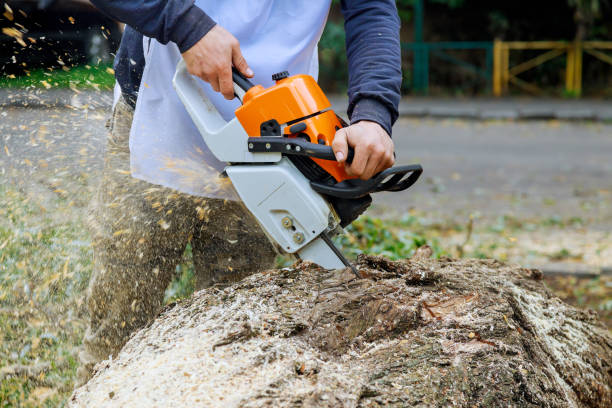
- Tension and Springback: A branch under stress acts like a coiled steel spring. When you make a cut, the trapped tension releases instantly. The wood can violently kick backward, knocking you off your feet or throwing cutting tools back at you.
- Unpredictable Fall Paths: A 400-pound limb rarely drops straight down. The heavy foliage twists as it detaches, causing the limb to swing sideways like a pendulum into fences, windows, or air conditioning units.
- Ladder Dangers: Using a sharp, powered saw while balancing on an aluminum ladder on uneven turf is extremely unsafe. Even a light nudge from falling brush can knock the ladder out from beneath you.
- Bark Tearing: Cutting a branch without proper relief cuts causes the heavy end to tear away a long strip of living bark down the trunk. That creates a large, permanent wound that invites pests and disease to kill the rest of the tree.
How Professional Tree Limb Removal Works
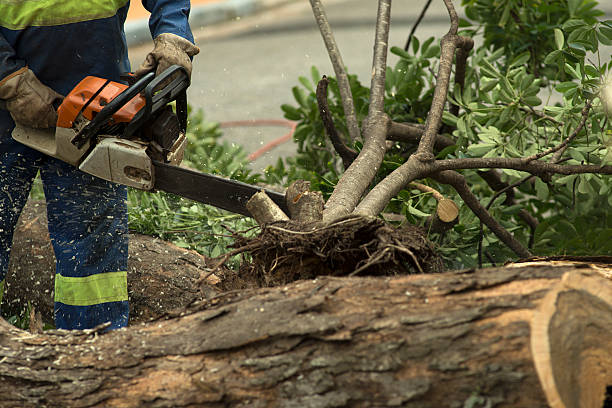
When you hire a licensed crew for a professional tree limb removal service, the job follows strict safety procedures designed to keep your home and lawn intact.
- Site Inspection: We inspect the ground area, locate underground irrigation or utilities, check nearby structures, and map out a safe drop zone.
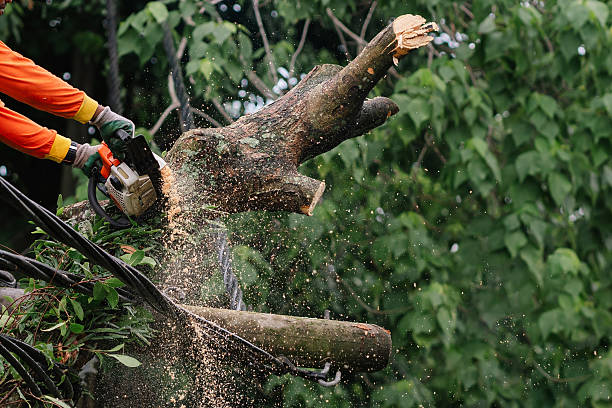
- Controlled Lowering with Rigging: Instead of letting wood fall freely, our technicians use friction brakes, pulleys, and high-strength arborist ropes. We secure the limb before cutting so that once the cut finishes, the limb swings gently away from the house and lowers smoothly to the ground.
- The 3-Cut Pruning Method: We make an undercut on the bottom side of the branch first, followed by a relief cut further out to drop the main weight. Finally, we make a clean cut just outside the branch bark collar. This protects the trunk and allows the tree to heal naturally.
- Complete Cleanup: We feed all branches directly into our industrial wood chippers, haul away logs, and rake the entire work area clean.
How Much Does Tree Limb Removal Cost in Wichita?
Limb removal pricing varies depending on branch height, closeness to buildings or electrical wires, ease of equipment access, and the overall volume of debris.
Here is what property owners across the Wichita area can typically expect for limb removal:
| Project Scope | Typical Price Range | What the Service Covers |
| Single Low-Hanging Branch | $125 to $275 | Trimming one lower branch accessible from the ground or pole saw, including debris cleanup. |
| Over-Roof Hazard Pruning | $350 to $800 | Controlled rope-lowering and clearance of large limbs hanging over roofing or patios. |
| High-Canopy Large Limbs | $550 to $1,300+ | Bucket truck or climbing crew required to dismantle heavy upper-canopy sections. |
| Emergency Storm Removal | $650 to $1,800+ | Rapid response to secure cracked or dangling branches resting on structures or driveways. |
Homeowner Tip: If a windstorm snaps a limb and it damages an insured structure like your roof or garage, your homeowner policy will generally cover the cleanup and repair costs minus your deductible. Take clear photos of the damage before moving anything.
Protect Your Investment: Why Proper Tree Care Matters
Some homeowners make the mistake of hiring cheap labor to top their trees. Topping involves cutting off all top branches down to blunt, ugly stubs.
Never top your trees. Topping strips the tree of its food-producing leaves and triggers a panic response where it shoots out dozens of weak, upright sprouts. These sprouts are attached only by a thin layer of outer bark. Within two to three years, you are left with a tree full of weak limbs that break off in normal Kansas breezes.
Instead, ask for proper structural thinning or deadwood removal. These methods take away hazardous limbs while keeping the main framework healthy, wind-resistant, and visually appealing.
Conclusion: Keep Branch Hazards Under Control
Dead limbs, cracked branch joints, and storm-damaged wood can put your home and family at risk, especially when branches hang over roofs, driveways, or other frequently used areas. Recognising these warning signs early helps you decide when professional removal is necessary and avoid the added risks of handling large branches yourself.
The right approach depends on the branch’s condition, its location, and the safest way to remove it without damaging the rest of the tree or your property. Whether you need routine pruning or urgent help with a broken limb, a professional assessment can help you understand the work involved.
At Kansas Tree Experts, we provide tree limb removal in Wichita with a focus on safety, careful planning, and thorough cleanup. Contact us to discuss your concerns and request an estimate.
Frequently Asked Questions
How can I tell if a tree limb is dead or just dormant?
Scrape a small sliver of bark off a twig using a pocketknife. If the tissue underneath is green and damp, the branch is alive. If the wood underneath is dry, brittle, and brown, the limb is dead.
Can I legally cut branches hanging over my fence from a neighbor’s tree?
Under Kansas law, you generally have the right to trim branches back to your property line. However, you cannot cross the boundary line onto their land, and your cuts cannot permanently damage or kill the neighbor’s tree.
What is the best season for tree limb removal in Wichita?
Late winter (January through March) is ideal for non-emergency limb removal. Deciduous trees are dormant, the bare branches make structural cracks easy to spot, and the cuts heal quickly once spring growth arrives.
Will trimming large limbs kill my mature tree?
No, as long as cuts are made outside the branch collar and less than 25% of the live canopy is removed in a single season. Proper pruning improves air circulation and helps the tree resist wind stress.
Does homeowners insurance cover limb removal if the branch falls on the lawn?
Generally, no. Insurance policies typically pay for tree removal only when the fallen branch causes physical damage to an insured structure like a house, detached shed, or fence. If it lands on the lawn, the cleanup cost is the homeowner’s responsibility.
How close can tree branches be to my house before they are dangerous?
Keep branches at least 8 to 10 feet away from your roof, siding, and gutters. Branches that sit closer can scrape off shingles in strong winds, drop heavy debris, and give squirrels or raccoons easy access to your attic.