You are sitting in your living room, listening to the wind howl and the rain beat against the glass. The storm passes, the sirens finally stop, and you walk out your front door to check the yard.
Your heart sinks. A massive shade tree has snapped in half. Branches are scattered across your lawn, and a heavy limb is resting on your roof.
Dealing with severe weather is just a part of living in Kansas. But when a storm destroys a mature tree on your property, it leaves you with a massive, dangerous, and overwhelming mess. What do you do first? Who do you call? Will your insurance pay for it?
If you are currently staring at a disaster in your yard, take a deep breath. You are going to get through this. In this guide, we will walk you through exactly what you need to do right now, how a professional storm cleanup tree service actually works, and how to keep your family safe during the process.
Step 1: Stay Inside and Look Up
The very first thing you need to do is fight the urge to walk out into the yard. When a tree comes down in a storm, it rarely comes down neatly.
Before you take a single step toward a fallen tree, you must look up. Did the tree pull down the power lines that connect to your house? Is there a black wire tangled in the branches or laying in the wet grass?
If you see a down wire, stop immediately. Do not walk near it. Do not let your dog into the yard. Treat the entire area as if it is electrified, because wet ground can carry a current far away from the actual wire. Call your local utility company right away. You cannot start any kind of cleanup until the utility trucks arrive and confirm the power is cut.
You also need to look for “widow-makers.” This is an industry term for heavy, broken branches that are caught high up in the tree canopy. They are just hanging by a thread. A tiny gust of wind can send a 200-pound branch crashing down on your head. If the tree is still standing but has hanging branches, keep everyone away from it.
Step 2: Grab Your Phone, Not Your Chainsaw
Once you know the area is safe from electricity, it is time to document the damage. Do this before you pick up a single stick or move a single branch.
Why? Because your insurance company needs proof. According to the Insurance Information Institute, severe convective storms (which include thunderstorms, hail, and tornadoes) cause an average of $17 billion in insured property losses across the U.S. every single year. Insurance adjusters deal with thousands of claims after a big Kansas storm, and they rely heavily on photos.
Take pictures from every angle. Get wide shots that show the whole tree in the yard. Take close-ups of the spot where the tree hit your roof, your fence, or your car.
After you have photos, call your homeowner’s insurance company’s 24-hour claims line. You do not need to know how much the repairs will cost yet. You just need to get your name in their system and get a claim number.
How the Pros Prioritize the Mess
When a supercell rolls through Sedgwick County, a reliable storm tree service will get hundreds of phone calls in a single morning. Because everyone needs help at once, professional tree companies have to prioritize the most dangerous situations first.
If a tree just fell in the middle of your empty grass, you might have to wait a day or two for a crew to arrive. But if a tree is causing a massive safety hazard, you jump to the front of the line.
Storm Damage Priority List
| Situation in Your Yard | Priority Level | What the Crew Does First |
|---|---|---|
| Tree resting on your house | Emergency (Level 1) | Crew uses rigging to safely lift the weight off the roof immediately. |
| Tree blocking the street or driveway | Urgent (Level 2) | Crew cuts the trunk to clear a path so cars and emergency vehicles can move. |
| Split tree leaning over a house | Urgent (Level 2) | Crew stabilizes the split trunk before it falls and causes damage. |
| Tree fell on a fence or in the yard | Standard (Level 3) | Scheduled for standard removal and cleanup once emergencies are cleared. |
The Hidden Dangers of Fallen Tree Cleanup
It is really tempting to grab a chainsaw from the garage and try to chop up the fallen tree yourself to save some money. Please do not do this.
Living in a state that averages over 80 tornadoes a year means we see a lot of broken trees. And as experts, we can tell you that cutting a storm-damaged tree is totally different from cutting firewood.
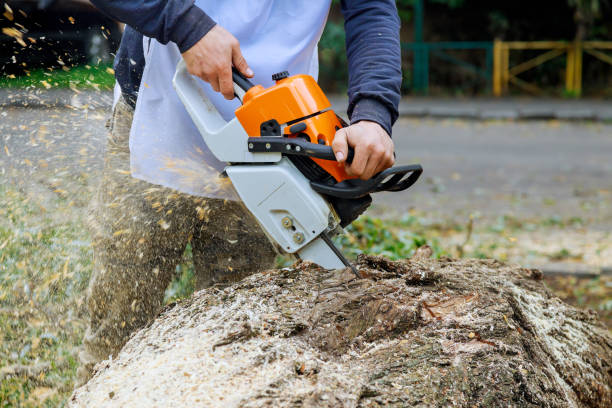
When a tree is blown over, the wood is bent, twisted, and under a massive amount of physical tension. The trunk is basically acting like a giant, loaded spring. If you take a chainsaw and cut the trunk in the wrong spot, that tension releases instantly. The log can violently snap back, roll over you, or kick the chainsaw straight into your face.
Professional tree crews are highly trained to read about the tension in the wood. They know exactly where to make relief cuts, so the pressure releases safely. Leave the heavy lifting to the folks with the right gear.
Watch Out for the “Storm Chasers”
Here is a sad reality about severe weather: it brings out scammers.
The day after a big storm hits Wichita, you will likely hear a knock on your door. It will be a guy in an unmarked pickup truck offering to chop up your tree for a cheap cash price. These guys are called “storm chasers.” They follow bad weather across the country to make a quick buck.
Never hire the first person who knocks on your door. Most of these guys do not carry active liability insurance or workers’ compensation. If one of them drops a heavy log through your living room window, they will just get in their truck and drive away, leaving you to pay the repair bill. If they fall out of your tree and break a leg, you could be sued for their medical bills.
Spotting a Scammer vs. a Local Pro
| The Fly-by-Night Scammer | The Trusted Local Professional |
|---|---|
| Asks for a 50% cash deposit up front. | Never asks for payment until the job is done right. |
| Cannot show you a Certificate of Insurance. | Happily emails you their active insurance proof. |
| Has out-of-state license plates. | Is a permanent member of the local community. |
| Says they will leave the brush in your yard. | Brings a wood chipper and hauls all the mess away. |
What to Expect During the Cleanup Process
Once a legitimate crew arrives, the process goes pretty fast. Here is what your yard will look like during a professional cleanup visit.
First, the crew secures the area. They will ask you to move your cars out of the driveway so they can park their heavy woodchippers and dump trucks.
Next, they tackle hazards. If the tree is on your house, they won’t just start hacking at it. They will use heavy ropes, pulleys, and sometimes even cranes to carefully lift the wood up and away from your roof, ensuring they do not cause a second impact.
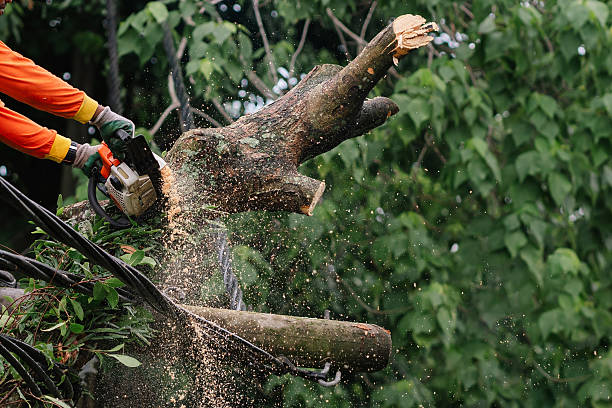
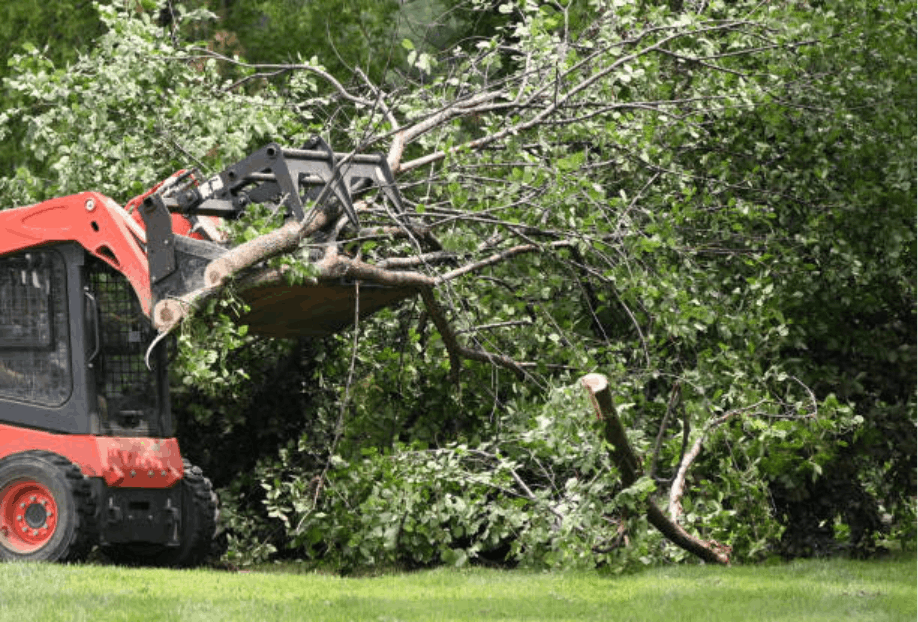
Once the wood is safely on the ground, the loud part starts. They will cut the branches into manageable pieces and feed them directly into the woodchipper. The heavy trunk logs will be sliced up and loaded into the back of a haul truck.
Finally, they do the cleanup. A good crew doesn’t leave you with a yard full of leaves and sawdust. They will rake the grass, clean the driveway, and make sure your property looks fantastic before they drive away.
Getting hit by a bad storm is incredibly stressful. But by staying away from downed power lines, taking good photos for your insurance, and hiring a local, insured crew, you can get the mess cleaned up safely and fast. Hang in there; your yard will be back to normal before you know it.
If you are dealing with a storm emergency, we are ready to help you get your property back to normal. Contact us today for a free, honest quote.
Frequently Asked Questions
Will my homeowner’s insurance pay for the tree cleanup?
Yes, if the tree hits a covered structure like your house or fence, insurance usually pays for removal. If it just falls in the grass and damages nothing, you usually have to pay out of pocket.
Can I keep the wood for my fireplace?
Absolutely! If you have a wood-burning stove or a fire pit, just ask the crew. We are happy to cut the thick trunk into 16-inch firewood logs and leave them stacked in your yard.
Should I cover the hole in my roof right away?
Yes, you need to prevent water damage. Once the tree crew safely lifts the heavy wood off your house, you should immediately have a heavy-duty tarp screwed over the hole before the next rain starts.
How do you remove a tree that is leaning but hasn’t fallen?
We treat leaning, split trees as high-priority emergencies. We use bucket trucks, heavy ropes, and rigging to tie the tree off and safely dismantle it piece by piece before it can crash into your house.
Do you also remove the tree stump after a storm?
Tree removal and stump grinding are usually two different services. Once the heavy debris is hauled away, we can come back with a specialized machine to grind the leftover stump down below the dirt line.
Why shouldn’t I just hire my neighbor who has a chainsaw?
Fallen trees are under massive physical tension. If cut wrong, they can snap violently and cause severe injuries. Furthermore, if your neighbor gets hurt in your yard, you can be sued for their medical bills.