Tree trimming can seem like a straightforward property-maintenance task. A homeowner may notice a low branch, an overgrown limb, or a section of the canopy that looks uneven and decide to handle it with basic tools. For very small branches in accessible locations, limited trimming may be manageable.
However, tree work becomes considerably more complicated as branch size, height, tree condition, and surrounding property risks increase. Cutting the wrong branch can affect the tree’s structure, while working from a ladder or near electrical infrastructure can create serious safety concerns.
This is why many homeowners begin researching tree trimming services near me when a job goes beyond basic yard maintenance.
The choice between DIY trimming and professional service should depend on the size and location of the work, the condition of the tree, the equipment required, and the potential consequences of an incorrect cut.
Is DIY Tree Trimming Always a Good Idea?
No. DIY tree trimming can be appropriate for certain minor tasks, but it is not suitable for every tree or branch.
The most important distinction is between minor pruning at ground level and structural or elevated tree work.
A small branch that can be reached safely from the ground is very different from a large limb several feet above the ground. The second situation may require specialized equipment, careful cutting techniques, and an understanding of how the branch will move as it is cut.
Before picking up a saw, consider three basic questions:
- Can the branch be reached safely from the ground?
- Is the branch small enough to remove without heavy equipment?
- Could the falling branch damage people, buildings, vehicles, utilities, or other property?
If the answer to any of these questions raises concerns, professional tree care may be the safer option.
What Does DIY Tree Trimming Usually Involve?
DIY trimming is generally limited to small, accessible branches that do not create significant hazards.
Small Branch Removal
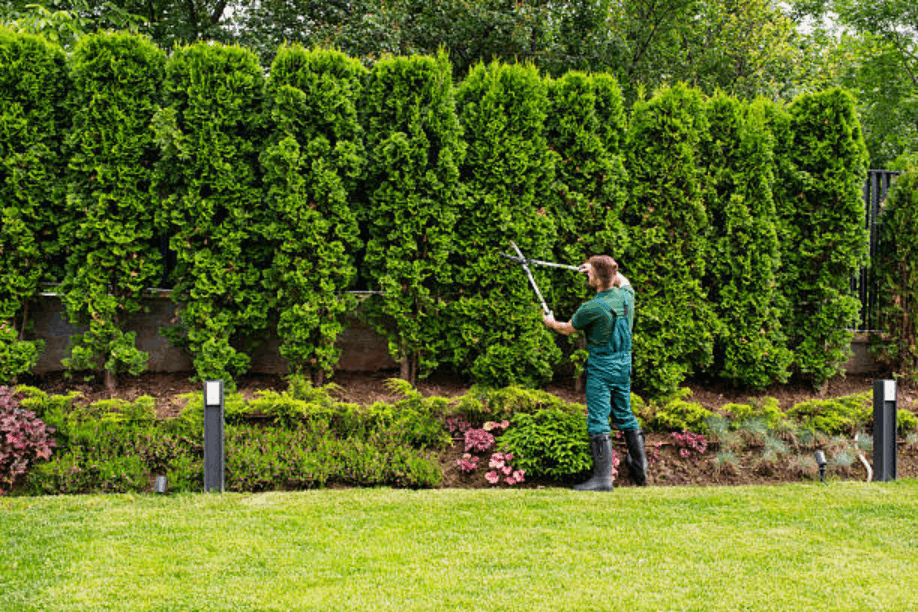
A homeowner may be able to remove small dead or unwanted branches when they are within comfortable reach and the work can be performed without climbing.
The cutting tool should be appropriate for the branch diameter, and the cut should be made carefully rather than tearing or breaking the branch.
Removing Minor Growth
Small shoots or low branches may sometimes be removed as part of routine yard maintenance.
However, homeowners should avoid making extensive cuts simply to change the shape of a mature tree.
Basic Cleanup
After minor trimming, branches and leaves should be collected and disposed of appropriately.
The important point is that DIY trimming should remain limited to work that can be completed without climbing, heavy equipment, or exposure to significant hazards.
When Is DIY Tree Trimming More Reasonable?
There are situations where a homeowner may reasonably perform limited trimming.
The Branch Is Small
Small branches are generally easier to control than heavy limbs. Their weight and fall path are more predictable.
The Branch Is Easily Reachable
If the branch can be reached from the ground without using a ladder or climbing the tree, the risk is generally lower.
There Are No Nearby Hazards
A small branch in an open yard presents a different situation from one growing above a roof, driveway, fence, or utility line.
The Tree Appears Healthy
If the tree shows no obvious signs of severe damage, decay, instability, or major structural problems, simple maintenance may be less complicated.
Even in these circumstances, homeowners should avoid removing large portions of the canopy or making unnecessary cuts.
When Should You Hire a Professional?
The decision changes when the tree or branch presents a meaningful safety or property risk.
Professional assistance is generally more appropriate when branches are:
- Large or heavy
- High above the ground
- Close to buildings
- Above vehicles or parking areas
- Near electrical infrastructure
- Over sidewalks
- Near fences or other structures
- Difficult to access
- Damaged by storms
- Showing signs of decay
A professional tree-care provider can evaluate the entire situation rather than treating one branch as an isolated problem.
The Risks of Cutting Large or High Branches
Large branches can behave unpredictably when they are cut.
A limb may swing, split, roll, or fall in an unexpected direction. The branch’s weight can also place substantial force on the remaining portion of the tree.
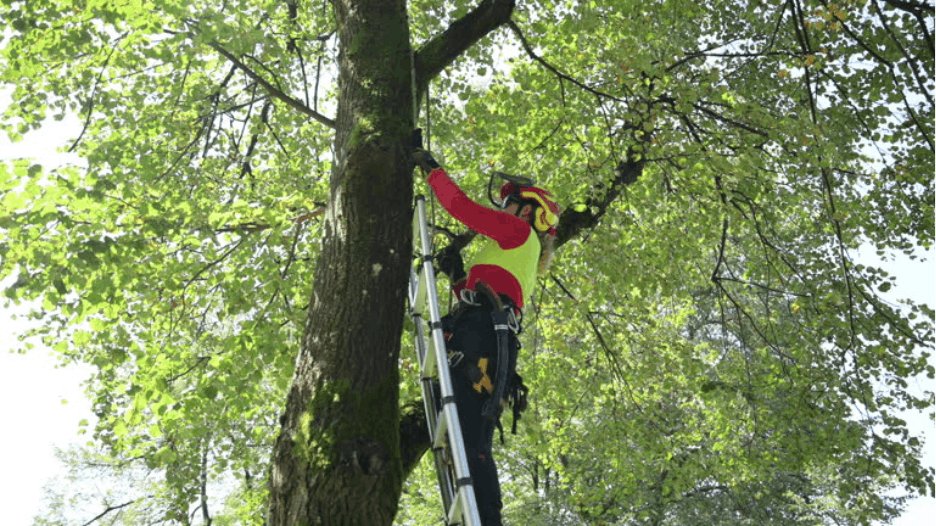
Ladder Risks
Using a ladder while handling a saw creates an additional hazard because the homeowner needs to control both their body position and the cutting tool.
Tree branches can also move as they are cut, potentially affecting balance.
Falling Branches
A branch does not always fall straight downward. Its shape, weight distribution, attachment point, and surrounding branches can influence its movement.
A large limb falling onto a roof, vehicle, fence, or another tree can cause significant property damage.
Hidden Tree Damage
A tree can have internal decay that is not immediately visible from the ground.
A branch may appear healthy while having structural weaknesses inside. Professional assessment can help identify conditions that are difficult for an untrained observer to recognize.
How Professionals Assess a Tree Before Trimming
Professional tree trimming with Kansas Tree Experts should begin with evaluating the tree and its surroundings. This helps identify the tree’s condition, nearby structures, access limitations, and the type of trimming that may be appropriate.
Looking at the Overall Canopy
Instead of focusing only on the branch a homeowner wants removed, the tree should be considered as a whole.
The distribution of branches, areas of dead growth, and overall structure can affect which limbs should be addressed.
Checking Branch Attachments
The point where a branch connects to the trunk or another major limb is important.
Weak or damaged attachments may require additional consideration before cutting.
Considering the Ground Area
Professionals also need to understand where branches could land.
A tree located beside a house requires different planning from one in an open field.
Identifying Access Requirements
The equipment required for trimming depends partly on the location and height of the branches.
Some trees can be accessed from the ground, while others may require specialized equipment.
DIY vs Professional Tree Trimming
The following comparison can help homeowners determine which approach makes sense.
| Consideration | DIY Trimming | Professional Trimming |
|---|---|---|
| Small ground-level branches | May be suitable | Also possible |
| Large branches | Generally unsuitable | Appropriate for assessment |
| High branches | High risk | Specialized approach available |
| Near buildings | Requires caution | Professional planning recommended |
| Near utilities | Avoid DIY work | Professional evaluation recommended |
| Storm-damaged trees | Can be hazardous | Professional assessment preferred |
| Ladder work | Increased fall risk | Appropriate equipment may be used |
| Major canopy changes | Not recommended without knowledge | Tree-specific assessment |
| Extensive cleanup | Homeowner responsibility | Can be included in service scope |
| Multiple trees | Can become time-consuming | Professional project planning may help |
The purpose of this comparison is not to suggest that every tree requires professional service. Instead, it shows how the complexity of the job increases as the risks and physical demands increase.
Why Tree Location Changes the Decision
The same branch can represent different levels of difficulty depending on where the tree grows.
Tree Near a House
Branches growing over a roof can create concerns about falling limbs and property damage.
If the branch is large or elevated, professional assessment is generally preferable to attempting the work from a ladder.
Tree Near a Driveway
Branches over a driveway can potentially fall onto vehicles or obstruct access.
The work area may also need to remain clear while trimming takes place.
Tree Near a Sidewalk
Branches over pedestrian areas require consideration of people moving underneath the tree.
Temporary access restrictions may be needed during professional work.
Tree Near Utility Infrastructure
Trees and electrical infrastructure can create particularly serious hazards.
Homeowners should not attempt trimming branches that are close to electrical lines. A qualified professional should determine how the situation should be handled.

Signs Your Tree May Need More Than Simple Trimming
Sometimes what appears to be a trimming problem is actually a larger tree-care concern.
Dead or Broken Branches
A dead branch may be easier to identify, but its size and location still matter.
A small dead twig may be a minor maintenance issue. A large dead limb above a frequently used area is a different concern.
Cracks or Splits
Visible cracks in major limbs or the trunk can indicate structural problems.
Homeowners should avoid attempting to solve these issues by simply cutting branches without understanding the larger condition of the tree.
Storm Damage
Storms can leave hanging branches, split limbs, and partially damaged trees.
These conditions can be unstable and may require professional evaluation before anyone attempts removal.
Significant Leaning
A noticeable change in the tree’s position or an unusual lean can warrant further assessment, particularly if the tree is located near a building or frequently used area.
What Professional Tree Trimming Typically Involves
When homeowners hire professional tree trimming services, the work can involve several stages.
Property and Tree Assessment
The contractor identifies the tree, the branches requiring attention, and the surrounding property conditions.
Work Planning
The work plan may account for branch size, tree height, equipment access, nearby structures, and where cut material can safely be handled.
Selective Trimming
Rather than removing branches indiscriminately, the work should follow the project’s intended purpose.
The exact cuts depend on the tree, its condition, and the property owner’s needs.
Debris Management
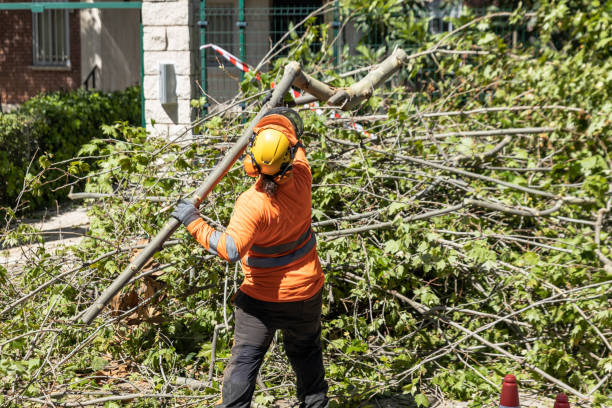
Branches and other material generated during trimming need to be handled after the cutting work is completed.
Property owners should clarify cleanup expectations before the project begins.
What Should You Consider When Searching for Tree Trimming Services Near Me?
A local search for tree trimming services near me can produce many options. Location is useful, but it should not be the only consideration.
Check the Service Scope
Confirm that the company handles the type of work you need.
Some projects may involve trimming alone, while others may require removal, stump grinding, or vegetation clearance.
Explain the Tree’s Location
When requesting information, describe whether the tree is near:
- A house
- Garage
- Driveway
- Road
- Sidewalk
- Fence
- Utility infrastructure
- Commercial property
This gives the contractor useful information before the site is assessed.
Ask About Cleanup
Find out whether branches and other debris are handled as part of the service.
Consider the Complete Project
If a tree has already been removed and a stump remains, you may also need stump grinding.
Planning related work together can make it easier to understand the complete property-maintenance requirement.
What Does “Tree Branch Trimming Near Me” Usually Mean?
A search for tree branch trimming near me often reflects a specific concern rather than a request for general tree maintenance.
The homeowner may be dealing with one or more branches that:
- Extend toward a roof
- Block a walkway
- Rub against a structure
- Hang over a driveway
- Have become damaged
- Are interfering with visibility
Before deciding that one branch should simply be cut, consider why the branch is causing concern and whether removing it could affect the rest of the tree.
A professional can evaluate the branch in relation to the surrounding canopy.
Understanding Tree Cut Services Near Me
The phrase tree cut services near me can refer to several different types of work, including trimming, cutting damaged branches, or complete tree removal.
These services should not be treated as identical.
Trimming involves selective branch removal. Tree removal involves taking down the entire tree. Stump grinding addresses the remaining stump after removal.
Knowing which service you actually need can make it easier to communicate with a contractor and compare project scopes.
Kansas Tree Experts and Wichita Tree Care
Kansas Tree Experts provides tree-care services in Wichita and surrounding communities. Its listed services include tree trimming, tree removal, stump grinding, land and bush clearance, and commercial tree services.
For homeowners considering professional trimming, the important question is whether the tree’s condition and location require professional assistance.
Kansas Tree Experts can be relevant for projects where tree trimming forms part of a broader property-maintenance requirement. For example, a property may need branches trimmed before landscaping work, a damaged tree removed after severe weather, or a remaining stump ground after removal.
The best starting point is to describe the tree’s location, the concern you have noticed, and the type of work you are considering.
How to Decide Between DIY and Professional Trimming
A simple decision framework can help.
Choose Limited DIY Work Only When the Job Is Minor
If the branch is small, accessible from the ground, and away from hazards, basic maintenance may be manageable for a homeowner who understands proper cutting practices.
Choose Professional Help When the Risk Increases
Professional tree care becomes more appropriate when the branch is large, elevated, damaged, difficult to access, or close to structures or utilities.
Do Not Trade Safety for Convenience
Saving time or avoiding a service call is not worthwhile if the work creates a significant risk of injury or property damage.
A tree may look simple from the ground, but its weight, structure, and surrounding environment can make cutting more complicated than expected.
Conclusion
DIY tree trimming can be suitable for limited, low-risk maintenance, but larger or more complicated tree work requires a different level of planning. Branch size, height, tree condition, property layout, and nearby hazards all influence whether a homeowner should handle the work or seek professional assistance.
If you are searching for tree trimming services near me, start by identifying the exact problem and considering the potential risks. Small branches in open areas may be manageable, while large limbs near buildings, vehicles, sidewalks, or utility infrastructure require greater caution.
Kansas Tree Experts provides tree trimming and other tree-care services in Wichita and surrounding communities. Kansas Tree Experts If you are unsure which approach is appropriate for your property, contact us to discuss the tree, its location, and the work you are considering.
Frequently Asked Questions
Is DIY tree trimming safe?
DIY trimming may be reasonable for small branches that can be safely reached from the ground and are away from hazards. Large, elevated, damaged, or difficult-to-access branches should generally be evaluated by a professional.
How do I know when to hire tree trimming services near me?
Consider professional service when branches are large, high, damaged, close to buildings, near utility infrastructure, or difficult to access safely.
Can I trim a tree near power lines myself?
No. Homeowners should not attempt to trim branches that are close to electrical lines. This type of situation can present serious electrical and fall hazards and should be evaluated by qualified professionals.
What is the difference between trimming and tree removal?
Tree trimming removes selected branches while leaving the tree in place. Tree removal involves taking down the entire tree. The appropriate service depends on the tree’s condition and the property’s needs.
Is tree branch trimming near me different from regular tree trimming?
The phrase tree branch trimming near me generally describes a local search for branch-specific work. The actual service depends on the size, location, condition, and number of branches involved.
What should I tell a tree service before an appointment?
Explain where the tree is located, what problem you have noticed, whether there is visible damage, and what structures or access restrictions are nearby.
Does Kansas Tree Experts provide tree trimming?
Yes. Kansas Tree Experts lists tree trimming among its tree-care services in Wichita and surrounding communities. Kansas Tree Experts Tree Services
Can tree trimming be combined with other tree services?
Depending on the property and project requirements, trimming may be part of a broader tree-care project that includes removal, stump grinding, or land and bush clearance.
Should I use tree cut services near me for a damaged tree?
The appropriate service depends on the extent of the damage. A damaged branch may require trimming, while a severely compromised tree may require removal. A professional assessment can help determine the appropriate approach.