A dying tree rarely announces its collapse with advance notice. For months, it might just look a little tired, dropping a few extra leaves or showing a patch of bare bark. But as the interior wood dries out and turns brittle, that standing timber changes from an ordinary landscape feature into a multi-ton liability waiting for the next gust of wind to bring it down.
When you walk into your yard and realize a mature shade tree has completely stopped producing leaves, figuring out your timeline is critical. Can it sit safely until next season, or do you need prompt dead tree removal in Wichita before the next storm system rolls across the prairie?
Understanding the difference between a tree that can wait for routine scheduling and one that demands rapid intervention protects your home, your vehicles, and your family. In this guide, we walk through the warning signs that indicate immediate danger, what makes dead wood fail so violently, how a licensed tree removal service handles complex takedowns, and how to know when you need emergency tree removal right away.
The Hidden Danger of Dead Standing Timber
Standing dead trees, known in forestry as “snags,” serve a purpose in deep wilderness areas by offering nesting spots for wildlife. In a residential Wichita neighborhood, however, they are ticking time bombs.
Trees rely on constant sap flow and cellular moisture to stay flexible. When a tree dies, that moisture evaporates. The internal heartwood fibers dry out, lose their tensile strength, and become as brittle as dry chalk.
Because dead wood cannot bend, it snaps suddenly at the trunk base or main crotches without the bending warnings that living trees give off.
5 Warning Signs That Dead Tree Removal Is Urgent
Not every dead tree requires a middle-of-the-night dispatch, but certain symptoms indicate that the tree’s structural integrity has reached a critical failure point.
Inspect your tree from a safe distance and look for these five urgent indicators:
1. Fresh Soil Heaving or Root Plate Lifting
If you notice the ground bulging, cracking, or lifting upward around the base of a dead tree, its root system has sheared. The primary anchor roots that keep the trunk upright have broken loose under the soil line. A tree in this state can blow over in a moderate afternoon breeze.
2. Deep Vertical Trunk Cracks and Cavities
Look closely at the central trunk. If you spot a deep, vertical split that penetrates through the bark into the inner wood, the structural cylinder of the trunk has failed. When combined with internal hollows where more than one-third of the trunk diameter is decayed, the tree lacks the solid wood necessary to support its canopy weight.
3. Fungal Conks and Shelf Mushrooms at the Root Flare
Mushrooms sprouting directly from the soil line or the base of the trunk (the root flare) are a sign of aggressive wood-decay fungi. These organisms feed directly on the structural lignin that gives wood its strength. If the base of the trunk is soft enough that you can press a screwdriver into it easily, the tree is rotting from the bottom up.
4. Overhanging Targets (Roofs, Power Lines, Driveways)
In tree risk evaluation, a hazard is defined by the “target” beneath it. A dead tree standing in the center of an empty five-acre field poses minimal risk. However, if that same dead tree leans toward your roof, bedroom, children’s play area, or overhead utility service drop, the situation is urgent.
5. Shedding Large Bark Plates and Major Limbs
When large sheets of bark slough off the trunk and expose smooth, weathered gray wood underneath, the vascular cambium layer has been dead for a significant period. If the tree has begun dropping secondary limbs larger than four inches in diameter on calm days, the upper canopy is disintegrating and will continue to shed heavy timber.
Urgent vs. Scheduled Removal: How to Triage
Use this comparison table to determine whether your situation requires standard scheduling or immediate emergency action:
| Situation / Visual Sign | Risk Level | Urgency Category | Recommended Action |
| Dead tree leaning toward your home with cracked soil | Extreme | Immediate Emergency | Clear the area, stay out of the impact zone, and call for emergency tree removal. |
| Dead limbs tangled in active power lines | Extreme | Immediate Hazard | Stay at least 35 feet back; contact your electric utility provider right away. |
| Fully dead tree with no immediate targets within fall zone | Low | Routine Scheduling | Schedule standard removal within the next 4 to 8 weeks. |
| Dead tree overhanging driveway or detached shed | High | Urgent Priority | Schedule professional removal before the next seasonal storm front. |
| Living tree with isolated dead branch over roof | Medium | Preventive Maintenance | Book targeted tree trimming in Wichita, KS to clear the hazard. |
Why You Should Never Wait on a Dead Ash or Elm Tree
Certain tree species common to south-central Kansas become particularly treacherous once they die.
Emerald Ash Borer in Green and White Ash
Ash trees across Wichita have suffered heavy losses from the Emerald Ash Borer (EAB). The larvae of this invasive beetle chew through the tree’s phloem layer, cutting off water and nutrient transport. What makes dead ash trees uniquely dangerous is that they develop “ash wood brittleness.” The wood fibers dry out and shatter without warning. Professional tree climbers often cannot safely tie their ropes into dead ash trees because the anchor branches snap under body weight, requiring bucket trucks or cranes instead.
Dutch Elm Disease and Siberian Elms
Siberian elms grow fast, but their wood is notoriously soft and brittle. When struck by disease or drought stress, large structural stems decay quickly, leaving giant limbs vulnerable to breaking off in ordinary Kansas winds.
How a Professional Crew Safely Dismantles a Dead Tree
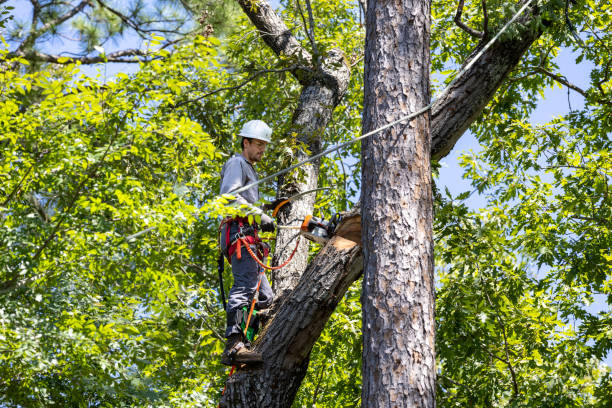
Dismantling a brittle, dead tree requires specialized equipment and rigging skills that differ significantly from standard green-tree pruning. Because the wood cannot be trusted to support heavy dynamic shock loads, professional crews take deliberate precautions:
- Thorough Risk Assessment: Technicians inspect the trunk with sounding mallets to determine the thickness of remaining sound wood and check for power lines, underground pipes, and drop-zone obstacles.
- Aerial Access (Bucket Trucks and Cranes): If the tree is too rotted or brittle for a climber to ascend safely, crews deploy aerial lift trucks or cranes to access the upper canopy from above without placing weight on the dead trunk.
- Piecing Down via Rigging: Branches are tied off with high-strength synthetic arborist ropes and friction lowering devices. Each piece is cut and lowered under control to prevent heavy timber from impacting your lawn, patio, or roof.
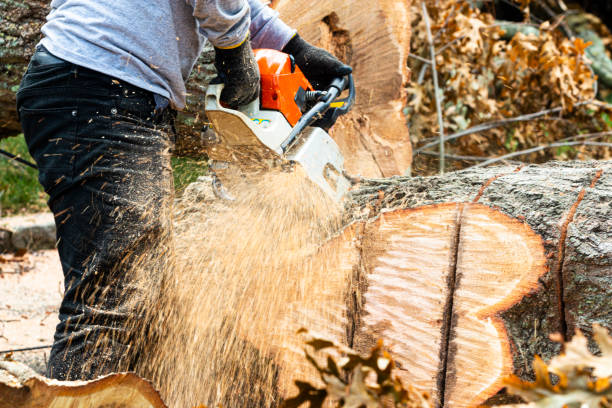
- Controlled Trunk Sectioning: The bare spar is cut into short, manageable blocks from the top down and carefully lowered or dropped into an established landing zone.
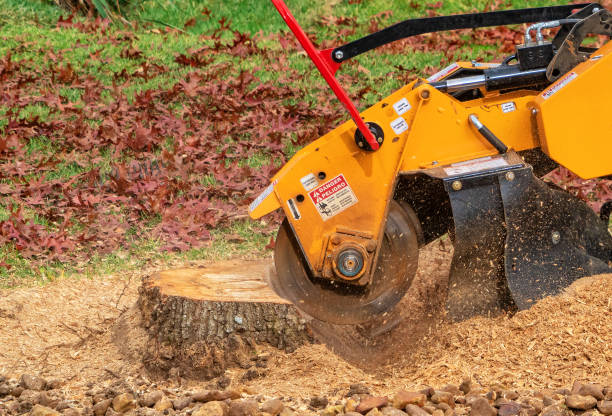
- Chipping, Hauling, and Cleanup: The debris is processed through high-capacity chippers, logs are hauled away, and the yard is thoroughly raked and cleared.
What Does Dead Tree Removal Cost in Wichita?
Pricing for dead tree removal depends on the tree’s height, trunk diameter, overall structural stability, and proximity to surrounding structures. Because dead trees carry increased liability and often require specialized bucket or crane access, costs can vary.
Below is an overview of typical costs for removing dead trees across the Wichita area:
| Tree Size & Condition | Height Range | Average Price Range | Key Job Factors |
| Small Dead Tree | Under 25 feet | $250 to $550 | Straightforward ground felling or small ladder work; full brush cleanup. |
| Medium Dead Tree | 25 to 50 feet | $550 to $1,100 | Sectional takedown of medium ash, birch, or elm; basic lowering ropes. |
| Large Mature Dead Tree | 50 to 75 feet | $1,100 to $2,200 | Bucket truck access required; heavy wood lowering over roofs or fences. |
| Hazardous / Severe Rot | Any height over 50 feet | $1,800 to $3,500+ | Crane-assisted removal where trunk cannot be climbed; tight residential quarters. |
| Emergency After-Hours Service | Any size | $700 to $2,500+ | Immediate night or storm mobilization to secure actively failing timber. |
Insurance Note: Homeowner insurance policies typically only cover tree removal if a tree falls and damages a covered structure like your house, detached garage, or fence. Insurance rarely pays to remove a standing dead tree before it falls, nor does it cover cleanup if the dead tree falls harmlessly onto open grass. Staying proactive is the most cost-effective path.
The Bottom Line: Prevent Dead Tree Hazards
A dead tree can become a serious safety concern when decay weakens its trunk, roots, or major branches. Recognizing the warning signs early helps you determine whether removal can be scheduled routinely or requires urgent attention, especially when nearby homes, vehicles, or walkways are at risk.
At Kansas Tree Experts, we assess hazardous trees and recommend appropriate removal methods based on their condition and location.
If you’re concerned about a dead or unstable tree, contact us to discuss your situation and request an estimate for dead tree removal in Wichita.
Frequently Asked Questions
1. How can I tell if my tree is dead or just dormant during the winter?
Perform a quick scratch test. Use a pocketknife to gently scrape a thin layer of outer bark off a small branch. If the cambium layer beneath is green and moist, the tree is alive. If it is dry, brittle, and brown, that section is dead.
2. Is it cheaper to remove a tree before or after it falls?
Removing a tree before it falls is almost always cheaper. Controlled removal allows crews to plan cuts and access points safely. Once a tree falls on a roof or car, the job requires emergency dispatch, complex extraction rigging, and costly structural repairs.
3. Can a dead tree fall on a completely calm day?
Yes. As internal rot breaks down structural lignin, the weight of the canopy can exceed the strength of the rotted trunk base. Dead trees frequently collapse on calm, sunny days due to gravity and ongoing internal structural failure.
4. Will cutting down a dead tree damage my lawn or landscaping?
Professional crews use protective ground mats to distribute equipment weight and prevent tire ruts. Limbs are lowered using controlled rope rigging rather than dropped directly onto lawns, protecting flowerbeds, irrigation heads, and decorative hardscapes.
5. How quickly does an emergency tree crew respond in Wichita?
For urgent hazards where a tree is actively crushing a roof, blocking primary access, or threatening living spaces, our crew prioritizes immediate mobilization to secure the site and stabilize the structure, often arriving within hours.
6. Does Kansas law hold me responsible if my dead tree falls on my neighbor’s house?
Yes, potentially. If you knew (or reasonably should have known) that your tree was dead and posed a hazard, failing to remove it can be classified as negligence under Kansas law, making you liable for the damages to your neighbor’s property.