“We’re insured” is the beginning of a conversation, not the end of your check. Before hiring a tree service, ask for current documents, match them to the business doing the work and confirm the relevant details with its insurance representative.
The purpose is to understand what has been documented and which questions remain. No certificate can promise that every accident will be covered, and insurance does not replace a clear work agreement or a sound plan for the job.
Start with the business name and the actual work
Request the company’s legal business name, the name used on its estimate and the name that will appear on your service agreement. If those differ, ask the company to explain the relationship before you compare them with the insurance documents.
Describe the work specifically. A request for tree removal in Wichita might involve a large tree beside a garage, while another project involves selected pruning over a driveway. Give the insurance representative the relevant description rather than asking only whether the company has “landscaping insurance.”
Also ask who will arrive: the company’s employees, a separate stump-grinding business, a crane operator or another subcontractor. The business that writes the estimate may not perform every task. You need to know whose work the documentation concerns.
Read the certificate without treating it as the policy
A certificate of insurance, often called a COI, summarizes information about the policies listed on it. Check the insured business, insurer names, policy types, policy numbers, dates and limits. Look for missing or unclear entries rather than assuming a familiar-looking form settles everything.
Kansas law specifically says a certificate cannot change the policy it describes. A statement added to the certificate therefore does not, by itself, expand coverage. The underlying policy and any applicable endorsements matter. See Kansas statute 40-955.
If you need clarification about your status under a policy or a condition in the work agreement, ask your own insurance adviser and the contractor’s insurance representative. Do not interpret being named on a document as automatic protection from every possible loss.
Check each policy’s job
Different policies address different exposures. The National Association of Insurance Commissioners’ small-business guidance distinguishes liability, workers’ compensation and vehicle coverage. For a tree-care project, ask about these separately:
| Coverage to discuss | Question to ask |
|---|---|
| Commercial general liability | What bodily-injury or property-damage claims arising from the proposed operations could this policy cover, and what limitations should I understand? |
| Workers’ compensation | What arrangement applies to the employees who will perform the work? |
| Commercial auto | What coverage applies to the business vehicles involved in the job? |
One policy should not be treated as a substitute for another. The relevant limits, exclusions and circumstances affect coverage. A headline limit on a certificate is not a guarantee of a payment to you, and proof that equipment is insured does not establish that damage to your property is covered.
You do not need to decide a claim in advance. You do need to identify unanswered questions before authorizing the project.
Confirm dates and details with the issuer
Ask the contractor to arrange current documentation from its agent or insurer. Use contact information you verify independently when following up; do not rely solely on a number inside an unfamiliar attachment.
Check whether the policy dates span the planned work. If the job is postponed beyond an expiration date, request updated information before the rescheduled visit. A previously issued certificate should not be assumed to establish that nothing has changed.
Your follow-up can be straightforward:
“I’m considering hiring this business for the work described in the attached estimate. Can you confirm the current policy information and explain any relevant limits on these operations? Is there further documentation I should request?”
An agent may need the contractor’s involvement or authorization to answer particular questions. Let them explain what they can verify. If an answer is unclear, request clarification rather than filling the gap with a verbal assurance from someone else.
Ask about the people and subcontractors on site
Ask who employs the crew and whether a separate business will supply any part of the service. If subcontractors are involved, clarify which company is responsible for checking their coverage and request the documentation relevant to their work. Do not assume the main contractor’s certificate automatically answers those questions.
For an additional check, the Kansas Department of Labor’s workers’ compensation resources provide a coverage-verification service. The department notes that the search relies on reported carrier data, so an unclear result needs follow-up. It is not a substitute for resolving the business name or a claimed exemption with the appropriate adviser or agency.
Avoid making your own legal determination that a small crew or a person described as an independent contractor must—or must not—have a particular policy. Ask for the basis of the arrangement and seek qualified advice when the answer affects your decision.
Keep the insurance check with the work agreement
Save the certificate, the estimate, any relevant endorsements supplied, and the messages that clarify your questions. Keep the final scope and the actual performing business identifiable in the same records.
That matters for pruning as well as removal. For tree trimming, identify the trees and authorized work before comparing documents. Insurance verification cannot resolve a disagreement about which branches you asked the crew to remove.
If reasonable documentation remains unavailable or the names, dates and planned work do not line up, pause the hiring decision until those issues are resolved. If you have concerns about your own policy or a contract requirement, consult your insurance adviser.
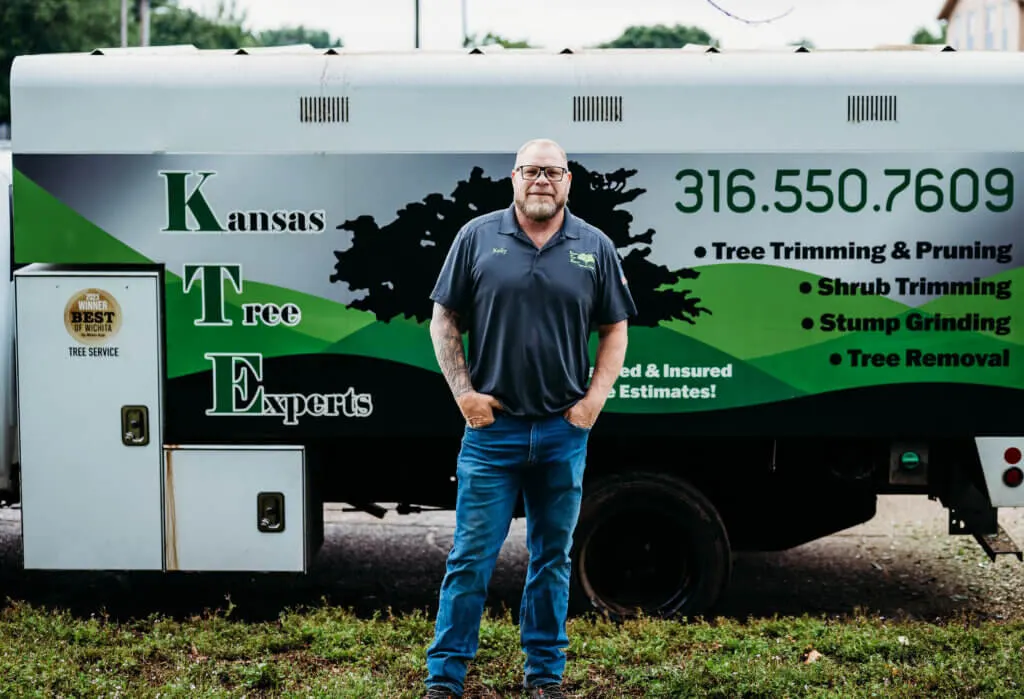
Kansas Tree Experts offers tree removal and trimming in Wichita. When discussing your project, ask about the work plan and request current documentation relevant to it. Contact Kansas Tree Experts for an estimate so those questions can be addressed before you approve the job.