Choosing a tree removal company can be harder than it looks. One estimate may cover cutting down the tree and hauling away every branch, while another may leave you responsible for the debris or stump. If you compare prices without checking what’s included, you could end up paying more than expected.
For homeowners in Wichita, the right choice comes down to more than cost. You need a company that understands the job, explains its plan, carries appropriate insurance, and respects your property. Taking time to compare a few tree removal service companies in Wichita can help you avoid unclear pricing, incomplete cleanup, and unnecessary risks.
Start With What Your Tree Actually Needs
Before requesting estimates, work out what you want done. A company can only provide a useful quote when the scope of work is clear, and different removal jobs can require very different equipment and levels of planning.
Full Removal or Partial Tree Work?
Not every problem tree needs to be removed completely. Depending on its condition, selective pruning or removing a damaged limb may address the immediate concern.
Ask the company to explain why it recommends removal rather than another option. If a tree is dead, badly damaged, or structurally unstable, complete removal may be appropriate. For a tree that is mostly healthy, a more limited service could be worth discussing.
A clear explanation helps you understand the recommendation instead of feeling pressured into a larger job.
Access, Nearby Structures, and Equipment
A tree in an open backyard presents different challenges from one growing beside a house, fence, driveway, or utility line. Restricted access may affect how the crew dismantles the tree and moves the cut sections.
During an estimate, point out anything that could complicate the work, including:
- Buildings, sheds, fences, and garden beds close to the tree
- Narrow gates or limited access for equipment
- Branches extending over a roof, driveway, or neighboring property
- Overhead utility lines or other hazards
- Slopes, soft ground, and areas where heavy equipment could cause damage
The company should assess these conditions before confirming its approach and price. Work involving power lines may require coordination with the relevant utility provider.
Cleanup and Stump Removal Requirements
Decide what you want the property to look like after the job. Some homeowners want all branches, logs, and wood chips removed. Others prefer to keep usable logs for firewood or retain the chips for landscaping.
Stump grinding should also be discussed separately unless it is clearly included in the quote. Removing the visible tree does not automatically mean the stump and larger surface roots will be removed.
Write down your requirements before comparing estimates. That way, each company can quote on the same scope of work.
Five Things to Check Before Hiring a Tree Company
A professional-looking website or a high star rating can be a useful starting point, but neither tells you everything about how a company handles tree removal. Check the practical details before making a decision.
1. Verify Insurance and Relevant Credentials
Ask for proof of current liability insurance and workers’ compensation coverage where applicable. These protections matter when crews are working near homes, vehicles, fences, and other property.
Do not rely only on a verbal assurance that the company is insured. Confirm that the coverage is current and appropriate for the work being quoted. If a company claims a particular certification or license, ask which organization issued it and whether it applies to your project.
2. Look for Experience With Similar Jobs
A company that regularly handles small ornamental trees may not be the best fit for a large, leaning tree beside your house. Ask whether the crew has completed jobs with similar size, access restrictions, and hazards.
Useful questions include:
- How would you approach this particular tree?
- What equipment might the job require?
- How will you control falling limbs and cut sections?
- What precautions will you take to protect nearby structures?
You are looking for clear, relevant answers rather than broad claims about experience.
3. Get a Written Estimate
A written estimate gives you something concrete to compare. It should describe the tree or trees involved, the planned work, the cleanup arrangements, and any additional services.
Check whether the quote explains how unexpected costs will be handled. If a company discovers a problem after work begins, you should understand how it will communicate the issue and seek your approval before carrying out additional chargeable work.
Avoid relying on a price given casually over the phone when the company has not assessed important site conditions.
4. Understand the Safety Plan
Tree removal involves falling branches, heavy equipment, cutting tools, and sometimes unstable wood. Ask how the crew will control the work area and keep people away from hazards.
A reliable provider should be able to explain its approach in terms you understand. Depending on the site, that may involve removing the tree in sections, using rigging equipment, or bringing in a crane.
Be cautious if a company dismisses your concerns or promises to drop a large tree without first assessing the surroundings.
5. Read Reviews for Specific Details
Online reviews are more useful when they describe what actually happened. Look for comments about communication, punctuality, cleanup, respect for the property, and how the company handled problems.
Pay attention to patterns across multiple reviews rather than focusing on one glowing or negative comment. Recent feedback can be particularly helpful, although reviews should still be considered alongside written estimates, insurance details, and direct communication.
How to Compare Tree Removal Quotes Fairly
Once you have two or three estimates, put them side by side. The goal is to compare the same job, not simply choose the smallest number.
| Quote Detail | What to Check |
|---|---|
| Tree removal | Does the price cover the full tree and the agreed removal method? |
| Branch and log disposal | Will all debris be hauled away, or will some remain on-site? |
| Stump grinding | Is it included, optional, or priced separately? |
| Equipment and access | Are special equipment requirements included in the price? |
| Property protection | What precautions will be taken around buildings, fences, and landscaping? |
| Additional charges | What could change the price, and will you approve extra work first? |
| Final cleanup | Will the crew rake or clear the work area, and what is excluded? |
Why the Lowest Quote May Not Be the Best Value
A lower price is not automatically a bad sign. A company may have efficient equipment, a suitable crew, or a straightforward approach to the job. The important question is whether it is offering the same scope and level of service as the other estimates.
For example, one quote might include hauling away the wood and grinding the stump, while another covers only cutting and removing the tree above ground. The second estimate may look cheaper until you add the services you still need.
Compare the total expected cost, the work included, and the clarity of the terms. If one quote is much lower than the others, ask the company to explain the difference before committing.
Questions Worth Asking Before You Make a Decision
A short conversation can reveal whether a provider communicates clearly and understands your expectations. You do not need to ask every question on this list, but choose the ones that apply to your property.
- Who will carry out the work?
Find out whether the quoted company will complete the job with its own crew or use subcontractors.
- How will you protect my property?
Ask about precautions for roofs, fences, lawns, driveways, and nearby landscaping.
- What happens if the job takes longer than expected?
Clarify how delays, unexpected obstacles, and changes in scope will be handled.
- Are permits or approvals required?
Ask the company to identify any requirements that may apply, and verify them with the relevant local authority if needed.
- What will be left behind?
Confirm whether logs, branches, chips, and the stump will remain.
- When is payment due?
Understand the payment schedule and the terms before work begins.
Notice how the tree removal businesses respond. A provider does not need to predict every possible complication, but it should be willing to explain what it knows, identify uncertainties, and discuss how changes will be handled.
Warning Signs You Shouldn’t Ignore
Most problems are easier to avoid before you sign an agreement. Be cautious if a company is unwilling to provide basic information or pushes you to make a decision before you understand the job.
Look out for these warning signs:
- Vague estimates: The quote gives a single price but does not explain what work is included.
- No proof of insurance: The company avoids providing current documentation or asks you to take its word for it.
- Pressure to commit immediately: You are told to accept the offer on the spot without time to review the details.
- Unclear cleanup terms: The company cannot confirm whether debris, logs, or the stump will be removed.
- Unexplained price changes: The provider will not explain potential extra charges or how it will obtain approval for additional work.
- No meaningful site assessment: The company quotes a complex removal without asking about access, nearby structures, or visible hazards.
One warning sign does not always tell the whole story, but several together should prompt you to look elsewhere. A trustworthy company should make the scope, cost, and expectations easier to understand, not harder.
Comparing Local Tree Removal Businesses in Wichita
Local experience can be useful when a company understands the area’s properties, common tree-care challenges, and the practical effects of Kansas weather. However, being local is only one part of the decision. The same checks for insurance, pricing, and safety still apply.
When researching tree removal service companies in Wichita, check whether they:
- Serve your part of Wichita and can attend the property for an assessment
- Handle the type and scale of removal you need
- Provide written estimates with clear inclusions
- Explain how they manage difficult access and nearby structures
- Have relevant reviews that describe completed work
- Offer a clear plan for debris disposal and final cleanup
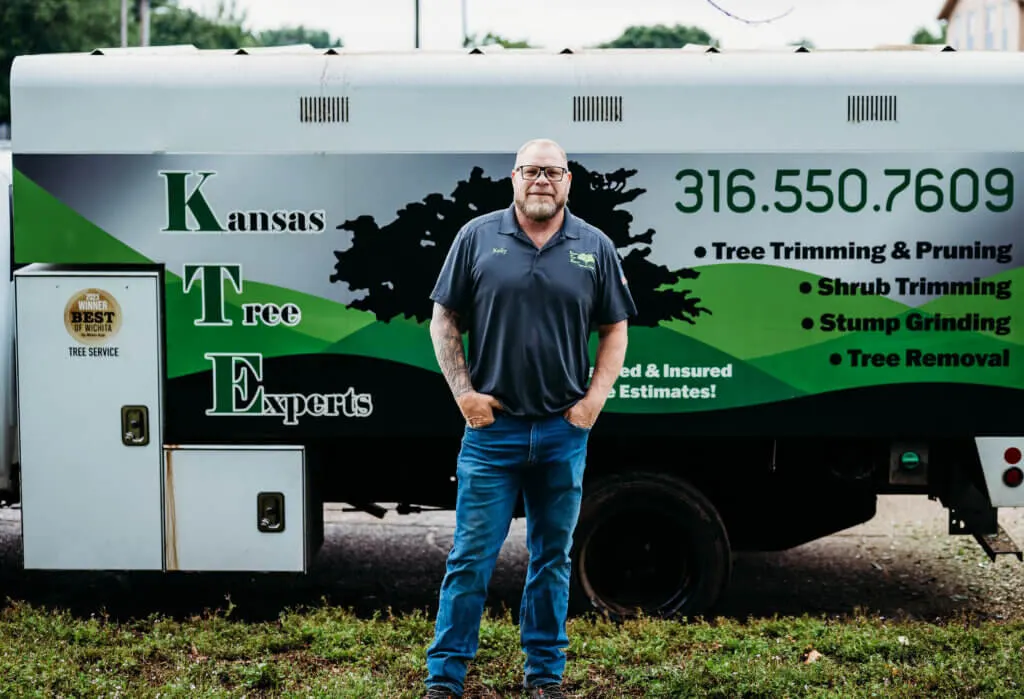
You can also check the company’s own service pages to understand the work it handles. For example, at Kansas Tree Experts, we provide tree removal, stump grinding, and other tree services in Wichita. Use that information as a starting point, then confirm the details of your specific job directly with any company you are considering.
It is worth comparing a few suitable providers rather than contacting every company you find online. Two or three detailed estimates are often enough to identify meaningful differences, provided each company has assessed the same work.
Make Your Final Choice With Confidence
Before accepting a quote, take a moment to review the details. You should know exactly which tree will be removed, what method the company plans to use, how the crew will manage safety, and what cleanup is included.
Use this checklist to make your decision:
- The estimate describes the work in writing.
- Insurance has been verified.
- The company has experience with a similar job.
- The removal plan accounts for nearby structures and access.
- Debris disposal and stump work are clearly addressed.
- Extra charges and payment terms are explained.
- You have had time to review the agreement without pressure.
The right choice is the company that offers a suitable plan, communicates clearly, and provides a fair price for the work required. A little preparation can help you avoid surprises and feel more confident about having a tree removed from your property.
Find a Company You Can Trust
Every removal has its own challenges, so compare companies based on how well their proposed work fits your property rather than price alone. Review the details, ask questions, and make sure you understand what happens before, during, and after the job.
If you have a tree that needs attention in Wichita, contact us to discuss your property and request an estimate. Having the work assessed is a practical first step toward deciding which removal option makes sense for your situation.
Frequently Asked Questions
1. How many tree removal quotes should I get?
Getting two or three written quotes is a useful starting point for most residential jobs. Make sure each company is pricing the same work, including debris disposal and stump removal if needed, so you can compare the estimates fairly.
2. Is the cheapest tree removal estimate always the best option?
No. A low estimate may exclude hauling, stump grinding, or other work you expect to be included. Compare the full scope, insurance, safety approach, and payment terms before deciding which quote offers the best value.
3. What insurance should a tree removal company have?
Ask for current liability insurance and workers’ compensation coverage where applicable. These can help address different risks associated with property damage and worker injuries. Confirm the details rather than relying solely on a company’s verbal assurance.
4. Should I hire a tree service or an independent arborist?
A tree service is generally hired to carry out work such as removal, pruning, and debris cleanup. An independent consulting arborist may be useful when you need an impartial assessment of a tree’s health, condition, or risk before deciding what work is necessary.
5. Can a tree removal company leave the wood behind?
Yes, if that arrangement is agreed upon. Some homeowners keep logs for firewood or use wood chips for landscaping, while others want everything hauled away. Confirm which materials will remain and whether disposal costs are included in the estimate.
6. What should I do if a tree removal quote changes after work begins?
Ask the company to explain what changed, why the original estimate no longer applies, and what the additional work will cost. Review the agreement and approve any extra chargeable work in writing before it proceeds, except where immediate action is needed to address an urgent safety risk.