Having a tree removed from your property can raise several questions. How long will the work take? Will the crew need to bring heavy equipment? What happens to the branches, trunk, and stump once the tree is down?
The answers depend on the tree’s size, condition, location, and the work involved. Removing a tree in an open yard is very different from taking down a damaged tree hanging over your roof or standing close to a fence.
A professional tree take down service should explain what needs to happen before work begins, how the tree will be removed, and what will be included in the cleanup. Understanding these details can help you prepare your property and avoid unexpected costs.
If you are planning tree removal at your home in Wichita, here is what to expect at each stage, from the initial assessment to the final cleanup.
Before the Tree Comes Down: What Gets Assessed?
Before any cutting begins, the crew needs to understand the tree’s condition and the layout of your property. These details help determine the right removal method and identify potential hazards.
Tree Health and Structural Risks
The first step is to examine the tree for signs of damage, decay, or instability. A dead tree, a split trunk, or major broken limbs can make removal more complicated than it would be for a healthy tree.
The crew may look for:
- Large dead branches or hanging limbs.
- Cracks or splits in the trunk.
- Signs of decay or fungal growth.
- A pronounced lean or visible root damage.
- Storm damage that may have changed the tree’s balance.
These signs help the crew understand the risks involved. They also help determine whether the tree can be removed in one piece or needs to be dismantled in sections.
Nearby Buildings, Utilities, and Access
The crew also needs to check what surrounds the tree. A narrow space between your house and garage, overhead power lines, nearby fences, and limited vehicle access can all affect the removal plan.
They will need to identify a suitable work area and consider where branches or trunk sections can be lowered safely.
If a tree is touching a power line, stay away and contact the utility company. Do not attempt to move the tree or cut the affected branches yourself.
Choosing the Right Removal Approach
Once the tree and its surroundings have been assessed, the contractor can explain the proposed method. A tree with enough open space may be felled in a controlled direction. A tree close to a building may need to be dismantled piece by piece.
Depending on the conditions, the crew may use climbing equipment, ropes, a bucket truck, or a crane.
Ask why the recommended method suits your property. A clear explanation helps you understand the work before agreeing to the estimate.
What Happens on Tree Removal Day?
The removal service process can look different from one property to another, but the crew should have a clear plan before cutting begins. Here is how the work typically progresses.
1. The Crew Prepares the Work Area
The team positions its equipment and establishes a work zone around the tree. Vehicles, outdoor furniture, and other movable items may need to be cleared before work starts.
The crew may also need access to a driveway, gate, or part of your yard. Follow any instructions about where you and your family can safely stand while the work is underway.
2. Branches Are Removed First When Needed
For trees that cannot be felled in one piece, the crew may begin by removing branches from the canopy. This reduces the amount of material attached to the trunk and allows the team to dismantle the tree in a controlled sequence.
Some branches may be lowered with ropes or other suitable equipment rather than allowed to fall freely. The approach depends on the tree’s condition and the space available below it.
3. The Trunk Is Cut and Lowered
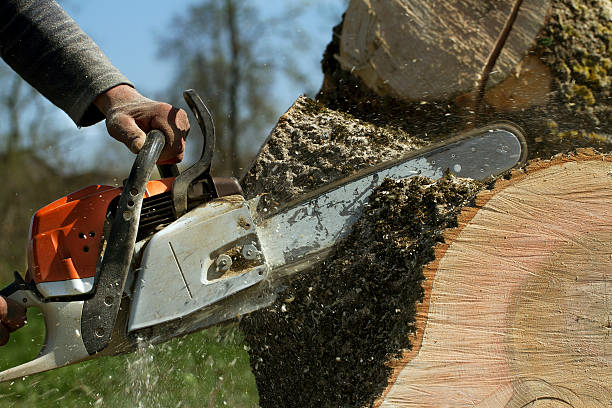
Once the necessary branches have been removed, the crew works down the trunk. Sections may be cut into manageable lengths and lowered to a designated area.
If the tree has enough room to fall safely, a different method may be appropriate. The crew should choose the approach based on the actual site conditions rather than using the same technique for every tree.
4. The Crew Checks the Work Area
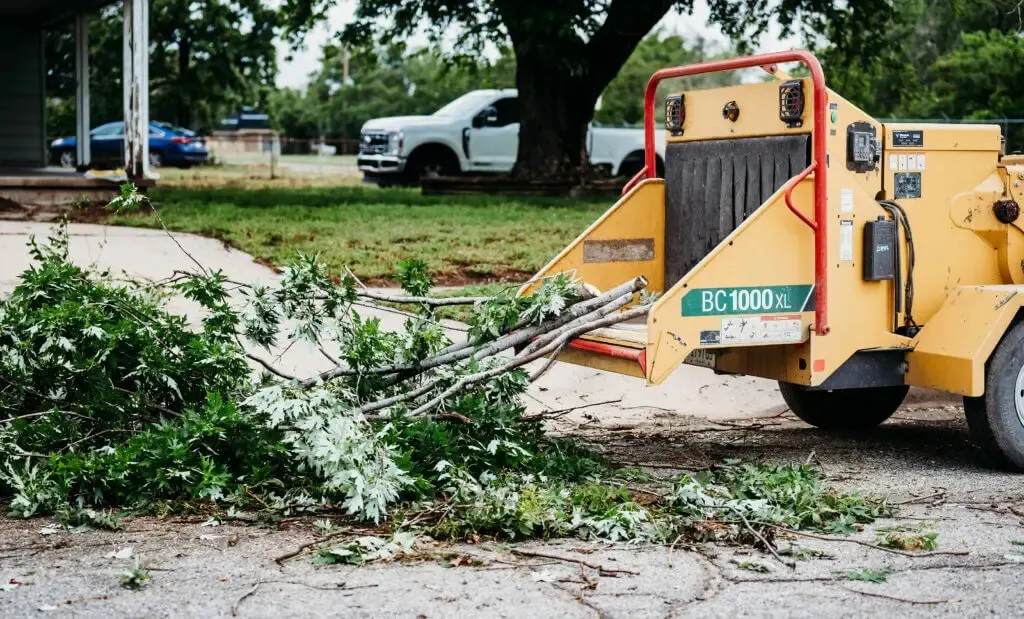
After the tree has been taken down, the team checks for remaining branches and other material that falls within the agreed scope of work. They may then move on to chipping, hauling, or preparing the wood for collection.
The time required depends on the tree’s size, its condition, access, and the amount of cleanup involved. A straightforward removal may take only a few hours, while a complex job can take longer.
What Happens to the Tree After It’s Cut Down?
The work does not always end when the tree is on the ground. The remaining wood and debris need to be handled according to your preferences and the terms of the tree cutting service agreement.
Different parts of the tree may be processed in different ways.
| Tree Material | What May Happen to It |
|---|---|
| Small branches and twigs | Chipped into smaller pieces or hauled away |
| Larger branches | Cut into manageable lengths or processed separately |
| Trunk sections | Removed, cut into logs, or retained by arrangement |
| Stump | Left in place or ground down through a separate service |
| Leaves and loose debris | Collected and cleared as agreed |
Can You Keep the Wood?
If you want to keep some of the wood, tell the contractor before the work begins. Suitable logs may be cut into manageable lengths for later use, but this depends on the tree species, wood condition, and the arrangements you make.
Do not assume that every log will automatically be left on your property. Some removal quotes include hauling all wood away, while others allow you to retain selected sections.
Does Cleanup Include the Stump?
Not necessarily. Removing the visible tree and grinding the remaining stump are usually separate tasks.
If you want to replant the area, lay new turf, or use the space for another purpose, ask about stump grinding when requesting your estimate. This gives the contractor a chance to include the additional work in the overall plan.
What Can Affect Your Tree Removal Service Quote?
The cost of tree removal service depends on more than its height. Two trees of similar size can require very different amounts of work if one stands in an open yard and the other is close to a building.
When reviewing an estimate, look at the factors that contribute to the total price.
| Cost Factor | How It Can Affect the Price |
|---|---|
| Tree size | Larger trunks and canopies may require more labour and equipment |
| Tree condition | Decay, storm damage, or instability can make removal more complex |
| Location | Nearby buildings, fences, and other obstacles may require careful dismantling |
| Access | Restricted space can affect equipment positioning and working time |
| Removal method | Climbing, rigging, or crane use can change the equipment and labour required |
| Stump grinding | Often priced separately from removing the tree |
What Should Your Estimate Include?
A written tree removal service estimate should explain what work will be completed and what you will pay for. Before accepting it, check whether it covers:
- Tree removal and the planned method.
- Labour and equipment.
- Branch and wood cleanup.
- Hauling or disposal of debris.
- Stump grinding, if requested.
- Any additional charges that could apply if site conditions change.
If a quote is much lower than others, ask what is excluded. One contractor may include hauling and cleanup while another may leave the wood on-site, making the prices difficult to compare directly.
What Can Go Wrong Without Proper Planning?
Tree removal involves heavy wood, powered cutting equipment, and the risk of falling branches. Poor planning can put workers and property at risk, particularly when a tree is damaged or stands close to a structure.
The U.S. Bureau of Labor Statistics reported 80 fatal occupational injuries among tree trimmers and pruners in 2023. This highlights the serious hazards associated with professional tree work.
Damage to Your Home or Landscaping
If the removal method does not account for nearby structures, falling branches or trunk sections may damage roofs, fences, garden beds, or outdoor features.
A proper plan considers where each section will go and how the crew will manage the work area. However, no contractor can guarantee that every risk can be eliminated.
Unstable Trees and Hidden Decay
A tree that looks solid from the ground may have internal decay or weak attachment points. Storm damage can also shift the tree’s weight, making it harder to predict how it will respond to cutting.
This is why the assessment matters. The crew needs to consider the tree’s condition before deciding how to remove it.
Unclear Cleanup Arrangements
Another common source of frustration is discovering that branches, logs, or the stump will remain after the work is complete.
Avoid this by confirming the cleanup arrangements in writing. Make sure you know whether the contractor will chip the branches, haul the wood, remove the stump, or leave selected materials for you to keep.
How to Prepare Your Property for Tree Removal
You can make removal day easier by sorting out a few details before the crew arrives. The contractor may provide additional instructions depending on the equipment and work planned.
Use this checklist to prepare:
- Move vehicles: Clear the driveway and any area needed for equipment access.
- Clear outdoor items: Move furniture, toys, garden tools, and other loose objects away from the work zone.
- Keep children and pets away: Arrange a safe place indoors or well away from the site.
- Discuss access: Tell the crew about narrow gates, slopes, or other restrictions.
- Identify underground features: Point out irrigation lines, septic components, or other features that may need protection.
- Confirm wood removal: Decide whether you want any logs or wood chips kept on your property.
- Review the cleanup plan: Check what will happen to the branches, trunk, and stump.
You should also ask whether you need to keep a particular part of the driveway or yard clear after the crew leaves. If you have landscaping work planned, let the contractor know so the cleanup can be coordinated with your next steps.
Most importantly, stay outside the designated work area while the crew is operating. Do not approach the tree to take photos or inspect the work while cutting is underway.
Plan Your Tree Removal Carefully
Taking down a tree is a significant job, especially when it is damaged or growing close to your home. Understanding the assessment, removal process, costs, and cleanup arrangements helps you prepare your property and know what to expect.
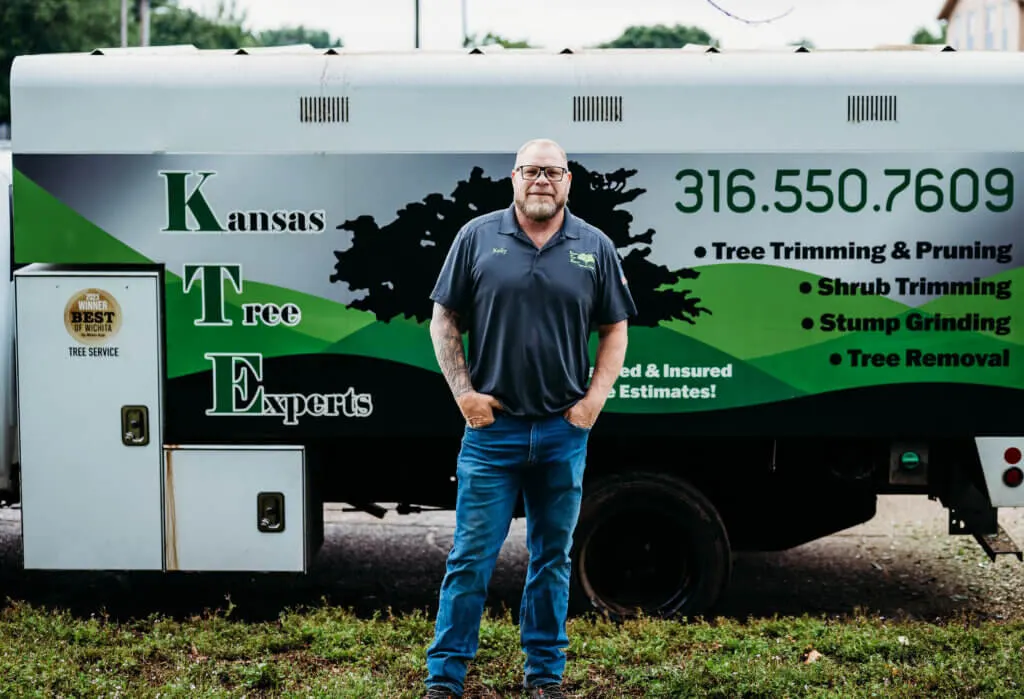
At Kansas Tree Experts, we understand that every property has different requirements. We recommend having the tree and its surroundings assessed before deciding on a removal method, particularly when there are nearby structures, limited access, or signs of damage.
If you have a tree that needs attention and want to understand the options for your property, contact us to discuss the work and request an estimate. We are here to help you make an informed decision about your tree removal needs.
Frequently Asked Questions
1. How long does a tree take down service take?
The time depends on the tree’s size, condition, location, and removal method. A straightforward job may take a few hours, while a large tree near buildings may require more time for careful dismantling and cleanup.
2. Do I need to be home during tree removal?
You should confirm this with the contractor before the scheduled date. You may not need to remain outside or watch the work, but the crew may need access to certain areas or your approval if unexpected issues arise.
3. Does tree removal include hauling away the wood?
Not always. Some estimates include branch chipping and wood hauling, while others cover removal only. Ask whether logs, branches, and other debris will be taken away or left on-site so you can plan accordingly.
4. Is stump grinding included in a tree take down service?
Stump grinding is often a separate service. If you want the stump removed, ask for it to be included in your estimate. The cost may depend on the stump’s size, location, and access for the grinding equipment.
5. Can a tree be removed if it is close to my house?
Yes, but the crew needs to account for the building, available space, and the tree’s condition. Depending on the site, they may dismantle the tree in sections or use suitable specialised equipment instead of felling it in one piece.
6. What should I ask before hiring a tree cutting service?
Ask about insurance, the proposed removal method, the work included in the estimate, debris cleanup, and stump grinding. A reliable contractor should explain the plan clearly and discuss how potential hazards and unexpected site conditions will be handled.