Trees provide shade, privacy, and natural beauty, but severe weather, disease, structural problems, and age can turn a tree into a serious property hazard. A tree that has fallen across a driveway is inconvenient, but one leaning toward a home, damaged near a utility line, or supported by only part of its root system can create a much more immediate safety concern.
Knowing when to call a 24/7 emergency tree service can help property owners respond appropriately when a dangerous tree cannot safely wait for routine maintenance. Emergency tree situations may happen at night, during weekends, or immediately after severe weather, which is why access to emergency assistance can be important.
Kansas Tree Experts provides tree removal, tree trimming, stump grinding, commercial tree services, and emergency tree services in Wichita and surrounding communities. Its service pages specifically describe 24/7 emergency response for several Wichita-area locations.
This guide explains what makes a tree an emergency, what property owners should do before help arrives, and how dangerous trees can be handled more safely.
What Is a 24/7 Emergency Tree Service?
A 24/7 emergency tree service is designed to address tree-related hazards that require attention outside normal routine maintenance schedules.
Emergency situations can include:
- A tree that has fallen onto a house
- A tree blocking an important driveway or access route
- Large branches hanging over a roof
- A severely leaning tree
- A split or damaged trunk
- A partially uprooted tree
- Storm-damaged trees
- Large limbs resting on structures
- Trees or branches near electrical lines
- A hazardous tree threatening people, vehicles, or buildings
The purpose of emergency tree service is not simply to remove a tree as quickly as possible. The first priority is to assess the hazard and determine the safest way to stabilize, remove, or manage the damaged tree.
The appropriate response depends on factors such as the tree’s size, condition, location, surrounding structures, accessibility, and the type of damage involved.
When Does a Tree Become an Emergency?
Not every damaged tree requires immediate removal. A small broken branch in an open section of the yard may be something that can be addressed through routine tree care.
However, certain conditions require a more urgent response.
A Tree Has Fallen on a Structure
A fallen tree can damage roofs, garages, sheds, fences, or other structures. The weight of the tree can also place additional stress on the damaged structure.
Property owners should avoid walking underneath or around unstable portions of the tree. If the building itself may be unsafe, contact the appropriate emergency professionals before entering the area.
A Tree Is Leaning Suddenly
A tree that develops a new or significant lean after a storm may have suffered root or structural damage.
The tree may not fall immediately. Wind, rain, additional weight, or movement around the root zone can cause further instability.
Large Branches Are Hanging Over a Property
Broken branches do not always fall immediately. A partially attached limb may remain suspended in the canopy and become a hazard later.
Large hanging branches over roofs, driveways, walkways, or areas where people gather should be evaluated by a professional.
The Trunk Has Split
A visible crack or split in the main trunk can indicate serious structural instability. The risk depends on the location and severity of the split, as well as the tree’s overall condition.
Do not attempt to tie, pull, or cut a severely split tree without professional guidance.
The Tree Is Near Power Lines
Trees and utility lines create an especially dangerous combination. If a tree or branch is touching or has fallen near a power line, stay away from the area.
Do not attempt to cut the tree, move branches, or remove debris yourself. Contact the utility provider or appropriate emergency service when electrical infrastructure is involved.
Common Causes of Tree Emergencies in Kansas
Kansas properties can experience several conditions that contribute to sudden tree damage.
Severe Winds and Thunderstorms
Strong winds can break branches, split trunks, and uproot trees. A tree with existing structural weaknesses may be particularly vulnerable.
Even trees that appear healthy can experience damage during extreme weather.
Tornadoes and Straight-Line Winds
Severe wind events can cause extensive damage within a short period. Trees may be uprooted or broken at different points along the trunk and canopy.
After a major storm, property owners should inspect trees from a safe distance rather than immediately approaching damaged areas.
Ice and Snow
Ice and snow can increase the weight carried by branches. This additional load can cause branches to break or place stress on already weakened portions of a tree.
Lightning
Lightning can damage trees in ways that are not always immediately obvious. A strike can cause bark damage, splitting, broken branches, or internal injury.
A damaged tree should be evaluated before homeowners decide that it is safe.
Disease, Decay, and Deadwood
Not all tree emergencies begin with a storm. Decay, dead branches, root problems, or structural defects can weaken a tree over time.
Routine inspections can help identify some of these conditions before they result in sudden failure.
What Should You Do When a Tree Becomes Dangerous?
When a tree becomes unstable, the first step is to protect people rather than the property.
1. Keep People Away
Create as much distance as practical between people and the damaged tree.
Keep children and pets away from the area. Do not stand underneath broken branches or next to a leaning trunk.
2. Look for Utility Hazards
Check the area from a safe location for:
- Downed power lines
- Damaged utility poles
- Branches resting on electrical equipment
- Damaged gas lines or other utilities
Never assume that a fallen electrical line is safe because it appears inactive.
3. Avoid Touching the Tree
A damaged tree may be under tension or compression. Branches can move unexpectedly when pressure changes.
Do not attempt to pull large branches away from a structure.
4. Document Visible Property Damage
If it is safe to do so, take photographs of the tree and affected property.
Photos can help when communicating with an insurance company or documenting the condition of the property before cleanup.
5. Contact the Appropriate Professionals
For significant tree hazards, arrange an assessment with a qualified tree service.
If electrical lines, major structural damage, fire, gas leaks, or other immediate hazards are involved, contact the appropriate emergency or utility provider first.
Why Dangerous Tree Removal Requires Professional Planning
Removing a dangerous tree is not simply a matter of cutting through the trunk.
A damaged tree can behave differently from a healthy, stable tree. Branches may be under tension, the trunk may be compromised, and the root system may no longer provide adequate support.
The location of the tree also matters.
For example, a tree in an open field may have more room for controlled removal than a tree located between a house, fence, driveway, and utility line.
Kansas Tree Experts explains that professional tree removal typically begins with an assessment of the tree and surrounding property. Factors such as tree height, trunk size, lean, nearby structures, access, and equipment requirements can affect the removal plan.
How a 24/7 Emergency Tree Service Handles Dangerous Trees
A professional emergency response generally involves several stages.
1. Initial Tree and Property Assessment
The first step is understanding what happened and what risks remain.
A professional may evaluate:
- Tree height
- Trunk diameter
- Tree condition
- Degree of lean
- Broken branches
- Root stability
- Nearby structures
- Utility lines
- Fences and landscaping
- Access for equipment
This information helps determine how the tree can be handled safely.
2. Establishing a Safe Work Area
The work area may need to be restricted before cutting begins.
People, vehicles, and pets should remain outside the designated work zone. The location of equipment and the direction in which tree sections can be safely moved should also be considered.
3. Identifying Structural Hazards
Emergency tree removal can involve additional risks compared with routine removal.
Professionals need to consider whether branches are under tension, whether the trunk has split, whether the tree is supported by surrounding structures, and whether the root system has shifted.
These conditions can influence the order in which different parts of the tree are removed.
4. Controlled Removal
Depending on the tree and location, removal may be completed in sections rather than by allowing the entire tree to fall.
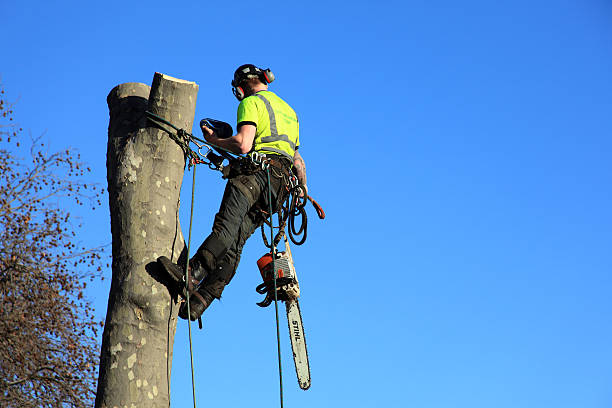
Kansas Tree Experts describes the use of controlled removal methods, including rigging, bucket trucks, or cranes when needed for challenging trees and locations.
The equipment and technique should be selected according to the individual property rather than using one approach for every emergency.
5. Debris Handling and Cleanup
Once dangerous sections have been removed, branches and trunk sections may need to be processed and removed.
The remaining stump may require separate treatment. Stump grinding is one option when the goal is to reduce the visible stump below ground level. Kansas Tree Experts lists stump grinding as a separate tree care service.
Situations Where You Should Not Handle a Tree Yourself
DIY tree work may appear manageable when looking at a fallen tree from the ground. However, several situations can make cutting extremely dangerous.
Do Not Cut Trees Near Power Lines
Electrical hazards require specialized handling and coordination with the utility provider.
Do Not Cut a Suspended Branch
A branch that is caught between other branches or resting on a structure may be under significant pressure.
Cutting it can cause sudden movement.
Do Not Climb a Storm-Damaged Tree
Broken branches and weakened trunks can fail without warning.
Do Not Use a Chainsaw on an Unstable Trunk
A fallen trunk may contain internal tension. Cutting it in the wrong location can cause the wood to move unexpectedly.
Do Not Pull Down Large Limbs With a Vehicle
Using a vehicle or other equipment to pull a branch can cause unpredictable movement and additional property damage.
Professional tree removal equipment and controlled techniques are designed for these types of hazards.
Emergency Tree Service vs. Routine Tree Maintenance
Emergency tree service and routine tree care have different purposes.
| Tree Care Situation | Typical Example | Recommended Approach |
|---|---|---|
| Emergency removal | Tree falls on a house | Immediate professional assessment |
| Storm damage | Large branches break during severe weather | Inspect and address hazards |
| Hazardous tree | Tree develops a severe lean | Professional evaluation |
| Routine trimming | Dead or overgrown branches | Scheduled tree maintenance |
| Preventive pruning | Branches growing toward structures | Planned pruning |
| Stump grinding | Remaining stump after removal | Separate stump service |
| Commercial tree care | Trees around business property | Scheduled professional maintenance |
Routine maintenance can reduce some risks, but it cannot eliminate the possibility of storm damage.
Kansas Tree Experts offers both routine tree services and emergency tree services, including tree trimming, removal, stump grinding, and commercial tree care.
How to Prepare Trees Before Severe Weather
Emergency response is important, but prevention can also reduce the likelihood of serious tree problems.
Schedule Regular Inspections
Regular inspections can help identify dead branches, weak unions, structural problems, and other visible concerns.
Remove Hazardous Deadwood
Dead branches can become falling hazards during strong winds. Removing hazardous branches before severe weather may reduce the risk of failure.
Maintain Proper Clearance
Branches growing toward roofs, driveways, sidewalks, and utility infrastructure should be evaluated regularly.
Avoid Improper Pruning
Poor pruning can create weak branch structures or unnecessary wounds. Tree trimming should be based on the tree’s species, condition, structure, and location.
Inspect Trees After Severe Weather
After a storm, look for:
- New cracks
- Broken branches
- Hanging limbs
- Exposed roots
- Sudden leaning
- Split trunks
- Significant bark damage
If any of these conditions appear dangerous, keep away from the tree and arrange a professional assessment.
Kansas Tree Experts notes that Wichita weather can include strong winds, ice, heat, drought, and rapid seasonal changes, all of which can influence tree condition and maintenance decisions.
Emergency Tree Service Safety Checklist
Use this checklist when dealing with a potentially dangerous tree:
- Keep people and pets away from the tree.
- Stay away from downed or damaged utility lines.
- Do not climb the tree.
- Do not cut suspended branches.
- Do not use a chainsaw on an unstable tree unless you are properly qualified.
- Photograph property damage only from a safe location.
- Contact your insurance provider when appropriate.
- Arrange a professional tree assessment.
- Ask what removal method will be used.
- Confirm whether debris and stump work are included in the service.
The most important rule is simple: do not put yourself at risk to remove a tree hazard.
Conclusion
A dangerous tree can become a serious safety concern with very little warning. Storms, high winds, ice, disease, structural defects, and root damage can all contribute to tree failure. When a tree is leaning dangerously, has fallen onto a structure, has large suspended branches, or is creating another immediate hazard, professional assessment is often the safest next step.
A 24/7 emergency tree service can help property owners respond when dangerous tree conditions occur outside routine maintenance schedules. The response should focus on safety, proper assessment, controlled removal, and appropriate cleanup rather than simply cutting the tree as quickly as possible.
Kansas Tree Experts provides tree removal, tree trimming, stump grinding, commercial tree services, and emergency tree services in Wichita and surrounding areas. Its Wichita-area pages specifically describe emergency response available day and night.
If you have a dangerous or storm-damaged tree and need to understand what type of service may be appropriate, contact us through Kansas Tree Experts to discuss the situation and available tree care options.