
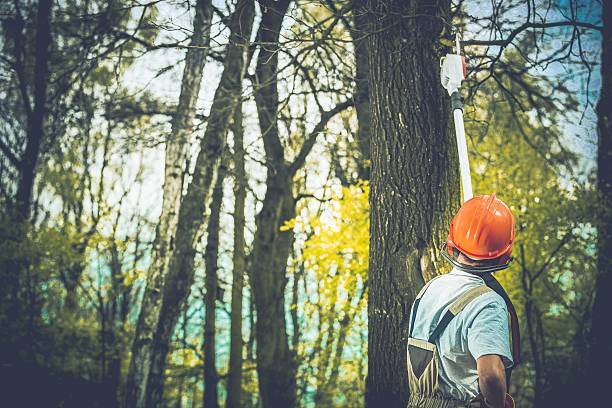
When a tree needs to be removed, one of the first questions homeowners often ask is, “How much will tree removal cost?” The answer depends on several factors, so a tree removal free estimate is useful for understanding the specific requirements of a project.
Tree removal is not priced simply according to the number of trees on a property. The height and size of the tree, its condition, location, accessibility, nearby structures, equipment requirements, debris removal, and stump work can all affect the estimate.
A professional estimate allows the tree service provider to evaluate these conditions before giving a project price. This is especially important when a tree is close to a home, garage, fence, driveway, power line, or other structure.
For homeowners searching for a tree removal free estimate, understanding what influences the price can make it easier to compare estimates and determine what services are actually included.
Kansas Tree Experts provides tree removal, tree trimming, stump grinding, emergency tree services, commercial tree services, and other tree care services in Wichita and surrounding communities.
What Is a Tree Removal Free Estimate?
A tree removal free estimate is an assessment provided before the removal work begins. The estimator evaluates the tree and surrounding property to determine the likely scope of work.
Depending on the property, the evaluation may consider:
- Tree height and diameter
- Tree species and structure
- Tree health and condition
- Lean or direction of growth
- Nearby buildings and structures
- Fences and landscaping
- Utility lines
- Access for equipment
- Required labor
- Removal and hauling
- Cleanup
- Stump grinding
The purpose of an estimate is to establish the expected scope and cost before the work is approved.
A free estimate does not necessarily mean that every possible service is included in one price. Homeowners should ask for clarification about removal, hauling, cleanup, and stump grinding before approving the project.
Why Tree Removal Costs Vary
There is no single price that applies to every tree removal project. Two trees of similar height can require very different removal methods depending on their location and condition.
For example, a tall tree standing in an open backyard may have enough space for controlled removal. A similarly sized tree growing between a house and power line may require a more controlled approach and specialized equipment.
The estimate should account for the actual conditions of the property rather than relying only on the tree’s size.
Factors That Affect a Tree Removal Estimate
1. Tree Size and Height
Tree size is one of the most obvious factors affecting removal costs.
A taller or wider tree generally requires more time, labor, equipment, and planning than a small tree. Large trees may also require sections of the tree to be lowered carefully instead of allowing branches or sections to fall freely.
Estimators may consider:
- Overall height
- Trunk diameter
- Number and size of major limbs
- Canopy spread
- Weight of branches and trunk sections
A large tree does not automatically mean a specific price, but its size can influence the resources required to remove it safely.
2. Tree Species and Structure
The species of a tree can also affect how a removal project is approached.
Different trees can have different wood densities, branching patterns, growth habits, and trunk structures. A tree with multiple large stems may require a different removal strategy from one with a single straight trunk.
The estimator may also look for:
- Multiple trunks
- Large lateral branches
- Weak branch unions
- Unusual growth patterns
- Dense canopy
- Leaning structure
These characteristics can affect how the tree is cut and controlled during removal.
3. Tree Condition
The condition of the tree is another important factor.
A healthy tree may have strong wood and predictable structural characteristics. A dead, decayed, split, or severely damaged tree can behave differently during removal.
For example, decay can weaken portions of a trunk or branch. Storm damage may also create broken limbs or unstable sections.
An estimator may look for signs such as:
- Dead branches
- Cracks or splits
- Trunk decay
- Hollow areas
- Significant leaning
- Storm damage
- Broken limbs
- Root-related concerns
The condition of the tree can influence the equipment, labor, and removal method required.
4. Tree Location
Location can significantly affect a tree removal estimate.
A tree standing in an open area may be relatively accessible. A tree growing close to a structure may require additional planning to control where branches and trunk sections land.
Common location-related considerations include:
- Distance from the house
- Distance from a garage
- Nearby fences
- Driveways
- Sidewalks
- Pools
- Landscaping
- Neighboring properties
- Utility lines
The more obstacles surrounding the tree, the more carefully the removal may need to be planned.
5. Nearby Structures and Obstacles
A tree does not exist in isolation. The surrounding property can influence the removal process.
If a tree is close to a roof, for example, branches may need to be lowered rather than dropped. If the tree is near a fence or landscaping, the crew may need to account for those features when determining the removal method.
During an estimate, point out anything you are particularly concerned about protecting.
This may include:
- Roofs
- Windows
- Sheds
- Garages
- Fences
- Vehicles
- Gardens
- Irrigation systems
- Outdoor structures
Understanding these concerns before the project begins can help the tree service provider develop an appropriate work plan.
6. Accessibility
Access to the tree can affect the amount of work required.
A tree located beside a wide driveway may be easier to reach with equipment than one located behind a narrow gate or in a restricted backyard.
The estimator may consider whether equipment can reach the work area and whether branches or logs need to be moved manually.
Access considerations can include:
- Gate width
- Driveway access
- Distance from the street
- Backyard access
- Terrain
- Landscaping
- Overhead obstructions
- Available space for equipment
A difficult-to-access tree may require additional labor even if the tree itself is not unusually large.
7. Equipment Requirements
Some tree removal projects can be completed with standard climbing and cutting equipment. Others may require additional equipment.
Depending on the tree and property, equipment could include:
- Climbing equipment
- Rigging systems
- Bucket trucks
- Wood chippers
- Loaders
- Cranes
- Chainsaws
- Log-handling equipment
The need for specialized equipment can affect the project cost.
Kansas Tree Experts states that its tree removal work may use equipment such as bucket trucks, cranes, and rigging depending on the property and removal requirements.
8. Number of Trees
Removing one tree is different from removing several trees.
When multiple trees are included in a project, the total estimate may depend on the size and location of each individual tree. Some trees may be straightforward to remove, while others may require additional equipment or more controlled work.
Ask whether the estimate covers all requested trees and whether each tree is clearly identified.
If you have several trees that need attention, an itemized estimate can make the scope easier to understand.
9. Debris Removal and Cleanup
Tree removal creates branches, logs, leaves, and other material that must be handled after cutting.
Ask whether cleanup and debris removal are included in your tree removal free estimate.
Important questions include:
- Are branches chipped?
- Are logs hauled away?
- Can homeowners keep usable firewood?
- Is sawdust removed?
- Is the work area cleared?
- Are large pieces of wood left on the property?
Two estimates may have different prices because they include different levels of cleanup.
Kansas Tree Experts describes its tree removal services as including cleanup and offers stump grinding as a separate tree care service.
10. Stump Grinding
Tree removal does not always include stump removal.
After a tree is cut down, the remaining stump may need to be ground separately. Homeowners should ask whether stump grinding is included in the original estimate or quoted as an additional service.
Stump grinding can be useful when the area will later be used for:
- Lawn installation
- New planting
- Landscaping
- Garden beds
- Outdoor improvements
Kansas Tree Experts lists stump grinding as one of its tree services and describes the process as grinding stumps below ground level.
11. Emergency or Storm-Damaged Trees
Emergency tree removal can involve different conditions from planned removal.
After severe weather, a tree may be partially uprooted, split, leaning, or resting against a structure. Broken branches can also create additional hazards.
Emergency work may require a faster response and careful evaluation of unstable sections.
If a tree has fallen near power lines, homeowners should stay away from the area and contact the appropriate utility provider. Do not approach or attempt to move a tree that may be in contact with energized lines.
Kansas Tree Experts lists emergency tree services among its offerings and advertises emergency response for hazardous storm-related tree conditions.
What Is Usually Included in a Tree Removal Estimate?
The exact scope depends on the provider and project. A written estimate may include some or all of the following:
| Estimate Component | What It May Cover |
|---|---|
| Tree removal | Cutting and dismantling the tree |
| Labor | Crew time required for the project |
| Equipment | Trucks, chippers, cranes, or other equipment |
| Branch removal | Cutting and handling branches |
| Log removal | Cutting, loading, and hauling logs |
| Cleanup | Clearing branches and debris |
| Stump grinding | Grinding the remaining stump |
| Root management | Handling exposed or surface roots |
| Emergency work | Removal of storm-damaged or hazardous trees |
Do not assume that every item is automatically included. Ask the provider to explain each part of the estimate before work begins.
How to Compare Tree Removal Estimates
If you receive multiple estimates, avoid comparing only the final dollar amount.
Instead, compare the scope of each estimate.
Compare the Recommended Work
Make sure each provider is quoting the same tree and the same type of work.
Compare Included Services
Check whether removal, hauling, cleanup, and stump grinding are included.
Compare Equipment Requirements
Ask whether specialized equipment is required and whether equipment costs are included.
Compare Potential Additional Costs
Find out whether unexpected conditions could change the final price.
Compare Scheduling
Ask when the work can be completed and whether weather or other conditions could affect the schedule.
Compare Documentation
A written estimate makes it easier to review what you are actually agreeing to.
A higher estimate is not necessarily excessive, just as a lower estimate is not automatically better. The scope of work should be considered alongside the price.
Questions to Ask Before Approving Tree Removal
Before accepting a tree removal free estimate, consider asking these questions:
- What is included in the quoted price?
- Is cleanup included?
- Is hauling included?
- Is stump grinding included?
- What equipment will be required?
- How will nearby structures be protected?
- Are there potential additional charges?
- How long will the work take?
- Does weather affect the schedule?
- Is the company licensed and insured?
- Who will perform the work?
- What happens to the wood after removal?
These questions can help you understand the complete project rather than focusing only on the initial price.
How to Prepare for a Tree Removal Estimate
A little preparation can make the estimate process easier.
Before the appointment, identify the trees you want evaluated. If there are several trees, make a simple list so there is no confusion about which trees are included.
You should also think about what you want done with the tree after removal.
For example, decide whether you want:
- All branches removed
- Logs hauled away
- Usable wood left on the property
- Stump grinding
- Additional nearby trees evaluated
If there are property features you want protected, point them out during the estimate.
This information can help the estimator understand your expectations and prepare a more complete quote.
Tree Removal Estimate Checklist
Use this checklist when reviewing a tree removal estimate:
Before the Estimate
- Identify the tree or trees
- Note visible damage or decay
- Identify nearby structures
- Check for difficult access
- Consider whether stump grinding is needed
During the Estimate
- Ask why removal is recommended
- Ask what method will be used
- Ask about equipment
- Discuss property protection
- Ask about cleanup
- Confirm whether stump grinding is included
Before Approving the Work
- Review the written estimate
- Confirm the total price
- Ask about additional charges
- Confirm scheduling
- Verify insurance information
- Make sure the scope matches your expectations
Conclusion
A tree removal free estimate is useful because it provides an opportunity to understand the specific conditions affecting your project before work begins. Tree size is important, but it is only one part of the calculation. Location, tree condition, access, nearby structures, equipment, debris removal, stump grinding, and emergency conditions can all influence the final estimate.
When comparing estimates, look beyond the total price. Review what services are included, how cleanup will be handled, whether stump grinding is separate, what equipment may be required, and whether additional charges are possible.
Kansas Tree Experts provides tree removal, tree trimming, stump grinding, emergency tree services, and commercial tree care in Wichita and surrounding areas. If you need more information about a tree removal project, contact us to discuss the property and request an estimate.
Frequently Asked Questions
What factors affect a tree removal estimate?
Tree size, height, condition, location, accessibility, nearby structures, equipment requirements, labor, number of trees, debris removal, stump grinding, and emergency conditions can all affect an estimate.
How much does tree removal cost?
There is no universal tree removal price because each project is different. The cost depends on factors such as tree size, condition, location, access, equipment, labor, and cleanup requirements. A site-specific estimate provides a more useful price than a general online figure.
Is a tree removal estimate usually free?
Some tree service companies provide free estimates. However, homeowners should confirm what is included in the estimate and whether any specialized inspections or additional services could involve separate charges.
Does a free estimate mean there are no additional costs?
Not necessarily. Additional costs can sometimes arise if the project conditions differ from what was initially evaluated. Ask the provider what circumstances could change the quoted price and whether additional work requires approval.
Is stump grinding included with tree removal?
Not always. Tree removal and stump grinding may be separate services. Ask whether stump grinding is included in the estimate or quoted separately.
Does tree size affect removal cost?
Yes. Larger and taller trees may require more labor, equipment, cutting, rigging, and cleanup. However, size is only one factor. Location and surrounding obstacles can also have a major effect.
Does tree location affect the estimate?
Yes. A tree near a home, garage, fence, power line, driveway, or other structure may require a more controlled removal process than a tree in an open area.
Should I get multiple tree removal estimates?
Getting multiple estimates can help you compare the recommended work, pricing, included services, scheduling, and cleanup. Make sure you compare similar scopes of work rather than just the final prices.
What should I look for in a written tree removal estimate?
Look for the tree or trees being addressed, removal scope, labor, equipment, cleanup, debris hauling, stump services, total price, potential additional charges, and scheduling information.
Can storm damage change a tree removal estimate?
Yes. Storm-damaged trees may have unstable branches, split trunks, or other hazards that require additional precautions. Emergency conditions can also affect scheduling and equipment requirements.

