
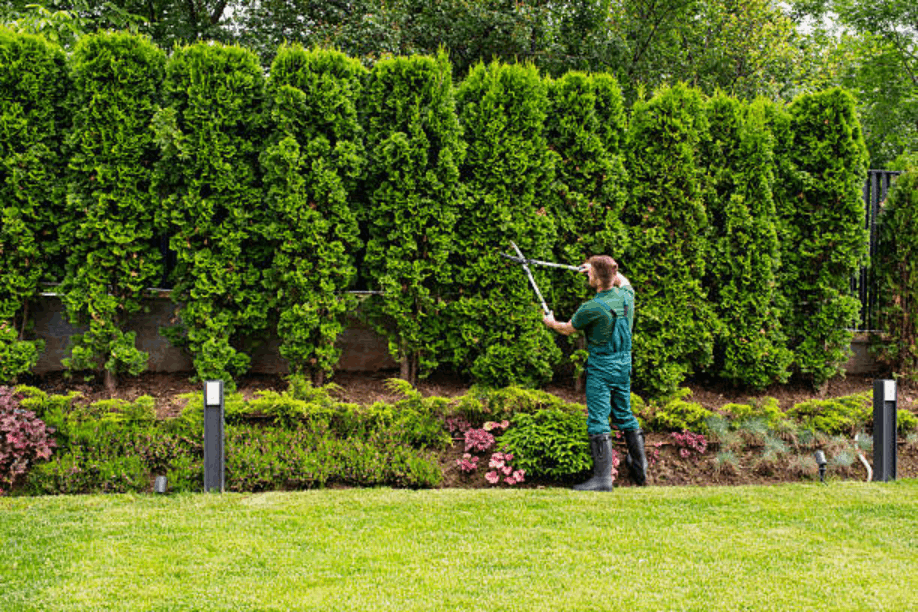
Look out at your front window. Are your trees looking a little wild? Are those bushes starting to swallow up your front porch?
We have all been there. You plant a cute, tiny shrub or a small sapling, and a few years later, it turns into a massive, overgrown monster. When your landscaping gets out of hand, it does not just look messy. It can actually become a serious hazard.
Here in Wichita, the weather is intense. We deal with straight-line winds in the spring, blistering heat waves in the summer, and heavy, branch-breaking ice storms in the winter. If your trees and bushes are overgrown, weak, or full of dead wood, they simply are not going to survive the wild Kansas weather.
But taking care of your yard is more than just surviving storms. According to the USDA Forest Service, having mature, well-maintained trees can actually increase your overall property value by up to 10%. On the flip side, industry data shows that improper trimming can cut a tree’s lifespan in half by exposing it to diseases and rot.
If you want to protect your home’s value and keep your yard looking fantastic, you need to understand the basics of tree and hedge trimming in Wichita.
In this guide, we are going to break down exactly when to cut, how to make the right cuts, and the common mistakes you desperately need to avoid.
Understanding the Difference: Trimming vs. Pruning
People use the words “trimming” and “pruning” like they mean the exact same thing. But if you want a healthy yard, you need to know the difference.
Trimming is mostly about looks and clearance. When you use an electric hedge clipper to make your bushes look like a perfect square, or when you cut a tree branch because it is scraping against your roof, you are trimming. It is basically a cosmetic haircut for your plants.
Pruning is all about health and safety. Pruning means you are selectively removing specific branches to make the plant stronger. You prune away dead wood, diseased branches, and limbs that are rubbing together.
Whether you need basic shrub and tree trimming to clean up your walkways, or deep pruning to save a sick tree, the rules of how and when to cut are the same.
Timing is Everything: The Wichita Trimming Calendar
The biggest mistake homeowners make is walking outside on a nice Saturday in July and randomly chopping branches off their trees.
Trees are living things. When you cut a branch, you leave an open wound. If you make that cut at the wrong time of year, bugs and fungal diseases will march right into that wound and kill the tree.
For the vast majority of shade trees in Kansas like Elms, Hackberries, Maples, and Lindens. The absolute best time to prune is late winter (January through early March).
Why is winter the gold standard?
1. The tree is asleep. During the cold months, trees are dormant. They have pulled all their energy down into their roots. Cutting them now causes very little stress.
2. The bugs are gone. The insects and fungi that spread diseases are dead or sleeping.
3. You can see the branches. Without leaves in the way, it is incredibly easy to spot the dead, broken, or crossing branches that need to be removed.
However, there are a few exceptions to winter rules. Here is a quick cheat sheet for Wichita yards.
The Wichita Seasonal Trimming Guide
| Type of Plant | The Best Time to Trim | Why? |
| Most Shade Trees (Maple, Elm, Ash) | Late Winter (Jan – March) | The tree is dormant and bugs are inactive. Cuts heal faster before spring. |
| Spring Bloomers (Redbud, Lilac) | Late Spring (Right after they bloom) | If you cut in winter, you chop off all the spring flower buds! |
| Oak Trees | Deep Winter ONLY | Cutting Oaks in warm months invites deadly Oak Wilt disease. |
| Evergreen Bushes (Boxwood, Yew) | Early Spring (March – May) | Gives them time to push out fresh, green growth before the summer heat hits. |
The “Oak Wilt” Danger You Must Know About
Let’s talk specifically about Oak trees for a second, because this is literally a matter of life and death for your yard.
Oak Wilt is a highly aggressive, deadly fungus that is spreading quickly across the Midwest. It is carried by tiny sap beetles. When you trim an Oak tree, the fresh cut oozes sap. If you make a cut during the warm months (April through October), those beetles will smell the fresh sap, land on the tree, and infect it with Oak Wilt.
Once an Oak tree gets this disease, there is no cure. The tree will quickly die and have to be completely removed. Never, ever trim an Oak tree in Wichita during the spring, summer, or fall. Only touch them in the freezing dead of winter.
The Golden Rules of Tree Pruning
If you have a small tree that you can safely reach from the ground, you can absolutely do some light pruning yourself. But you must follow a few golden rules.
Rule 1: The 25% Rule
Leaves are basically tiny solar panels. They absorb sunlight and turn it into food for the tree’s roots. If you chop off too many branches at once, you are literally starving the tree to death. Never remove more than 25% of a tree’s living, green canopy in a single year.
Rule 2: Do Not Make Flush Cuts
Look closely at the spot where a branch attaches to the main tree trunk. You will see a slightly swollen, wrinkly ring of bark. This is called the “branch collar.”
The branch collar contains special cells that the tree uses to grow a scab over a cut. If you take a saw and slice a branch perfectly flat against the trunk, you cut the collar completely off. The tree will never heal. The wound will stay open forever, allowing water and rot to hollow out the inside of your tree. Always make your cut just outside that swollen collar.
Rule 3: Use the 3-Cut Method
If you try to cut a heavy, thick branch with just one slice from the top, you are going to ruin the tree. As you cut through the wood, gravity will take over. The heavy branch will snap and fall, ripping a massive strip of bark all the way down the trunk.
To stop this from happening, use the simple 3-cut method:
1. The Undercut: Make a small cut on the bottom of the branch, about a foot away from the trunk. Cut about one-third of the way up.
2. The Top Cut: Move your saw an inch further out, and cut straight down from the top. The branch will snap cleanly and fall to the grass, leaving a short stub. The undercut stops the bark from peeling down the tree.
3. The Clean-Up Cut: Now that the heavy weight is gone, carefully saw the remaining stub off, right next to the branch collar.
Safety First: When to Put the Tools Down
Knowing your limits is the smartest thing a homeowner can do. You might feel confident with a pair of hand snips, but there are certain situations where you must step away and call a professional.
DIY Trimming vs. Calling a Pro
| The Situation | Can I Do It Myself? | Why? |
| Small dead twigs at eye level | Yes, absolutely. | Safe and easy to reach from the ground. |
| Shaping a 4-foot tall hedge | Yes, go for it. | Manageable height with standard hedge clippers. |
| Branch requires a ladder to reach | Call a Pro | Chainsaws and ladders are a deadly combination. |
| Tree is touching a power line | Call a Pro | Extreme risk of instant, fatal electrocution. |
| Branch is as thick as your leg | Call a Pro | The heavy weight can easily crush you or your house. |
Why You Should Trust Kansas Tree Experts
Never mess with power lines. If a tree is tangled in the wires running to your house, do not try to bat the branches away with a broom. Call your local utility company immediately to make the area safe.
Taking care of the plants on your property does not have to be a guessing game. By waiting until the dormant winter season, making clean cuts outside the branch collar, and keeping your bushes wider at the bottom, you are setting your yard up for massive success. Treat your trees with respect, leave the heavy lifting to the local professionals, and enjoy the best-looking yard on your block!
Frequently Asked Questions
What is the best time of year to trim trees in Wichita?
For most shade trees, late winter (January to early March) is the best time. The tree is asleep, bugs are inactive, and without leaves, it is much easier to see the structure of the branches.
How do I stop the bottom of my hedges from dying?
You must trim your hedges so the bottom is slightly wider than the top. If the top is too wide, it blocks sunlight from reaching the lower branches, causing the bottom leaves to slowly die and fall off.
Should I use black wound paint after cutting a tree branch?
No, do not use wound paint or tar. Studies show that painting a cut actually traps moisture inside the wood, which causes rot and feeds fungus. Let the tree heal itself naturally with fresh air.
Can I trim a tree that is touching a power line?
Never, under any circumstances, try to trim a branch near a power line. Electricity can easily jump through the moisture in the wood. Call your local utility company immediately to handle the lines safely.
How much of my tree can I safely cut off?
You should never remove more than 25% of a tree’s living, green canopy in a single year. Cutting off too many leaves starves the tree’s roots, causing severe stress and leading to dangerous, weak regrowth.
Why shouldn’t I trim my oak tree in the summer?
Trimming Oak trees during warm months attracts sap-feeding beetles that carry a deadly disease called Oak Wilt. Once infected, the tree cannot be cured and will die. Only trim Oaks in the dead of winter.

