
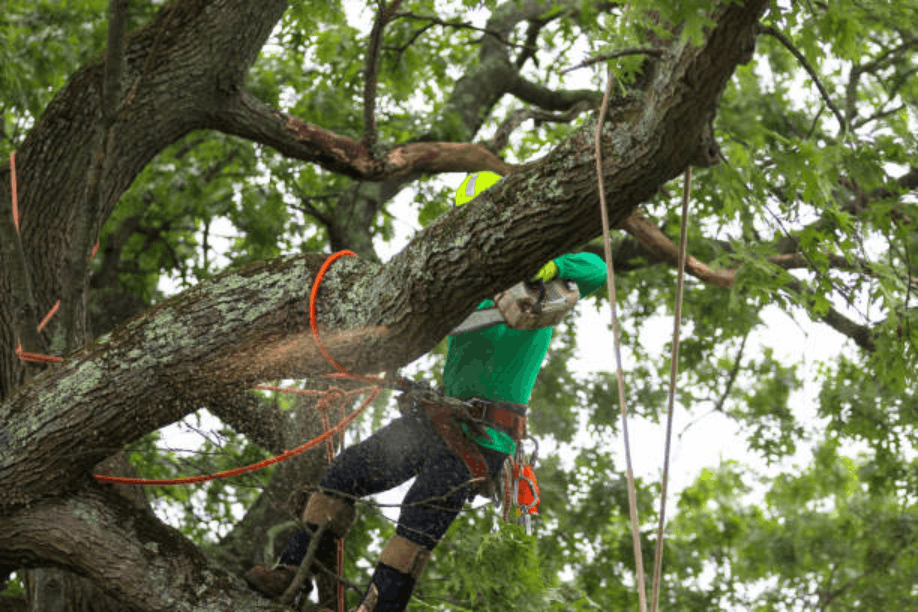
Tree removal can be a significant expense, especially when a tree is large, damaged, difficult to access, or located close to a home or utility line. Because of this, many property owners search for free tree removal services when they have a hazardous or unwanted tree.
But are these services actually available?
Free tree removal is possible in certain situations, but it is not usually a standard service for healthy trees located on private residential property. The cost may sometimes be covered by an insurance policy, utility company, local government, property owner, or assistance program. In other cases, a company may offer reduced-cost removal under specific circumstances.
Understanding who is responsible for the tree, why it needs to be removed, and whether the situation qualifies for financial assistance can help property owners avoid unexpected expenses.
What Are Free Tree Removal Services?
Free tree removal services generally refer to situations where the property owner does not have to pay the normal cost of removing a tree.
However, “free” does not necessarily mean that nobody pays for the work. In many cases, another organization or party covers the cost.
For example, a utility company may remove a tree that is interfering with its power lines. Similarly, an insurance company may pay for certain tree removal expenses after a covered storm damages a tree.
A local government may also remove trees located on public property, although this usually does not extend to privately owned trees.
Before assuming that a tree can be removed at no cost, it is important to determine who owns the tree, where it is located, why it needs to be removed, and what caused the problem.
When Can Tree Removal Be Free?
There are several circumstances where a property owner may not have to pay the full cost of tree removal.
Storm-Damaged Trees
Severe storms can cause trees to fall, split, or become unstable. When a tree damages a home or another insured structure, homeowners insurance may cover certain removal expenses depending on the policy.
Coverage varies significantly between policies. Some policies may cover removal when a fallen tree causes covered property damage, while removal of a tree that falls without damaging an insured structure may have different coverage rules.
Always check the specific terms of your policy before assuming that removal is covered.
Trees Near Utility Lines
Trees that interfere with electrical lines can create serious safety concerns. Depending on the circumstances, the utility company may handle vegetation management around its infrastructure.
However, this does not mean every tree near a utility line will be removed for free.
Responsibility can depend on the location of the tree, ownership of the property, the type of utility infrastructure involved, and the company’s vegetation-management policies.
If a tree is touching or dangerously close to power lines, property owners should avoid attempting to cut it themselves and contact the appropriate utility provider.
Public or Municipal Trees
A tree located in a public right-of-way, park, or other government-controlled area may be the responsibility of the city or another public agency.
In these cases, the property owner may not be responsible for removal.
The important distinction is tree ownership. A tree growing near a sidewalk is not automatically owned by the municipality. Local rules can determine where public responsibility begins and private responsibility ends.
Insurance-Covered Tree Removal
Homeowners insurance can sometimes help with tree removal following a covered event.
For example, a tree that falls during a covered storm and damages a house, garage, or other insured structure may qualify for coverage.
Coverage can depend on:
- The cause of the tree failure
- The type of damage
- Policy exclusions
- Deductibles
- Coverage limits
- Whether the tree damaged an insured structure
Insurance generally should not be assumed to cover routine removal of healthy trees simply because the owner wants them removed.
Community Assistance Programs
Some communities, nonprofit organizations, or local programs may provide assistance with hazardous tree removal for qualifying property owners.
Availability varies by location and eligibility requirements. These programs may prioritize situations involving safety risks, vulnerable residents, storm damage, or other specific circumstances.
Because these opportunities are location-specific, checking with local authorities and community organizations can be worthwhile.
Property Development or Land-Clearing Arrangements
In some situations, tree removal can be included in a larger construction, landscaping, or land-clearing project.
For example, a contractor may include removal costs within the overall project price rather than charging a separate tree-removal fee.
This is different from receiving a genuinely free tree removal service, but it can reduce the direct cost associated with individual tree removal.
When Is Free Tree Removal Usually Not Available?
Free removal is generally less likely when a healthy tree is located entirely on private property and there is no covered event or third-party responsibility.
Common examples include:
- Removing a healthy tree for landscaping reasons
- Removing a tree because it blocks a preferred view
- Removing trees before routine property improvements
- Removing trees that are simply unwanted
- Preventive removal without an immediate hazard
- Removing healthy trees to create additional yard space
In these situations, the property owner will generally need to pay for the service.
This is why it is useful to distinguish between free tree removal and affordable or low-cost tree removal.
What Does Tree Removal Usually Cost?
The cost of tree removal can vary considerably. There is no single price that applies to every property.
Several factors influence the final estimate.
| Cost Factor | Why It Matters |
|---|---|
| Tree size | Larger trees generally require more labor and equipment |
| Tree condition | Dead, split, or unstable trees can require additional safety measures |
| Tree location | Trees near buildings, roads, or utility lines may require careful removal |
| Accessibility | Limited access can increase labor and equipment requirements |
| Number of trees | Removing several trees may change the overall project cost |
| Stump removal | Grinding or removing the remaining stump is usually a separate consideration |
| Cleanup | Hauling branches, logs, and debris can affect the total price |
| Permits | Some locations may require permission before removal |
A professional assessment is often the best way to understand the actual cost because photographs or general size estimates may not reveal access or safety issues.
How to Find Legitimate Free or Low-Cost Services


If you are searching for tree removal services, start by determining whether another party may be responsible for the tree or the expense.
1. Check Your Homeowners Insurance
Review your policy or contact your insurance provider if the tree was damaged by a storm or another potentially covered event.
Ask specifically:
- Is tree removal covered?
- What circumstances qualify?
- Is there a coverage limit?
- Does the tree need to damage a covered structure?
- Does my deductible apply?
Getting these answers before arranging work can help prevent misunderstandings.
2. Contact the Utility Company
If a tree is interfering with electrical or other utility infrastructure, contact the relevant utility provider.
Do not attempt to trim or remove a tree that is touching power lines. Trees and branches can conduct electricity, creating a potentially life-threatening hazard.
3. Contact Local Authorities
If you believe the tree may be located in a public right-of-way, contact the appropriate city or county department.
Ask whether the tree is considered public or private property and whether the local authority is responsible for maintenance or removal.
4. Search for Local Assistance Programs
Check whether nonprofit organizations, community groups, or local programs provide tree-related assistance.
Eligibility may depend on factors such as:
- Property location
- Safety concerns
- Storm damage
- Household circumstances
- Tree condition
Because programs change, verify current requirements directly with the organization offering assistance.
5. Get Written Estimates
If you need to pay for removal, compare written estimates from qualified tree service providers.
An estimate should clearly explain what is included, such as:
- Tree removal
- Limb and branch removal
- Log disposal
- Cleanup
- Stump grinding
- Additional equipment
- Permit-related costs
A written scope helps you compare services rather than focusing only on the advertised price.
Questions to Ask Before Accepting Free Tree Removal
An offer that sounds free should still be evaluated carefully.
Ask the following questions before agreeing to the work:
Who Is Paying for the Service?
Find out whether the cost is being covered by an insurance company, utility provider, government program, contractor, or another party.
Is Everything Really Included?
Some offers may cover cutting down the tree but exclude stump removal, hauling, or cleanup.
Ask what happens to the branches, logs, and debris after the tree is removed.
Are There Any Additional Fees?
Confirm whether you could be charged for equipment, disposal, emergency service, permits, or other work.
Is the Tree Service Insured?
Tree removal can involve significant risks to people and property. Ask whether the company carries appropriate insurance and whether the work will be performed by trained personnel.
Are Permits Required?
Some municipalities regulate tree removal, particularly for protected trees or trees located in specific areas.
Check local requirements before work begins.
Free Tree Removal vs. Low-Cost Tree Removal
The terms can sound similar, but they describe different situations.
Free tree removal means the property owner does not directly pay for the qualifying service.
Low-cost tree removal means the property owner pays, but the service is offered at a reduced or competitive price.
For many homeowners, low-cost removal is more realistic than completely free removal.
A good approach is to investigate possible coverage first and then compare estimates if you are responsible for the cost.
This can help you avoid choosing an unreliable provider simply because the service is advertised as free.
What to Watch for With “Free” Tree Removal Offers
Not every “free” offer is necessarily what it appears to be.
Hidden Charges
A company may advertise free removal but charge for services such as stump grinding, debris hauling, or cleanup.
Always ask for the complete price before work begins.
Unlicensed or Uninsured Contractors
Low or no-cost services should not mean ignoring basic safety considerations.
Ask about insurance and qualifications before allowing someone to work on a hazardous tree.
Upfront Payment Requests
%0

