
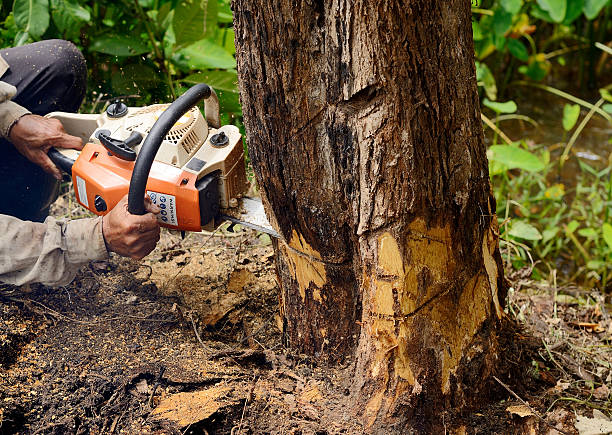
Commercial tree removal Wichita refers to the removal of trees located on business properties, apartment complexes, HOAs, commercial lots, offices, retail properties, and other managed properties in the Wichita area.
Commercial tree removal Wichita KS can be more complex than removing a tree from a typical residential yard. Businesses may have parking lots, sidewalks, buildings, signs, landscaping, utility infrastructure, customers, employees, tenants, and delivery vehicles operating around the property.
Because of these conditions, the removal process generally requires planning before cutting begins. The tree’s size, condition, location, access, nearby structures, and the way the property is used can all affect the work.
Kansas Tree Experts provides commercial tree services in Wichita for commercial property owners, managers, builders, offices, apartment complexes, HOAs, and storefronts. Its listed services include tree removal, tree trimming, stump grinding, land and bush clearance, and emergency tree services.
Why Do Commercial Properties Need Tree Removal?
Trees can be valuable parts of commercial landscaping, but not every tree can or should remain indefinitely.
A commercial tree may eventually need removal because of structural problems, storm damage, disease, decline, location, or changes to the property.
Common situations include:
- A tree has sustained major storm damage.
- The trunk has significant decay or structural damage.
- Large branches have failed.
- A tree has become unstable.
- A dead tree is located near a frequently used area.
- A tree is interfering with a building or access area.
- The property is being renovated or redeveloped.
- A tree is obstructing necessary access.
- A previously damaged tree has continued to decline.
Tree removal should not automatically be the first solution. If a tree can reasonably remain through appropriate maintenance, trimming or other tree care may be considered instead.
The decision should be based on the condition of the tree and the circumstances surrounding the property.
When Should a Commercial Tree Be Removed?
There is no single rule that determines when every commercial tree should be removed. A property owner or manager should consider the tree’s condition, location, potential hazards, and future maintenance requirements.
Dead or Severely Declining Trees
A dead tree has no ability to recover and may become increasingly vulnerable to wind and other weather conditions.
However, even when removal appears necessary, the surrounding area should be evaluated before work begins.
Severe Storm Damage
Wichita properties can experience strong weather that may break branches or damage trees.
After a storm, property managers should look for:
- Broken branches
- Split trunks
- Hanging limbs
- Exposed roots
- Fallen trees
- Damaged trees leaning in unusual directions
Large or unstable trees should not be approached unnecessarily. Commercial properties should restrict access to potentially hazardous areas until the situation can be assessed.
Structural Problems
Cracks, cavities, significant decay, damaged roots, or major structural changes can indicate that a tree needs closer evaluation.
Not every visible defect means a tree must be removed. A qualified tree professional can assess whether removal, trimming, monitoring, or another approach is appropriate.
Location-Related Concerns
A tree may become problematic because of where it is located.
For example, a large tree may be positioned immediately beside:
- A commercial building
- A parking area
- A sidewalk
- A driveway
- A business entrance
- A sign
- An outdoor customer area
The location does not automatically make the tree unsafe, but it can increase the consequences if branches or the tree itself fail.
What Should You Expect During Commercial Tree Removal?
The exact process varies depending on the property and tree, but most commercial projects involve several stages.
1. Initial Tree Assessment
The first step is to assess the tree and surrounding property.
The assessment may consider:
- Tree size
- Tree condition
- Branch structure
- Trunk condition
- Root area
- Nearby buildings
- Vehicles
- Pedestrian areas
- Utility infrastructure
- Available equipment access
- Potential obstacles
The goal is to understand the scope of the removal before work begins.
2. Removal Planning
Once the tree and site have been assessed, the removal approach can be planned.
A commercial site may require more detailed planning because the tree may be surrounded by structures or areas that cannot easily be closed.
The plan may consider where equipment will be positioned, how sections of the tree will be lowered, where debris will go, and how people will be kept away from the work zone.
Kansas Tree Experts states that its commercial tree services are designed around commercial considerations such as timing, safety, property access, and minimizing disruption to businesses.
3. Preparing the Work Area
Before removal begins, the immediate work area should be controlled.
Depending on the property, preparation may involve:
- Moving vehicles
- Restricting pedestrian access
- Closing a section of a parking lot
- Protecting nearby landscaping
- Establishing equipment access
- Keeping employees and customers away from the work zone
For a busy commercial property, this stage can be especially important.
4. Tree Removal
The actual removal method depends on the size, condition, location, and surroundings of the tree.
A tree may be removed in sections rather than being allowed to fall as one piece. This can provide greater control when buildings, parking areas, landscaping, or other obstacles are nearby.
Larger or more complicated removals may require specialized equipment and rigging methods.
The removal team should account for where each section of the tree will go and how equipment will move around the site.
5. Debris Cleanup
Tree removal creates branches, logs, leaves, and other debris.
Cleanup should be discussed before the project begins so the property owner understands what is included.
For commercial properties, cleanup is particularly important because leftover debris can interfere with:
- Parking
- Sidewalks
- Building entrances
- Landscaping
- Employee access
- Customer access
- Routine property maintenance
Kansas Tree Experts lists cleanup as part of its commercial tree service approach and states that its commercial work is planned around minimizing disruption to businesses.
6. Stump Grinding
Removing the visible portion of a tree does not necessarily remove the stump.
If the stump remains, it may interfere with landscaping, mowing, pedestrian movement, or future use of the area.
Stump grinding reduces the remaining stump below the surrounding grade. The resulting area can then be prepared for future landscaping or another appropriate use.
Kansas Tree Experts lists stump grinding as one of its available tree services.
What Factors Affect Commercial Tree Removal?
The cost and complexity of commercial tree removal vary from property to property.
Some of the main factors include:
| Factor | Why It Matters |
|---|---|
| Tree size | Larger trees generally require more equipment and planning |
| Tree condition | Damaged or unstable trees can require additional precautions |
| Location | Trees near buildings or parking areas require careful planning |
| Accessibility | Limited access can affect equipment positioning |
| Nearby structures | Buildings, signs, fences, and landscaping may require protection |
| Number of trees | Multiple trees increase the overall project scope |
| Debris | Larger trees produce more material to process and remove |
| Stump | Stump grinding may be an additional part of the project |
| Scheduling | Commercial properties may require work around operating hours |
| Emergency conditions | Storm-damaged trees may require faster response |
For this reason, an on-site assessment is generally more useful than trying to determine the exact requirements from photographs or a general price list.
Commercial Tree Removal vs. Tree Trimming


Tree removal and tree trimming serve different purposes.
Tree trimming involves removing selected branches while leaving the tree standing. It may be used to address clearance, dead branches, overgrowth, or other maintenance requirements.
Tree removal involves taking down the entire tree.
The difference can be summarized as follows:
| Tree Trimming | Tree Removal |
|---|---|
| Removes selected branches | Removes the entire tree |
| Tree remains in place | Tree is taken down |
| Often used for maintenance | Used when removal is necessary |
| Can address clearance issues | Eliminates the tree and its future maintenance needs |
| May be part of routine care | Often requires more extensive planning |
Property owners should avoid assuming that a damaged tree automatically requires complete removal. An appropriate assessment can help determine whether trimming or removal makes more sense.
How Is Commercial Tree Removal Planned Around Businesses?
One of the biggest differences between commercial and residential tree work is the need to coordinate with property operations.
A business may have customers entering the property throughout the day. An apartment complex may have tenants walking between buildings. A retail property may have constant vehicle movement.
For this reason, the timing and location of tree work matter.
Property managers can help by providing information about:
- Business hours
- Parking restrictions
- Delivery schedules
- Pedestrian traffic
- Building entrances
- Restricted areas
- Tenant requirements
- Property access points
The tree service provider can then use this information when planning the work.
For larger commercial projects, property managers may also need to notify employees, tenants, customers, or other people who use the property.
Safety Considerations for Commercial Tree Removal
Safety should be considered before, during, and after tree removal.
Commercial tree removal can involve heavy branches, equipment, elevated work, falling debris, and restricted work zones.
Property owners should not allow employees or customers to enter the active removal area.
Additional considerations include:
Keep Vehicles Away
Vehicles should be moved away from the tree and equipment whenever possible.
Restrict Pedestrian Access
Sidewalks, entrances, and other walking areas may need temporary restrictions while removal is taking place.
Identify Nearby Structures
The removal team should know about buildings, fences, signs, landscaping, and other features located near the tree.
Consider Utility Lines
Trees located near utility infrastructure require additional planning. Property owners should identify known utility concerns before work begins.
Keep the Work Area Clear
Employees should not attempt to help with cutting, moving branches, or handling equipment unless they are part of the qualified work crew.
How Can You Prepare for Commercial Tree Removal in Wichita?
Property managers can take several practical steps before the scheduled work.
Notify People Using the Property
Employees, tenants, and customers may need advance notice if parking, entrances, or walkways will be affected.
Clear Parking Areas
Move vehicles away from the tree and planned equipment area.
Identify Access Points
Make sure the tree service provider knows where equipment can enter the property.
Discuss Landscaping
Inform the tree service about landscaping features that need special attention.
Confirm the Scope of Work
Before work begins, confirm whether the project includes:
- Tree removal
- Debris cleanup
- Stump grinding
- Wood removal
- Branch removal
- Additional trimming
Having the scope clearly defined can reduce confusion later.
How to Choose a Commercial Tree Removal Service
When comparing companies for commercial tree removal Wichita KS, property owners should focus on the scope of work, safety practices, insurance, experience with commercial properties, and communication.
Verify Insurance and Licensing
Ask whether the company is properly licensed and insured. Kansas Tree Experts identifies itself as licensed and fully insured on its website.
Request a Detailed Estimate
The estimate should identify the work being performed and clarify whether cleanup or stump grinding is included.
Ask About Commercial Experience
Commercial sites often have different access and scheduling requirements than residential properties. Ask whether the provider regularly works with businesses, HOAs, apartment properties, or property managers.
Discuss Scheduling
If the property has high customer or tenant traffic, discuss when the work can be performed with the least disruption.
Ask About Cleanup
Confirm how branches, logs, and other tree debris will be handled after removal.
Commercial Tree Removal Wichita KS: Local Considerations
Wichita commercial properties vary significantly. Some businesses have large parking lots, while others have trees close to buildings, sidewalks, entrances, and landscaped areas.
This means commercial tree removal Wichita KS should be approached as a site-specific project rather than a one-size-fits-all service.
Kansas Tree Experts is based in Wichita and lists commercial tree services as one of its primary service categories. Its website identifies businesses, apartment complexes, HOAs, and storefronts among the types of commercial properties it serves.
The company also lists tree removal, trimming, stump grinding, land and bush clearance, and emergency tree services as available services.
For Wichita property managers, this means a commercial tree project can potentially be coordinated with other required tree maintenance rather than treating every issue as a separate task.
Conclusion
Commercial tree removal requires careful planning because trees on business properties are often surrounded by buildings, parking areas, sidewalks, landscaping, employees, customers, tenants, and vehicles. Understanding the process can help property owners prepare for the work and reduce unnecessary disruption.
For commercial tree removal Wichita KS, the process may include an initial assessment, removal planning, work-area preparation, controlled tree removal, debris cleanup, and optional stump grinding. The exact approach depends on the tree and property.
Kansas Tree Experts provides commercial tree services in Wichita, including tree removal, tree trimming, stump grinding, land and bush clearance, and emergency tree services.
If you are managing a commercial property and need to evaluate a tree removal project, contact us to discuss the property requirements and request an estimate
Frequently Asked Questions
What is commercial tree removal?
Commercial tree removal is the process of removing trees from business properties, apartment complexes, HOAs, commercial lots, and other managed properties. The work involves assessing the tree, planning the removal, controlling the work area, removing the tree, and handling the resulting debris.
How do I know if a commercial tree needs to be removed?
A tree may require removal when it is dead, severely damaged, structurally compromised, unstable, or creating a significant property concern. An assessment can help determine whether removal or another form of tree care is appropriate.
How long does commercial tree removal take?
The timeframe depends on tree size, number of trees, location, access, weather, equipment requirements, and site conditions. A single accessible tree may take less time than multiple large trees located near buildings or active parking areas.
Does commercial tree removal include stump grinding?
It depends on the service agreement. Stump grinding can be included as part of a tree removal project, but property owners should confirm whether it is included in the estimate.
Can tree removal be performed while a business is open?
It may be possible depending on the property’s layout and the work required, but active tree removal can affect parking, sidewalks, entrances, and other areas. Scheduling should be discussed in advance to determine how the work can be performed safely.
What happens to the tree after removal?
The tree is generally cut into manageable sections, and the resulting branches and wood are handled according to the agreed scope of work. Property owners should ask whether debris removal is included.
Should I remove a tree after a Wichita storm?
Not necessarily. Storm damage should first be assessed. If a tree has fallen or has broken branches, restrict access to the affected area and arrange for an appropriate tree service evaluation.
Is commercial tree removal different from residential tree removal?
Yes. The basic removal principles are similar, but commercial properties often have more people, vehicles, structures, access restrictions, and operational requirements around the work area.
How much does commercial tree removal cost in Wichita KS?
There is no single price because commercial tree removal depends on factors such as tree size, condition, location, accessibility, equipment, number of trees, cleanup, and stump grinding. An on-site assessment and written estimate can provide a more useful project-specific figure.

