
Have you ever planted a tree hoping it would thrive, but months or even years later, it still looks small, sparse, or tired? You watered it, you mulched it, and you waited patiently. Yet, while the rest of the neighborhood trees look like giants, yours is barely hanging on.
While there are plenty of reasons a tree might struggle to grow in the Midwest, one very common (and easily overlooked) issue is a severe nutrient deficiency. Just like people, trees need a balanced diet to survive. If the dirt in your yard doesn’t have the right mix of minerals, your tree will slowly starve.
Let’s look at the most obvious signs that your Wichita trees may need fertilization, why our local soil is so tricky, and exactly how you can get your trees the food they desperately need.
The Problem with Kansas Soil
Before we jump into the warning signs, you need to know what we are dealing with underground. Here in the Wichita area, our dirt is notoriously difficult. We have heavy, dense clay that holds water like a bathtub, which makes it hard for roots to breathe.
But the biggest issue is the level of pH. A local extension study noted that the soil pH in central Kansas can easily reach 7.5 or higher. That means our dirt is highly alkaline. When soil is that alkaline, it acts like a locked vault. The dirt might actually be full of essential nutrients like iron or manganese, but the high pH locks those nutrients away so the tree roots cannot absorb them.
So, how do you know if your tree is locked out of its own food supply? Look for these warning flags.
Signs Your Wichita Tree Needs Fertilization
1. Stunted or Slow Growth
A healthy, established tree should be putting on noticeable new growth every single year. While different species grow at different speeds, the average shade tree in Kansas should be growing between 12 and 24 inches in height annually.
If your tree isn’t expanding, or if the new twigs it pushes out in the spring are incredibly short and weak, something is wrong. Trees require massive amounts of energy to push out new branches. If they do not have enough nutrients to produce that energy, they go into survival mode. They stop growing taller and simply use whatever limited food they have just to stay alive. If your tree has looked the same size for three years, it is starving.
2. Yellowing or Discolored Leaves
Most trees are supposed to have bright, deep green leaves all spring and summer long. Green leaves are full of chlorophyll, which is what the tree uses to perform photosynthesis and feed itself.
If you walk outside in the middle of July and notice your tree leaves are turning pale, sickly yellow, you likely have a nutrient problem. In Wichita, this is almost always caused by a condition called Iron Chlorosis. Because of our high soil pH, trees like Pin Oaks, Silver Maples, and Sweetgums simply cannot pull iron out of the dirt. The leaves turn yellow, but the veins of the leaf will stay dark green. Adding a professional liquid iron fertilizer to the soil can help these trees recover their beautiful green color.
3. A Sparse Canopy or Premature Leaf Drop
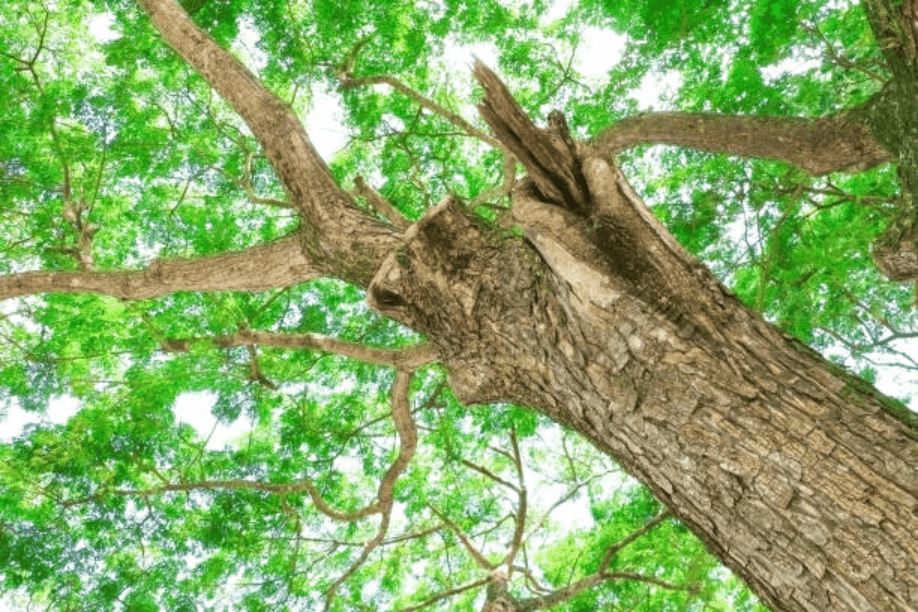
Stand under your tree and look up at the sky. A healthy tree should have a thick, dense canopy of leaves that blocks out most of the sunlight. If you can easily see the sky straight through the branches, or if the canopy just looks incredibly thin and sparse, your tree lacks the energy to create enough leaf buds.
Another major warning sign is the premature leaf drop. If it is August and your tree is already dropping brown, crispy leaves all over the grass, it is severely stressed. Without the right nutrients to sustain those leaves through the hot Kansas summer, the tree will just drop them to conserve water and energy.
4. Dead or Dying Branches
When a nutrient deficiency goes ignored for several seasons, the tree has to make a tough choice. It doesn’t have enough food to feed its entire massive body, so it starts sacrificing its own limbs to keep the main trunk alive.
You will start to notice dead, bare branches appearing near the very top of the canopy, or scattered dieback on the outer edges of the tree. Dead branches are a massive red flag. While dieback can also be caused by root damage, bugs, or fungal diseases, it almost always points to a tree that needs professional help immediately before the rot spreads to the trunk.
5. Fewer Flowers or Poor Fruit Production
If you planted a gorgeous ornamental tree like an Eastern Redbud or a Dogwood, you did it because you wanted to see those brilliant spring flowers. But flowering takes an incredible amount of energy.
If your tree barely pushes out any blossoms, or if the flowers look small, pale, and drop off after just a few days, a lack of soil nutrients is usually the culprit. The exact same rule applies to fruit trees like apples or peaches. If an apple tree is struggling to survive in poor dirt, it isn’t going to waste its precious energy growing big, juicy apples. The fruit will be tiny, deformed, or simply won’t grow at all.
6. A Young Tree Still Getting Established
When you buy a sapling from a local nursery, it usually lived its entire life in a perfect, nutrient-rich potting mix. Then, you bring it home and stick it into the hard, heavy Wichita clay. It is a massive shock to the system.
Young trees do not have the massive, deep root systems that older trees have. They can only drink the water and nutrients that are sitting inches away from their tiny root ball. If the dirt in your front yard is poor, that young tree will struggle to establish itself. (Note: Most experts suggest waiting a full year before fertilizing a brand-new sapling to let it adjust to the shock of planting. After that first year, giving it a boost is a great idea!)
Always Get a Soil Test First
If you notice one or two of those warning signs in your yard, your first instinct might be to run to the hardware store and buy a giant bag of generic fertilizer.
Please don’t do that.
Guessing what your tree needs is a recipe for disaster. Yellow leaves could mean a lack of iron, but they could also mean the tree is overwatered, or that it has a bug infestation. If you dump nitrogen fertilizer on a tree that needs iron, you can chemically burn the roots and kill the tree faster.
Before you add anything to your dirt, get a professional soil test. Skip the cheap DIY kits at the big box stores. You can send a dirt sample to the Kansas State Soil Testing Lab (often facilitated through the Sedgwick County Extension Office) for a very small fee. They will send you a highly accurate, detailed report showing exactly what your soil has, what it is missing, and what the pH level is.
Decoding Tree Nutrient Deficiencies
Here is a quick cheat sheet on what specific nutrient shortages look like in Midwest trees.
| The Missing Nutrient | What Happens to the Tree | Why It Matters |
|---|---|---|
| Iron | Leaves turn pale yellow or white, but the veins stay dark green. | Super common in Kansas due to high soil pH locking the iron in the dirt. |
| Nitrogen | The entire leaf turns a light, sickly yellow, and growth stops completely. | Nitrogen is the main engine for pushing out new, green leafy growth. |
| Phosphorus | Leaves might turn a strange dark green or get a purple/red tint on the edges. | Trees need this to grow deep, strong anchor roots and produce flowers. |
| Potassium | The edges of the leaves look brown and burned, curling inward. | Essential for helping the tree survive severe winter freezes and summer droughts. |
The Timing: When Should You Fertilize?
Just as important as what you feed your trees is when you feed them. If you feed a tree at the wrong time of year, you can actually cause massive damage.
The absolute best time to fertilize trees in the Wichita area is in the late fall (October through early December). During the fall, the tree is no longer wasting energy trying to grow new leaves. Instead, it is sending all its energy underground to grow its roots. When you inject fertilizer in the fall, the tree stores those nutrients like a bear storing fat for the winter. When spring arrives, it uses those massive reserves to push out an incredibly healthy, full canopy.
Early spring is the second-best time, giving the tree a nice kickstart right before the buds open.
However, you should never fertilize a tree in the middle of a brutal summer drought. Fertilizers are basically salts. If you put fertilizer in bone-dry soil, it will pull whatever tiny amount of moisture is left directly out of the roots, causing severe chemical burns. Trees need plenty of water to process fertilizer safely.
The Tree Feeding Calendar
Not sure when to call the pros? Keep this simple schedule in mind.
| The Season | Should You Fertilize? | The Reasoning |
|---|---|---|
| Late Fall | Yes (Best Time) | Builds massive nutrient reserves in the root system over the winter. |
| Early Spring | Yes (Great Time) | Provides a strong kickstart right before the leaves begin to bud. |
| Mid-Summer | No (Avoid) | The severe Kansas heat makes fertilizer burn highly likely. |
| During a Drought | Absolutely Not | The lack of water means the fertilizer will scorch and kill the roots. |
Bringing a sick, yellowing tree back to life doesn’t happen overnight. But by paying attention to the warning signs like early leaf drops or stunted twigs and getting a proper soil test, you can stop the decline. Ditch the cheap spikes, hire a pro to inject the good stuff deep into the dirt, and watch your yard transform next spring.
Don’t Let Your Trees Starve: Call Kansas Tree Experts
When your trees look tired, off-color, or completely stalled out, you need a local crew who actually understands the weird, heavy dirt we have here in Sedgwick County.
That is exactly why Kelly Tunnell built Kansas Tree Experts. We are not an out-of-town franchise; we are your local Wichita neighbors. With over 25 years of hands-on experience in the tree care industry, we know exactly what it takes to make struggling trees thrive in our harsh climate.
If you want to breathe new life into your tired landscaping, we would love to help you out. Contact us to schedule a consultation. Let’s get your trees healthy, green, and growing again!
Frequently Asked Questions
When is the best time to fertilize my trees in Wichita?
The absolute best time is late fall. Fall fertilization allows the tree to expand its root system and store massive nutrient reserves over the winter. Early spring is also a fantastic time to provide a quick kickstart before the growing season begins.
Can fertilizing during a summer drought save my dying tree?
No, it will make it worse! Trees need plenty of water to process nutrients safely. Fertilizing dry soil will chemically burn the roots and force the tree to waste its precious water reserves. Wait until regular rainfall returns to fertilize.
Do every single one of my trees need regular fertilizer?
No. Most mature, established trees in healthy native soil do perfectly fine without supplemental feeding. However, trees trapped in poor urban soil or surrounded by concrete often need a boost to replace the natural decomposing matter they are missing.
How do I know if my tree has iron chlorosis?
Look closely at the leaves in the middle of summer. If the main leaf turns a pale, sickly yellow or white, but the veins inside the leaf remain dark green, your tree is likely suffering from an iron deficiency.
Can I just buy fertilizer spikes from the hardware store?
You can, but they are highly ineffective for large trees. Spikes only deposit nutrients in a tiny, shallow area of dirt. Deep-root liquid fertilization performed by a professional distributes the food evenly across the tree’s entire root zone for maximum absorption.
Where should I get my soil tested in Kansas?
Skip the cheap DIY kits. Send a small dirt sample to the Kansas State Soil Testing Lab, which you can easily coordinate through the Sedgwick County Extension Office. They provide highly accurate readouts of your pH and missing nutrients.

