
Removing a tree from your property does not always mean the job is finished. Once the trunk and major branches are gone, the remaining stump can continue to occupy valuable space in the yard. Over time, it may become difficult to mow around, create a tripping hazard, interfere with landscaping, or attract unwanted insects and fungi.
For Wichita property owners, understanding the available options before arranging stump work can make the process easier. Stump removal Wichita services can involve complete extraction of the stump and major roots, while stump grinding generally involves reducing the stump below ground level so the area can be restored.
The right approach depends on what you plan to do with the property afterward, the size and location of the stump, access for equipment, and the condition of the surrounding landscape.
What Is Stump Removal?
Stump removal is the process of taking a remaining tree stump out of the ground after a tree has been cut down or removed.
A stump is connected to a root system beneath the soil. Depending on the tree species, age, size, and growing conditions, that root system can extend considerably beyond the visible stump.
Complete removal may involve:
- Cutting and excavating around the stump
- Removing the main stump
- Extracting larger roots
- Filling the resulting hole
- Clearing wood debris and soil
- Preparing the area for future landscaping
However, not every property requires complete extraction. In many situations, stump grinding Wichita services may be more practical.
What Is Stump Grinding?
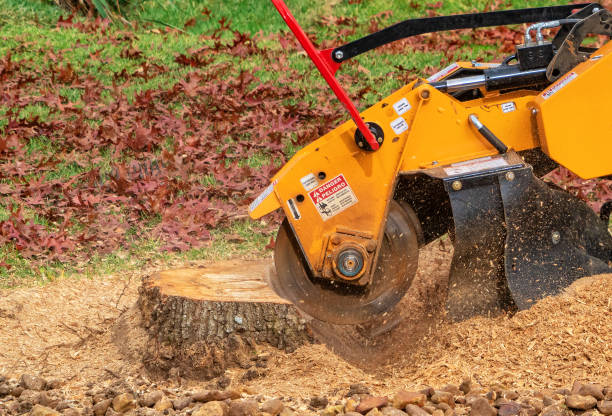
Stump grinding uses specialized equipment to mechanically reduce a stump into wood chips. The stump is typically ground below the surrounding soil level, allowing the area to be covered with soil and used for landscaping.
Grinding does not normally remove the entire underground root system. Instead, it focuses on eliminating the visible stump and creating usable surface space.
For a homeowner who wants to install grass, create a garden bed, or improve the appearance of a yard, grinding may provide a suitable solution without excavating a large area.
Stump Removal vs. Stump Grinding
The terms stump removal and stump grinding are sometimes used interchangeably, but they describe different processes.
| Factor | Stump Removal | Stump Grinding |
|---|---|---|
| Main objective | Remove the stump and major roots | Reduce the stump below ground level |
| Root removal | More extensive | Limited |
| Ground disturbance | Usually greater | Usually less |
| Equipment | Excavation tools and other equipment | Stump grinder |
| Cleanup | May produce a larger amount of soil and wood debris | Primarily produces wood chips |
| Best suited for | Projects requiring deeper excavation | Lawn and landscape restoration |
| Replanting | Useful when complete removal is required | May require additional consideration depending on location |
| Property impact | Can disturb surrounding soil | Generally more localized |
Neither method is automatically better for every property. The appropriate option depends on the condition and location of the stump and the property’s future use.
Why Should Wichita Property Owners Remove a Tree Stump?
Leaving a stump in place may seem harmless, especially if it is not located near a walkway or driveway. However, several practical issues can develop over time.
1. Stumps Can Become Tripping Hazards
An exposed stump can be difficult to see, particularly when grass or weeds grow around it. Children, visitors, and property occupants may trip over the stump or nearby roots.
The risk can increase as the stump deteriorates and develops uneven surfaces.
2. Stumps Take Up Landscaping Space
A stump can prevent property owners from using part of their yard as planned.
For example, a homeowner may want to:
- Expand a lawn
- Install a flower bed
- Plant another tree
- Add mulch
- Create a garden
- Install hardscaping
Removing or grinding the stump can make the area easier to redesign.
3. Decaying Wood Can Attract Pests
As a stump decomposes, it becomes a source of organic material. Depending on its condition and surroundings, decaying wood may provide a suitable environment for certain insects and fungi.
This does not mean every stump will automatically create a pest problem. However, property owners should consider the condition of the stump when deciding whether to leave it in place.
4. Stumps Can Interfere With Lawn Maintenance
Mowing around a stump can be inconvenient and may require additional trimming. A hidden stump can also damage landscaping equipment if it is accidentally struck.
Grinding the stump below ground level can make routine lawn maintenance easier.
5. Some Stumps May Produce New Growth
Certain trees can produce shoots from remaining roots or the stump itself. Grinding or removing the stump does not guarantee that every underground root will immediately disappear, but it can reduce the visible structure that supports unwanted regrowth.
Signs a Stump Should Be Removed
Not every stump requires immediate attention. However, property owners should consider removal or grinding when the stump:
- Is located along a frequently used walkway
- Interferes with mowing
- Is close to a driveway or parking area
- Is beginning to decay significantly
- Has visible fungal growth
- Is producing unwanted shoots
- Occupies space needed for landscaping
- Creates an obstacle around a children’s play area
- Is located where construction or hardscaping is planned
The condition and location matter more than simply how old the stump is.
How Does Stump Removal Work in Wichita?
The exact process varies according to the property and stump. A professional assessment generally starts by examining the stump’s size, location, condition, surrounding structures, and accessibility.
Step 1: Assess the Stump and Work Area
Before work begins, the area should be evaluated for nearby structures, fences, landscaping, utilities, irrigation systems, and other potential obstacles.
Access is also important because stump equipment needs enough room to reach the work area.
Step 2: Determine the Appropriate Method
The property owner and service provider can determine whether complete stump removal or grinding is more appropriate.
Grinding may be sufficient when the primary objective is to eliminate the visible obstruction. Complete removal may make more sense when the site needs deeper excavation or the remaining root structure presents a specific concern.
Step 3: Perform the Stump Work
For grinding, a stump grinder reduces the wood into smaller chips until the stump reaches the required depth.
For complete removal, excavation and cutting may be necessary to separate the stump and larger roots from the soil.
Step 4: Handle the Debris
Wood chips, soil, and larger pieces of wood may remain after the work. The cleanup requirements depend on the selected method and the property owner’s plans for the area.
Step 5: Restore the Area
Once the stump is addressed, the area may be filled and leveled. Depending on the property owner’s plans, the space can later be used for grass, plants, mulch, or another landscaping project.
What Affects Stump Removal Cost?
There is no single price that applies to every stump. A professional estimate generally depends on several factors.
| Cost Factor | Why It Matters |
|---|---|
| Stump diameter | Larger stumps generally require more work |
| Number of stumps | Multiple stumps increase labor and equipment time |
| Tree species | Wood density can affect grinding or cutting |
| Location | Tight or difficult areas can increase complexity |
| Accessibility | Equipment needs suitable access to the stump |
| Root spread | Extensive roots may require additional work |
| Soil conditions | Ground conditions can affect excavation |
| Cleanup | Additional debris handling may affect the overall job |
| Desired depth | Deeper grinding may require additional work |
| Future landscaping | Site preparation needs vary by project |
Property owners should ask what is included in an estimate rather than comparing prices based only on the initial number.
When Is the Best Time for Stump Removal?
Stump work can often be scheduled throughout the year, but the most practical timing depends on the property and the intended use of the area.
If a stump is creating an immediate safety problem, there is little reason to wait for a particular season.
For planned landscaping projects, removing or grinding the stump before installing new grass, plants, or hardscaping can simplify the project.
Wichita weather can also affect ground conditions. Wet or muddy soil may influence equipment access, while frozen ground can create different working conditions. A local tree service can assess the site and determine an appropriate schedule.
Can Property Owners Remove a Stump Themselves?
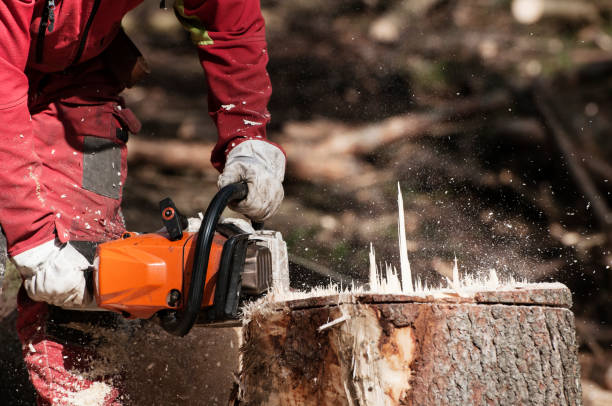
Small, accessible stumps may look like a manageable DIY project, but complete stump removal can be more difficult than it appears.
A stump is connected to underground roots, and digging around those roots can require substantial physical effort. Larger stumps may also require specialized equipment.
Chemical stump decomposition products can take considerable time and do not provide the same immediate result as mechanical grinding or removal.
Property owners should also consider the risk of damaging underground utilities, irrigation systems, nearby landscaping, or structures while digging.
For these reasons, professional assessment can be useful, particularly for large stumps or stumps located close to buildings, fences, utilities, or other structures.
What Happens After Stump Removal?
The next step depends on what the property owner wants to do with the space.
Planting Grass
If the stump is ground below the surface, the area can potentially be prepared for new grass. The wood chips may need to be removed or managed, and additional soil may be needed to restore the grade.
Creating a Garden Bed
The cleared space can potentially become part of a flower bed or planting area. Before planting a replacement tree, however, property owners should consider the previous tree’s location, remaining roots, and the requirements of the new species.
Installing Hardscaping
If the space will become part of a patio, walkway, retaining area, or other hardscape, the required depth and soil preparation should be discussed before the stump work begins.
Leaving the Area as Lawn
For a simple lawn restoration project, grinding may be a practical option because it reduces the visible stump and allows the surface to be regraded.
Choosing a Stump Removal Service in Wichita
When comparing companies for tree stump removal Wichita KS, property owners should look beyond price alone.
Consider asking:
Is the company insured?
Tree and stump work involves heavy equipment and property-specific risks. Confirming insurance coverage can help property owners understand who is responsible for potential damage or accidents.
What method will be used?
Ask whether the company recommends grinding or complete removal and why that method fits the property.
How deep will the stump be ground?
If the property will be landscaped afterward, the required grinding depth may be different from a situation where the area will simply remain covered with soil.
Is cleanup included?
Clarify whether the estimate includes removal of wood chips, excess soil, and other debris.
Are underground utilities considered?
The work area should be evaluated for potential utility conflicts before digging or operating equipment.
What will the property look like afterward?
Ask whether the company will leave the area level, whether additional soil is included, and what preparation will still be required for future landscaping.
How Kansas Tree Experts Approaches Stump Work
Kansas Tree Experts lists stump grinding among its tree-care services in Wichita, along with tree trimming, tree removal, commercial tree services, emergency tree services, and land and bush clearance.
For property owners considering stump work, Kansas Tree Experts can be a relevant local resource for understanding the available tree-care options and determining what type of work may be appropriate for a particular property. The company also describes stump grinding as a service that can prepare areas for replanting, sod, or landscaping improvements.
Property owners can learn more about available Wichita tree services through Kansas Tree Experts.
Stump Removal Considerations for Different Properties
The right approach can also depend on the type of property.
Residential Properties
Homeowners often remove stumps to improve lawn maintenance, reduce trip hazards, or create space for landscaping.
Rental Properties
Landlords and property managers may need to address stumps that interfere with tenant access, lawn care, or routine property maintenance.
Commercial Properties
Commercial properties may have additional concerns involving parking areas, pedestrian paths, signage, landscaping, and customer access. A stump located near a high-traffic area may require prompt attention.
Properties With Future Construction
If a property owner plans to build, install a structure, or add hardscaping near the stump, complete removal may need to be considered rather than simply grinding the visible portion.
Conclusion
A tree stump can remain on a property long after a tree has been removed, but property owners do not necessarily have to live with the obstruction. Stump removal Wichita options range from grinding the stump below the soil surface to more extensive extraction, depending on the property’s needs.
Before scheduling work, consider the stump’s size, location, condition, accessibility, and what you want to do with the space afterward. Comparing these factors can help determine whether grinding or complete removal makes more sense.
For Wichita property owners researching local stump and tree services, Kansas Tree Experts provides information about stump grinding as part of its broader tree-care services. If you need more information about the available options for your property, contact us through Kansas Tree Experts to discuss your tree-care needs and the appropriate next steps.
Frequently Asked Questions About Stump Removal Wichita
How much does stump removal cost in Wichita?
The cost varies based on stump diameter, location, accessibility, number of stumps, root conditions, equipment requirements, and cleanup. A site-specific estimate is the most reliable way to determine the expected cost.
Is stump grinding the same as stump removal?
No. Stump grinding reduces the visible stump below ground level, while complete stump removal involves extracting the stump and, depending on the situation, larger portions of its root system.
How deep should a stump be ground?
The appropriate depth depends on what will happen to the area afterward. A lawn restoration project may have different requirements from a future construction or hardscaping project.
Can a tree stump grow back after grinding?
Some tree species can produce shoots from remaining roots. Grinding removes the main visible stump, but underground roots can remain and may occasionally produce new growth.
How long does stump removal take?
The time depends on the stump’s size, number of stumps, accessibility, equipment, and selected removal method. A small, accessible stump may take much less time than several large stumps in difficult locations.
Is it better to remove a stump or grind it?
It depends on the property’s needs. Grinding is often suitable when the goal is to eliminate the visible obstruction and restore the surface. Complete removal may be more appropriate when deeper excavation or more extensive root removal is necessary.
Can I plant a new tree where an old stump was removed?
It may be possible, but the location should be evaluated first. Remaining roots, soil conditions, the previous tree species, and the requirements of the replacement tree can all affect the decision.
Should I remove a stump before landscaping?
If landscaping will occupy the same area, addressing the stump beforehand can make site preparation easier. The required method depends on the planned landscaping project.
Does stump removal eliminate all roots?
Not necessarily. Complete extraction can remove the stump and larger roots, but smaller roots may remain in the soil. Grinding primarily addresses the stump rather than the entire underground root network.
How do I choose a stump removal company in Wichita?
Look for a company with appropriate insurance, relevant equipment, experience with local properties, clear estimates, and a defined process for stump work and cleanup. Ask what method will be used and what is included in the quoted service.

