
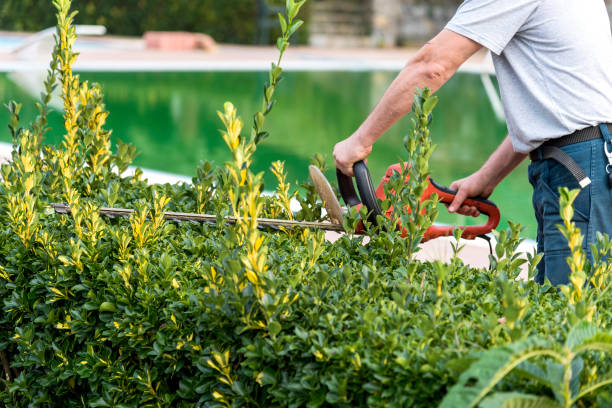
Trimming is an important part of maintaining trees and shrubs, but the two types of plants should not always be treated the same way. Shrub tree trimming involves different techniques, tools, safety considerations, and objectives depending on whether the work involves a woody shrub or a mature tree.
Homeowners may assume that trimming is simply a matter of cutting away unwanted growth. In reality, the way vegetation is pruned can affect its shape, structure, health, and future growth. Cutting too much, making poor cuts, or trimming at an unsuitable time can create problems that may take years to correct.
The main difference is scale and structure. Shrubs usually have multiple stems and are often maintained for shape, size, density, or appearance. Trees generally have a central trunk or a defined structural framework, and trimming often focuses on maintaining healthy branch structure, removing damaged growth, and managing clearance.
Kansas Tree Experts provides tree trimming services along with tree removal, stump grinding, shrub shaping, land and bush clearance, commercial tree services, and emergency tree services in Wichita and surrounding communities.
Understanding the difference between shrub trimming and tree trimming can help homeowners choose the appropriate approach for their landscape.
What Is Shrub and Tree Trimming?
Shrub and tree trimming both involve selectively removing plant growth, but the purpose and technique can be very different.
Shrub trimming generally focuses on controlling the size, shape, density, and appearance of shrubs. It may also remove dead, damaged, or crossing branches.
Tree trimming generally focuses more heavily on the tree’s structural branches, safety, clearance, and removal of dead or damaged limbs.
The distinction matters because a technique that works for a small shrub may not be appropriate for a mature tree.
For example, regularly shaping a hedge may involve frequent cuts across multiple stems. A mature tree usually requires more selective cuts that preserve its natural structure.
What Is Shrub Trimming?
Shrub trimming involves selectively cutting branches and stems to maintain or improve the shrub’s condition and form.
Depending on the plant and its purpose, trimming may be used to:
- Control excessive growth
- Maintain a desired shape
- Remove dead branches
- Improve airflow
- Reduce overcrowding
- Keep pathways clear
- Prevent growth from interfering with structures
- Encourage appropriate new growth
Some shrubs are naturally compact, while others can become large and woody if they are not maintained.
Shrub Shaping
Shaping is one of the most common reasons homeowners trim shrubs.
The goal is generally to maintain a balanced appearance without removing more plant material than necessary.
However, different shrubs respond differently to pruning. Some can tolerate regular shaping, while others may develop weak growth or poor form if repeatedly cut in the wrong way.
Removing Damaged Growth
Shrubs can develop dead or damaged branches because of weather, disease, pests, age, or mechanical damage.
Removing clearly damaged growth can help maintain the plant’s overall appearance and reduce the presence of dead material.
Controlling Size
Shrubs planted close to buildings, walkways, windows, or fences may eventually outgrow their available space.
Trimming can help control growth when the shrub is still suitable for the location.
If a shrub repeatedly grows beyond its available space, however, removal or replacement may be more practical than continual heavy trimming.
What Is Tree Trimming?
Tree trimming involves removing selected branches from a tree to address structural, health, safety, or clearance concerns.
Common reasons for tree trimming include:
- Removing dead branches
- Removing broken limbs
- Improving clearance
- Reducing interference with structures
- Managing selected growth
- Addressing crossing or rubbing branches
- Maintaining appropriate branch structure
Tree trimming requires more consideration because large branches can be heavy and may fall unpredictably if they are not properly controlled.
Structural Considerations
A mature tree has a complex branch structure. Removing a major branch can change how weight is distributed throughout the tree.
For this reason, tree trimming is generally more selective than simply cutting back visible growth.
The goal is not necessarily to make the tree smaller. Instead, appropriate pruning should address specific branches while preserving as much of the healthy structure as possible.
Clearance Trimming
Trees can grow toward buildings, roads, sidewalks, utility infrastructure, and other areas where branches may create clearance issues.
Selective trimming can help maintain appropriate clearance.
Homeowners should not attempt to trim branches near electrical lines. Utility-related tree work can involve serious electrical hazards and should be handled through appropriate professionals and utility procedures.
Shrub vs. Tree Trimming: Key Differences
Although both services involve pruning, several characteristics distinguish them.
1. Plant Structure
Shrubs commonly have multiple stems originating near the base. Trees typically develop a trunk and larger structural limbs.
This difference affects where and how cuts are made.
2. Trimming Techniques
Shrub trimming may involve more frequent shaping and size control.
Tree trimming usually involves selective removal of individual branches based on their condition, location, and effect on the overall structure.
3. Tools and Equipment
Small shrubs can often be trimmed using hand pruners, loppers, or hedge shears.
Tree trimming may require pole saws, chainsaws, climbing equipment, bucket trucks, rigging systems, or other specialized equipment depending on the size and location of the tree.
4. Safety Requirements
The safety risks are generally greater with mature trees.
A large tree may have heavy branches positioned above people, buildings, vehicles, or utility lines. Working at height can also introduce additional risks.
Shrub trimming is usually performed closer to ground level, although larger shrubs can still require appropriate tools and precautions.
5. Trimming Goals
Shrub trimming often emphasizes:
- Shape
- Size
- Density
- Appearance
- Removal of damaged growth
Tree trimming often emphasizes:
- Structural integrity
- Deadwood removal
- Clearance
- Safety
- Selected branch management
6. Timing and Frequency
Shrubs may require more frequent maintenance because their growth can quickly change their shape.
Trees may need trimming less frequently, depending on their species, age, condition, location, and growth rate.
The appropriate timing depends on the plant rather than a single universal schedule.
Shrub and Tree Trimming Comparison Table
| Factor | Shrub Trimming | Tree Trimming |
|---|---|---|
| Primary goal | Shape, size, density, maintenance | Structure, safety, clearance, maintenance |
| Typical height | Usually ground level | Can involve significant height |
| Common tools | Hand pruners, loppers, hedge shears | Saws, pole tools, climbing or lifting equipment |
| Branch size | Usually smaller | Can include large, heavy limbs |
| Safety risk | Generally lower | Can be significantly higher |
| Cutting approach | Often repeated shaping | Usually selective branch removal |
| Clearance concerns | Walkways, windows, fences | Buildings, roads, utility lines |
| Frequency | Often more frequent | Usually less frequent |
| Professional equipment | Sometimes unnecessary | Often needed for larger trees |
| Structural concerns | Generally limited | Important consideration |
The table illustrates why shrub trimming and tree trimming should not automatically be treated as the same service.
When Should Homeowners Trim Shrubs?

There is no single trimming schedule that applies to every shrub. Timing depends on the species, growth pattern, landscape purpose, and local conditions.
Homeowners may consider trimming when:
- Growth is blocking a walkway
- Branches are interfering with windows
- The shrub has become uneven
- Dead growth is visible
- Branches are crossing or overcrowding
- The plant is extending into another landscape area
- The shrub needs to be maintained within a defined space
Before performing extensive trimming, it is useful to identify the shrub species and understand how it responds to pruning.
Some flowering shrubs, for example, produce flowers on older growth. Cutting them at the wrong time can reduce flowering in the following season.
When Should Homeowners Trim Trees?
Tree trimming should be based on the tree’s condition, species, growth pattern, location, and specific needs.
Homeowners may need to consider trimming when:
- Dead branches are present
- Broken limbs need attention
- Branches are rubbing against each other
- Growth is interfering with a structure
- Branches are obstructing a walkway
- Clearance needs to be maintained
- The tree has developed problematic growth
Storm-damaged trees require particular caution. A branch that appears stable may be under tension or partially detached.
If a tree has significant storm damage, homeowners should avoid climbing the tree or cutting large damaged branches themselves.
Kansas Tree Experts provides tree trimming services in the Wichita area and describes its service as addressing issues such as overgrown branches and tree growth affecting structures or property.
Common Shrub Trimming Mistakes
Cutting Too Much at Once
Removing a large portion of a shrub can stress the plant and create an unnatural appearance.
When size reduction is necessary, it is generally better to understand the plant’s growth characteristics before making extensive cuts.
Using the Same Technique on Every Shrub
Different shrub species respond differently to pruning.
A technique suitable for a formal hedge may not be appropriate for a flowering or naturally shaped shrub.
Ignoring Dead or Damaged Growth
Simply shaping the outside of a shrub can leave damaged material inside the plant.
Selective removal of dead or problematic branches may be necessary.
Repeatedly Cutting Only the Outer Surface
Some shrubs become dense on the outside while developing bare interior sections when repeatedly sheared.
The appropriate pruning approach depends on the species and desired result.
Common Tree Trimming Mistakes
Removing Too Many Branches
Heavy pruning can reduce the tree’s foliage and alter its natural structure.
Tree trimming should generally be based on a specific objective rather than removing branches simply because they are visible.
Topping the Tree
Tree topping involves cutting major branches back to stubs or significantly reducing the tree’s height.
This can create weak regrowth and may damage the tree’s natural structure.
Homeowners should discuss alternative pruning approaches with a qualified professional when height reduction is a concern.
Making Improper Cuts
Poorly positioned cuts can damage the tree and interfere with its natural ability to respond to pruning.
Large branches also require careful handling because of their weight.
Ignoring Utility Lines
Branches near electrical lines can create serious hazards.
Homeowners should never attempt to handle potentially energized utility lines themselves.
Trimming Without Considering the Whole Tree
Removing one large branch can affect the balance and structure of the entire canopy.
A tree should be evaluated as a whole rather than treated as a collection of individual branches.
Can the Same Person Trim Shrubs and Trees?
A company may offer both services, but that does not mean the work is performed using the same methods.
Shrub trimming typically involves smaller vegetation and ground-level tools. Tree trimming can involve elevated work, heavy limbs, specialized equipment, and additional safety planning.
When hiring a provider for both services, ask whether the company has experience with the specific type of tree and shrub work required on your property.
Kansas Tree Experts offers both shrub shaping and tree trimming as part of its range of property vegetation services.
When to Consider Professional Tree and Shrub Services
Professional assistance may be appropriate when the vegetation is too large, difficult to access, or positioned near structures or utility infrastructure.
Consider professional help when:
- A tree requires climbing
- Large branches need removal
- The tree is close to a building
- Branches are near electrical lines
- A tree has storm damage
- Equipment is required
- A shrub has a large or difficult root system
- Multiple trees or shrubs need maintenance
- You are unsure whether trimming or removal is appropriate
For smaller shrubs that can be safely reached from ground level, homeowners may be able to perform basic maintenance themselves. However, more complicated work should be evaluated carefully before attempting it.
How to Prepare for a Trimming Service
Before a professional arrives, identify the specific plants you want evaluated.
For trees, note:
- Branches that concern you
- Clearance problems
- Visible deadwood
- Storm damage
- Branches near structures
For shrubs, identify:
- Areas that are overgrown
- Branches blocking access
- Shrubs that need shaping
- Plants you believe may need removal
It is also useful to identify nearby features that should be protected, such as landscaping, fences, vehicles, irrigation equipment, and outdoor structures.
Ask the provider for a clear explanation of the recommended work and what the estimate includes.
Conclusion
Although shrub tree trimming and tree trimming both involve cutting unwanted or excessive growth, they are not identical tasks. Shrubs are commonly trimmed to control shape, size, density, and appearance, while trees require greater attention to branch structure, safety, clearance, and the condition of individual limbs.
The right approach depends on the species, size, condition, location, and purpose of the vegetation. Homeowners should avoid using the same pruning technique for every plant and should take extra precautions when working with large trees or branches near structures and utility lines.
Kansas Tree Experts provides tree trimming and shrub shaping services, along with tree removal, stump grinding, land and bush clearance, commercial tree services, and emergency tree care in Wichita and surrounding communities.
If you are unsure whether your property needs shrub shaping, tree trimming, or another type of vegetation service, contact us to discuss the specific work required. A proper evaluation can help determine the appropriate service while reducing the risk of unnecessary or excessive trimming.
Frequently Asked Questions
What is the difference between shrub and tree trimming?
Shrub trimming usually focuses on maintaining the plant’s size, shape, density, and appearance. Tree trimming is more focused on structural branches, deadwood, clearance, and safety.
Can I use the same tools for shrub and tree trimming?
Some basic pruning tools can be used for both, but larger trees often require specialized saws, climbing equipment, bucket trucks, rigging systems, or other equipment.
How often should shrubs be trimmed?
The frequency depends on the shrub species, growth rate, desired shape, and location. Some shrubs need regular shaping, while others require only occasional pruning.
How often should trees be trimmed?
There is no universal schedule. Tree trimming needs depend on species, age, condition, growth, location, and specific structural or clearance concerns.
Is shrub trimming the same as shrub shaping?
The terms can overlap. Trimming generally refers to cutting back growth, while shaping emphasizes maintaining or improving the shrub’s form.
Should dead branches be removed from trees?
Dead branches can become a maintenance and safety concern, particularly when they are large or located above areas where people or property are present. Their removal should be evaluated based on their size, location, and condition.
Is tree topping a good way to reduce tree height?
Tree topping is generally not recommended as a routine method of controlling tree height because it can create structural and growth problems. Selective pruning may provide a more appropriate alternative depending on the tree.
Can shrubs be trimmed at any time of year?
Not necessarily. The appropriate timing depends on the species and the purpose of pruning. Some shrubs can be maintained at different times, while flowering shrubs may require more careful timing.
Does Kansas Tree Experts provide both shrub and tree services?
Yes. Kansas Tree Experts lists shrub shaping and tree trimming among its services. The company also provides tree removal, stump grinding, land and bush clearance, commercial tree services, and emergency tree services.
When should I hire a professional for trimming?
Professional assistance is worth considering when trees are large, branches are near structures or utility lines, equipment is required, the vegetation is difficult to access, or you are uncertain about the appropriate pruning method.

