
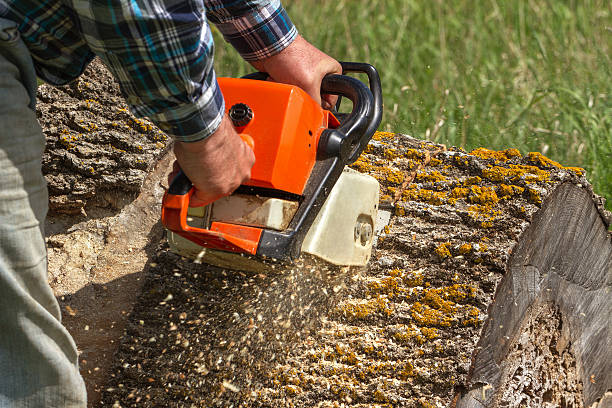
A fallen or severely damaged tree can create an unexpected safety and property problem. Strong winds, thunderstorms, tornadoes, lightning, ice, disease, and weakened roots can cause trees or large branches to fail with little warning. When a tree falls across a driveway, damages a structure, blocks access, or becomes unstable near people and utilities, the situation may require prompt professional attention.
Emergency tree removal involves safely addressing a tree that has become an immediate or developing hazard. The goal is not simply to remove the tree quickly. The condition of the tree, surrounding property, utility lines, structures, access, and potential movement of damaged branches or trunks all need to be considered.
Kansas Tree Experts provides tree care services in Wichita and surrounding Kansas communities, including tree removal, tree trimming, stump grinding, commercial tree services, and emergency tree services. For property owners dealing with a fallen or damaged tree, understanding when professional help is appropriate can reduce unnecessary risks.
This guide explains what to do after tree damage, how emergency tree removal works, and which situations should not be handled as a do-it-yourself project.
What Is Emergency Tree Removal?
Emergency tree removal is the removal of a tree that has become an urgent safety or property concern because of damage, instability, or its location.
Unlike routine tree removal, emergency situations often develop unexpectedly. A tree may fall during a storm, develop a dangerous lean after strong winds, or lose a large branch that is left hanging over a home or driveway.
Common examples include:
- A tree falling onto a house or garage
- A tree blocking a driveway or access road
- A large branch falling onto a vehicle
- A severely leaning tree after a storm
- A split trunk that may fail
- A partially uprooted tree
- Large broken branches hanging over a structure
- A damaged tree near utility lines
- A fallen tree creating an access or safety hazard
Not every damaged tree needs immediate removal. A professional assessment can help determine whether the tree needs to be removed, trimmed, stabilized, or monitored.
When Does a Fallen or Damaged Tree Require Emergency Removal?
The most important question is whether the tree presents an immediate or developing hazard.
A Tree Has Fallen on a Structure
A tree resting on a home, garage, shed, fence, or other structure should be treated carefully. The weight of the tree can place additional pressure on the damaged structure, while branches and trunk sections may remain unstable.
Do not climb onto the tree or attempt to cut it away from the building yourself. Keep people away from the area and arrange for the appropriate professionals to assess the situation.
The Tree Has Suddenly Started Leaning
A new or significant lean can indicate damage to the roots or trunk. This is particularly concerning after severe weather.
A leaning tree may not fall immediately. Additional wind, rain, soil movement, or changes in weight distribution can increase instability.
Large Branches Are Hanging Over a Property
Broken branches can remain attached to a tree after a storm. These branches may fall later without much warning.
Large suspended limbs over roofs, sidewalks, driveways, vehicles, or frequently used areas should be evaluated rather than pulled down or cut without proper equipment and experience.
The Trunk Has Split
A split trunk can indicate significant structural damage. The location and size of the crack, the tree’s overall health, and the surrounding environment all affect the level of risk.
If the main trunk has split, keep people away from the tree until it can be assessed.
Roots Have Been Pulled Out of the Ground
An uprooted or partially uprooted tree can be extremely unstable. Even when part of the root system remains attached to the soil, the tree can shift or fall unexpectedly.
Do not attempt to push, pull, or cut a partially uprooted tree.
Common Causes of Emergency Tree Damage
Tree emergencies can happen for several reasons. In Kansas, severe weather is one of the most common causes of sudden tree damage.
High Winds
Strong winds can break branches, split trunks, and uproot trees. Wind damage can also expose pre-existing structural weaknesses that were not obvious during normal conditions.
Thunderstorms
Severe thunderstorms may combine high winds, heavy rain, and lightning. These conditions can cause branches to break or trees to become unstable.
Tornadoes
Tornadoes can cause extensive damage to trees and surrounding structures. After a tornado or major wind event, property owners should avoid damaged trees until the area has been assessed for hazards.
Ice and Snow
Accumulated ice and snow add weight to branches. Weak or structurally compromised branches may break under the additional load.
Lightning
Lightning can damage a tree’s bark, branches, trunk, or internal structure. Some damage may not be immediately visible.
Disease and Decay
A tree can become hazardous even without a major storm. Decay, deadwood, root problems, or structural defects can weaken trees over time.
Regular inspections can help identify some problems before they result in an emergency.
What to Do Immediately After a Tree Falls
Knowing what to do after a tree falls can help prevent additional injuries and property damage.
1. Keep People Away From the Tree
The first priority is safety. Keep children and pets away from the damaged tree and surrounding debris.
Do not stand beneath broken branches or near a severely leaning trunk.
2. Look for Utility Hazards
Check the area from a safe distance for power lines and other utility hazards.
If a tree or branch has fallen onto or near a power line, do not touch the tree or attempt to move the branches. Contact the appropriate utility provider or emergency service.
A tree that appears to be touching a line should be treated as a potential electrical hazard.
3. Check for Structural Damage From a Safe Location
Look at the surrounding property without entering areas that may be unsafe.
Potential damage may include:
- Roof damage
- Broken windows
- Damaged siding
- Fence damage
- Vehicle damage
- Blocked driveways
- Damaged outdoor structures
- Broken utility equipment
If the structure itself may be unsafe, do not enter it simply to inspect the damage.
4. Take Photographs When Safe
Photographs can help document storm damage for your records or insurance claim.
Take photographs from a safe location and avoid entering unstable areas to get a better view.
5. Contact Your Insurance Provider When Appropriate
If the tree has damaged an insured structure or vehicle, contact your insurance company to understand the next steps.
Coverage varies between policies, so property owners should confirm their individual coverage rather than assuming that every type of tree damage is covered.
6. Arrange a Professional Tree Assessment
If the tree is large, unstable, near a structure, or otherwise hazardous, arrange an assessment with a qualified tree service.
Kansas Tree Experts provides tree removal and other tree care services for properties in Wichita and surrounding areas.
What Not to Do With a Fallen or Damaged Tree
A damaged tree can behave differently from a healthy standing tree. Attempting to remove it without understanding the forces involved can increase the risk of injury or additional property damage.
Do Not Cut a Tree Near Power Lines
Trees in contact with electrical lines should not be handled by homeowners. Stay away from the area and contact the appropriate utility provider.
Do Not Climb a Damaged Tree
Branches may be cracked or weakened even when they appear stable.
Climbing can place additional weight on an unstable tree and increase the risk of falling.
Do Not Cut Suspended Branches Without Proper Training
Large branches can be under tension. Cutting them in the wrong location can cause sudden movement.
Do Not Pull a Large Tree With a Vehicle
Using a vehicle to pull a fallen or leaning tree can create unpredictable movement and damage nearby structures.
Do Not Assume a Fallen Tree Is Completely Safe
A tree lying on the ground may still contain significant tension. Parts of the trunk or branches can move when they are cut.
This is one reason professional assessment is important for large or complicated fallen trees.
How Professionals Handle Emergency Tree Removal
Professional tree removal begins with evaluating the specific circumstances rather than immediately cutting the tree.
Initial Assessment
The tree and surrounding area are evaluated for:
- Tree size
- Tree species and condition
- Trunk damage
- Broken branches
- Root stability
- Direction of lean
- Nearby buildings
- Vehicles and fences
- Utility lines
- Access for equipment
This assessment helps determine what type of removal approach may be appropriate.
Work Area Preparation
The area around the tree may need to be cleared of people, vehicles, and other potential obstacles.
The location of equipment and the movement of tree sections should be considered before cutting begins.
Controlled Removal
Large or hazardous trees may need to be removed in sections rather than allowed to fall in one piece.
Depending on the circumstances, professionals may use equipment such as ropes, rigging systems, bucket trucks, or cranes.
Kansas Tree Experts describes professional tree removal as a process that can involve assessment, planning, controlled cutting, removal, and cleanup depending on the property’s conditions.
Debris Removal
After the tree has been removed, branches and trunk sections may need to be cut into manageable pieces and removed from the property.
The exact cleanup process depends on the service agreement and the amount of material involved.
Stump Management
Tree removal does not always include stump removal.
A remaining stump may be left in place or addressed separately through stump grinding. Kansas Tree Experts lists stump grinding as one of its tree care services.
Emergency Tree Removal Process
The following table provides a simplified overview of what property owners can expect.
| Stage | What Happens | Main Consideration |
|---|---|---|
| Assessment | Tree and surrounding area are evaluated | Identify hazards |
| Safety planning | Work area and removal method are determined | Protect people and property |
| Preparation | Equipment and access are arranged | Account for nearby structures |
| Tree removal | Damaged sections are removed in a controlled manner | Manage movement and weight |
| Debris cleanup | Branches and wood are processed or removed | Clear the affected area |
| Stump service | Remaining stump may be addressed separately | Confirm service scope |
| Final inspection | Area is checked after removal | Identify remaining hazards |
The actual process can vary significantly depending on the size, condition, and location of the tree.
When Tree Removal May Not Be Necessary
Emergency tree damage does not automatically mean that a tree must be removed.
In some cases, a tree may be able to remain if the damage is limited and the tree is structurally sound.
For example, a smaller damaged branch may be addressed through appropriate pruning rather than complete tree removal.
The decision can depend on:
- The amount of damage
- Tree health
- Structural stability
- Root condition
- Tree species
- Location
- Risk to nearby property
- Future likelihood of failure
A professional assessment can help determine whether removal or another form of tree care is more appropriate.
Storm Damage and Tree Safety in Kansas
Kansas weather can create different tree risks throughout the year. Strong winds and thunderstorms can break branches or uproot trees, while ice and snow can increase branch weight.
Wichita-area property owners should also consider how trees are positioned around homes, garages, driveways, sidewalks, and utility infrastructure.
Kansas Tree Experts provides tree services in Wichita and surrounding communities, including tree removal, trimming, stump grinding, and emergency tree services.
After severe weather, property owners should inspect trees from a safe distance. Warning signs may include:
- New cracks in the trunk
- Broken major branches
- Hanging limbs
- Exposed roots
- Sudden leaning
- Split trunks
- Large sections of missing bark
- Soil movement around the base
If a tree appears unstable, keep people away until it can be professionally evaluated.
How to Prevent Future Tree Emergencies
Not every tree emergency can be prevented. Severe weather can damage even healthy trees. However, regular maintenance can address some conditions that increase risk.
Schedule Routine Tree Inspections
Regular inspections can identify visible defects, dead branches, structural weaknesses, and other concerns.
Remove Hazardous Branches
Dead or severely damaged branches may become falling hazards during storms. Addressing them before severe weather can reduce some risks.
Maintain Trees Near Structures
Trees growing close to homes and other structures should be monitored for branch growth, structural problems, and potential clearance issues.
Avoid Improper Pruning
Incorrect pruning can damage trees and create structural problems over time. Tree trimming should be performed according to the tree’s condition, species, structure, and location.
Check Trees After Severe Weather
After a significant storm, look for changes that may indicate damage. If you see a major crack, hanging branch, exposed roots, or sudden lean, avoid the area and arrange an assessment.
Emergency Tree Removal Safety Checklist
When dealing with a fallen or damaged tree, use the following checklist:
- Keep people and pets away from the tree.
- Stay away from downed or damaged power lines.
- Do not climb damaged trees.
- Do not cut large suspended branches yourself.
- Avoid using chainsaws on unstable trees without appropriate training.
- Do not pull trees with vehicles.
- Document property damage only when it is safe.
- Contact your insurance provider when necessary.
- Arrange a professional assessment for major hazards.
- Confirm whether debris removal and stump services are included.
The safest approach is to treat an unstable tree as a potential hazard until its condition has been properly evaluated.
Conclusion
A fallen or damaged tree can quickly become a safety concern, particularly when it is near a home, vehicle, utility line, driveway, or area used by people. Strong winds, storms, ice, disease, decay, and root problems can all contribute to unexpected tree failure.
The safest response is to keep people away from the affected area, identify potential utility hazards, document property damage from a safe location, and seek professional assistance when the tree is large, unstable, or difficult to assess.
Emergency tree removal should focus on controlled and safe handling rather than simply removing a tree as quickly as possible. Professional assessment can help determine whether complete removal, branch removal, trimming, or another solution is appropriate.
Kansas Tree Experts provides tree removal, tree trimming, stump grinding, commercial tree services, and emergency tree services for Wichita and surrounding areas. If you have a fallen or damaged tree and need information about available services, contact us through Kansas Tree Experts to discuss the situation.
Frequently Asked Questions About Emergency Tree Removal
What is emergency tree removal?
Emergency tree removal is the removal of a tree that presents an immediate or developing safety or property hazard. Common examples include trees that have fallen on structures, severely leaning trees, split trunks, partially uprooted trees, and large storm-damaged trees.
How do I know if a fallen tree is dangerous?
A fallen tree may be dangerous if it is near a structure, utility line, road, vehicle, or people. Large trunks and branches may also contain tension that can cause sudden movement during cutting. When in doubt, stay away and arrange a professional assessment.
Should I remove a fallen tree myself?
Small branches in a safe, open area may sometimes be handled by a homeowner. However, large fallen or damaged trees should generally be evaluated by professionals, especially when they are near buildings, utility lines, vehicles, or other obstacles.
What should I do if a tree falls on my house?
Keep people away from the affected area and avoid entering any potentially unsafe part of the structure. If utility lines are involved, stay away and contact the appropriate utility provider. Document the damage from a safe location and contact your insurance company as appropriate.
Can a storm-damaged tree be saved?
Yes, in some circumstances. The possibility depends on the severity and location of the damage, tree health, root condition, and structural stability. Not every damaged tree requires complete removal.
How quickly should emergency tree removal be completed?
The appropriate timing depends on the level of risk. A tree that has fallen onto a structure, is severely unstable, or is creating an immediate safety hazard should be addressed promptly. Less urgent damage may be scheduled for assessment and maintenance.
Does emergency tree removal include stump grinding?
Not necessarily. Tree removal and stump grinding can be separate services. Property owners should confirm whether stump removal or grinding is included in the agreed scope of work.
What causes trees to fall during storms?
Strong winds, saturated soil, lightning, ice, heavy snow, structural defects, disease, decay, and weakened roots can all contribute to tree failure. Several factors may occur together during severe weather.
Does Kansas Tree Experts provide emergency tree removal?
Kansas Tree Experts provides tree removal and emergency tree services among its listed tree care services in Wichita and surrounding Kansas communities. Property owners can review its services and contact the company for information about a specific tree situation.
What areas does Kansas Tree Experts serve?
Kansas Tree Experts is based in Wichita and serves Wichita and surrounding communities. Its listed service areas include communities such as Andover, Derby, Goddard, Haysville, Maize, Newton, Park City, Sedgwick, and Valley Center.

