
Removing a tree does not always mean the job is finished. After the trunk has been cut down, the remaining stump can continue to affect your yard for years. An old stump may become a tripping hazard, interfere with mowing, attract insects, encourage fungal growth, or simply make an otherwise maintained landscape look unfinished.
Some homeowners leave stumps in place because they assume the wood will eventually disappear on its own. While a stump will naturally decompose, that process can take a long time. During that period, the stump remains part of the landscape and can create practical problems.
For homeowners searching for tree stump grinding services near me, understanding what happens after tree removal can make it easier to decide whether grinding is appropriate. The right approach depends on the stump’s size, location, condition, surrounding landscaping, and plans for the property.
Kansas Tree Experts provides tree-related services for property owners who need to address concerns involving trees and their remains. Understanding the purpose of stump grinding can help homeowners make informed decisions rather than treating an old stump as something that can simply be ignored.
What Happens to a Tree Stump After Removal?
A tree stump is technically still living material for some time after the tree has been cut down. Depending on the tree species, age, condition, and season, roots and remaining wood may continue to respond to the loss of the main tree.
Eventually, the stump begins to break down. However, natural decomposition is gradual.
Natural Decomposition Takes Time
Wood does not disappear quickly simply because the tree has been removed. Moisture, fungi, insects, soil conditions, temperature, and the size of the stump all affect how quickly it decomposes.
A small stump in a warm, moist environment may break down faster than a large hardwood stump in a dry location. Even so, decomposition can leave an uneven area in the yard as the wood gradually breaks down.
This means homeowners who want a level, usable lawn may find that waiting for a stump to disappear naturally is not the most practical option.
New Growth Can Appear
Some tree species can produce shoots from the remaining stump or roots after the main trunk has been removed. These shoots can become an ongoing maintenance issue.
Repeatedly cutting new growth does not necessarily eliminate the underlying stump. If regrowth becomes persistent, a property owner may need to consider whether grinding or another appropriate treatment is warranted.
Why Ugly Tree Stumps Can Become a Yard Problem
An old stump is more than an appearance issue. Depending on where it is located, it can affect safety, landscaping, lawn maintenance, and future use of the property.
Stumps Can Create Tripping Hazards
A stump that sits along a walkway, near a driveway, or in an area where people regularly walk can become a physical obstacle.
The risk may increase as the stump becomes surrounded by grass or other vegetation. Once the edges become difficult to see, someone may trip over it.
Children playing in the yard, visitors walking across the property, and anyone mowing or maintaining the lawn may encounter the stump unexpectedly.
Stumps Can Make Mowing Difficult
A mower can pass around some small stumps, but larger or partially hidden stumps can make routine lawn care more difficult.
Repeatedly navigating around an obstacle also leaves grass growing around and immediately beside the stump. This can create an untidy appearance and make trimming around the area more time-consuming.
A stump located in the middle of a lawn can be particularly inconvenient because it prevents the area from being maintained as one continuous surface.
Stumps Can Interfere With Landscaping
An unused stump can limit what you do with part of your yard.
If you want to install a flower bed, expand a lawn, build a garden area, or change the layout of a landscape, an existing stump may become an obstacle.
Grinding the stump below the surrounding soil level can create more flexibility for future landscaping, although the resulting area may still require soil and other preparation before planting.
Can Tree Stumps Attract Pests?
Decaying wood can provide habitat or food for various insects and other organisms. Depending on the condition and location of the stump, this may include ants, beetles, termites, and other wood-associated insects.
A stump does not automatically mean a home will develop a pest infestation. However, leaving decaying wood close to a structure may be undesirable, particularly when the property owner is already dealing with pest concerns.
Why Location Matters
A stump located far from buildings may present fewer concerns than one directly beside a house, garage, deck, or other structure.
Moisture, decay, and contact with soil can contribute to the breakdown of the wood. Property owners should consider the stump’s surroundings rather than evaluating it in isolation.
If you notice insect activity around a stump, it is also important to identify the insects correctly. Not every insect found in decaying wood presents the same level of concern.
Stump Grinding vs. Complete Stump Removal
Homeowners often use the terms stump grinding and stump removal interchangeably, but they are different processes.
What Is Stump Grinding?
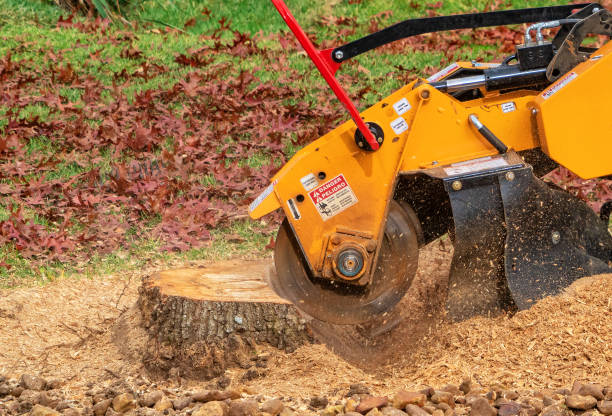
Stump grinding uses specialized equipment to mechanically grind the visible stump into wood chips or small pieces. The stump is typically reduced below the surrounding ground level rather than excavating the entire root system.
This can be useful when the primary goal is to remove the visible obstacle and make the area easier to use.
What Is Complete Stump Removal?
Complete stump removal involves excavating the stump and a portion of its root system from the ground.
Because tree roots can extend well beyond the stump itself, complete removal can require considerably more excavation. The appropriate method depends on what the property owner intends to do with the area afterward.
Which Method Is Better?
There is no universal answer.
| Consideration | Stump Grinding | Complete Stump Removal |
|---|---|---|
| Main objective | Reduce stump below ground level | Remove stump and more of its root system |
| Ground disturbance | Generally less | Generally greater |
| Root system | Most roots remain underground | More of the root mass is removed |
| Landscaping | Suitable for many lawn projects | Useful where deeper excavation is needed |
| Site restoration | Usually requires filling the area | Usually requires substantial backfilling |
| Best choice | When the visible stump is the primary concern | When complete excavation is necessary |
For many residential situations, grinding is a practical option because it removes the visible obstruction without requiring extensive excavation.
Benefits of Removing an Old Tree Stump
Getting rid of an unwanted stump can provide several practical benefits.
1. A Safer Walking Area
Removing a stump reduces the number of obstacles in the yard. This can be especially useful when the stump is located near a walkway, play area, driveway, or other frequently used space.
2. Easier Lawn Maintenance
A stump-free lawn is easier to mow and trim. Instead of maneuvering equipment around an obstacle, homeowners can maintain a more continuous area.
3. More Landscaping Options
Once the visible stump is gone, homeowners have greater flexibility when redesigning the area.
Depending on the depth of grinding and the condition of the surrounding soil, the space can potentially be incorporated into lawn areas, planting beds, or other landscape improvements.
4. A Cleaner Landscape
An old stump can draw attention even when the rest of the property is well maintained. Removing it can create a more consistent appearance.
The goal is not necessarily to make a property look perfect. It is about eliminating an unused remnant that no longer serves a useful purpose.
When Should You Consider Stump Grinding?
There are several situations when grinding may be worth considering.
The Stump Is in the Middle of the Lawn
A stump surrounded by grass is likely to interfere with mowing and trimming. Grinding can remove the obstacle and allow the area to be restored.
The Stump Is Near a Walkway
Stumps in pedestrian areas deserve attention because they can become trip hazards.
You Are Redesigning the Yard
If you are changing the landscape, an old stump may restrict where new plants, paths, or other features can be placed.
The Stump Is Beginning to Decay
Visible decay does not necessarily mean an emergency, but it indicates that the wood is breaking down. As the stump deteriorates, the surrounding area can become uneven or attract organisms associated with decomposing wood.
You Want to Prevent Future Maintenance Problems
A stump that is currently manageable may become harder to deal with as grass and vegetation grow around it. Addressing the obstacle earlier can simplify future yard maintenance.
What About the Tree Roots?
One common misconception is that stump grinding automatically removes every tree root underground. It does not.
Most of the larger root system remains in the soil after the visible stump has been ground down. These roots will gradually decompose over time.
When Is Root Grinding Needed?
Searching for root grinding near me may be appropriate when surface roots or remaining root sections are creating a specific landscaping or access problem.
For example, exposed roots may interfere with:
- Lawn installation
- Garden beds
- Walkways
- Soil grading
- Landscaping projects
- Certain construction plans
The correct approach depends on how deep the roots are, how extensive they are, and what you plan to do with the area.
Can All Tree Roots Be Removed?
Removing every root is usually neither practical nor necessary for routine residential landscaping.
Tree roots can extend significant distances from the original trunk. Complete excavation may disturb surrounding soil, plants, structures, and hardscape.
Instead, the objective should be to address the portion of the root system that is actually creating a problem.
Stump Grinding in Wichita, KS: What Local Property Owners Should Consider
Homeowners looking for stump grinding in Wichita, KS should consider the condition of the property before scheduling work.
The location of the stump matters. A stump close to a fence, building, retaining wall, irrigation system, or underground utility may require additional planning.
Consider Underground Utilities
Before grinding or excavating around a stump, property owners should be aware of underground utilities and other hidden infrastructure.
Utilities can include electrical lines, communication cables, water lines, gas lines, irrigation components, and drainage systems.
Professional planning should account for these potential hazards before equipment is used.
Consider the Surrounding Landscape
Stump grinding creates wood chips and can disturb the immediate area. Nearby plants, decorative landscaping, lawn areas, and structures should be considered when planning the work.
A larger stump may also require more cleanup and more material to remove or redistribute.
What Does Tree Service in Wichita Stump Grinding Usually Involve?
For property owners comparing tree service in Wichita stump grinding options, it helps to understand the general process.
Step 1: Inspect the Stump
The stump’s size, species, condition, location, and surroundings are considered.
Step 2: Identify Potential Obstacles
The work area should be checked for nearby structures, landscaping features, utility concerns, and access limitations.
Step 3: Prepare the Area
Depending on the equipment and location, the surrounding work area may need to be cleared.
Step 4: Grind the Stump
A stump grinder is positioned over the stump and used to reduce the wood below the desired ground level.
Step 5: Address the Resulting Material
Grinding produces wood chips and debris. The resulting material may need to be removed, redistributed, or managed depending on the landscape plan.
Step 6: Restore the Area
After grinding, the remaining depression may require soil or another appropriate fill material. The area can then be prepared for future landscaping.
Kansas Tree Experts can help property owners understand what may be involved in addressing an unwanted stump and whether grinding fits the needs of the site.
How to Prepare Your Yard for Stump Grinding
A little preparation can make the work area easier to access.
Clear Objects From the Area
Move lawn furniture, toys, decorations, hoses, and other removable objects away from the stump.
Identify Sensitive Areas
Point out irrigation components, garden features, fences, or other elements that may be close to the work area.
Think About the Finished Landscape
Decide what you want to do with the area after grinding. If you plan to reseed grass, install plants, or create another landscape feature, the depth and restoration requirements may be different.
Ask About Cleanup
Stump grinding produces wood chips. Before work begins, clarify how the resulting material will be handled and whether additional soil or restoration is needed.
Common Mistakes to Avoid
Leaving a stump alone is not the only mistake property owners can make. There are several other issues worth avoiding.
Ignoring a Stump Near a High-Traffic Area
A stump beside a walkway or in a frequently used portion of the yard deserves more attention than one in an unused corner.
Assuming Grinding Removes Every Root
Grinding primarily addresses the stump itself. Remaining roots generally stay underground and decompose naturally.
Planting Immediately Without Considering the Soil
The ground around a recently ground stump may contain wood material and may settle as decomposition continues. Depending on the intended landscaping, the area may need preparation before new planting.
Attempting Complex Grinding Without Proper Equipment
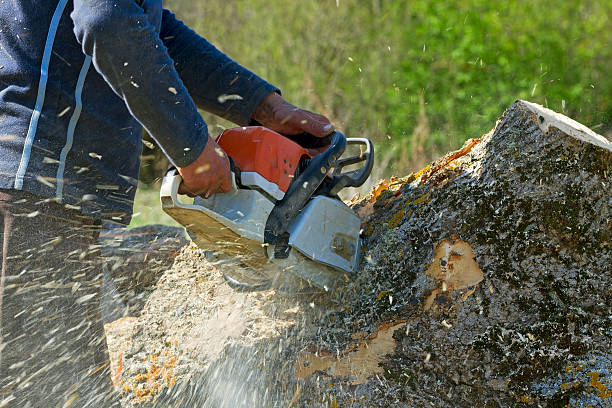
Stump grinders are powerful machines. They can cause serious injuries if operated incorrectly. Large stumps or difficult locations may require specialized equipment and experience.
Focusing Only on Appearance
An ugly stump may be the reason you notice the problem, but safety, accessibility, landscaping plans, and location are equally important considerations.
How to Choose Tree Stump Grinding Services Near Me
When searching for tree stump grinding services near me, avoid choosing based only on the first listing you find.
Consider whether the provider can explain the process clearly and identify potential issues before work begins.
Useful questions include:
- How deep will the stump be ground?
- How will the wood chips be handled?
- Are nearby structures considered during the work?
- What happens to exposed surface roots?
- Will the area require additional soil afterward?
- Are there access limitations?
- What preparation is needed before the work begins?
Clear answers can help you understand what the service actually involves.
A local provider such as Kansas Tree Experts can also help property owners determine whether stump grinding is appropriate for the specific location and intended use of the yard.
Conclusion
An old tree stump may seem like a minor leftover from a completed tree-removal project, but it can continue to affect your property. From trip hazards and mowing difficulties to landscaping limitations and gradual decay, an unwanted stump can become increasingly inconvenient over time.
Stump grinding provides one practical way to address the visible portion of a stump without excavating the entire root system. In other situations, more extensive removal may be appropriate, particularly when deeper excavation is necessary for a planned project.
If you are considering tree stump grinding services near me, evaluate the stump’s location, condition, surrounding landscape, and your plans for the property. Understanding these factors can help you choose an approach that fits your yard rather than treating every stump the same way.
For property owners in the Wichita area, Kansas Tree Experts can provide information about tree-related services and help you understand the considerations involved with stump work. If you have questions about an existing stump, contact us today to discuss the condition of the site and determine what type of tree-care solution may be appropriate.
Frequently Asked Questions
1. Is it necessary to remove a tree stump?
Not every stump must be removed immediately. However, removal or grinding may be worthwhile when a stump creates a safety hazard, interferes with lawn maintenance, attracts unwanted attention, or limits future landscaping.
2. How long does a tree stump take to decompose naturally?
There is no fixed timeline. Stump decomposition depends on tree species, stump size, moisture, temperature, soil conditions, fungi, and insects. Large stumps can remain for many years.
3. Does stump grinding remove the roots?
No. Stump grinding primarily removes the visible stump and grinds it below ground level. Most of the larger root system remains underground and gradually decomposes.
4. Is stump grinding better than stump removal?
It depends on the project. Grinding generally creates less ground disturbance and is suitable when the primary goal is to eliminate the visible stump. Complete removal may be more appropriate when deeper excavation is required.
5. Can I plant a new tree where an old stump was ground?
It may be possible, but the location should be prepared appropriately. Remaining roots and wood chips can affect the soil environment and available space. Selecting a suitable new planting location may sometimes be preferable.
6. Can an old stump attract termites?
Decaying wood can attract various insects, including some wood-associated species. A stump does not automatically cause a termite infestation, but removing unnecessary decaying wood near structures can be a sensible property-maintenance step.
7. What should I do with the wood chips after stump grinding?
Wood chips can sometimes be used as mulch in appropriate landscape areas, but large quantities may need to be removed. The best option depends on the type of project and the condition of the material.
8. Is root grinding the same as stump grinding?
No. Stump grinding focuses primarily on the remaining trunk base. Root grinding addresses specific roots or root sections that may be interfering with landscaping, grading, or other property improvements.
9. How deep should a stump be ground?
The appropriate depth depends on the planned use of the area. A lawn restoration project may have different requirements from a construction or landscaping project. The intended finished surface should be considered before work begins.
10. How do I find tree stump grinding services near me?
Start by identifying local providers that offer stump-related services and asking about their equipment, process, site assessment, cleanup, and restoration procedures. Comparing the scope of work can help you make an informed decision.

