
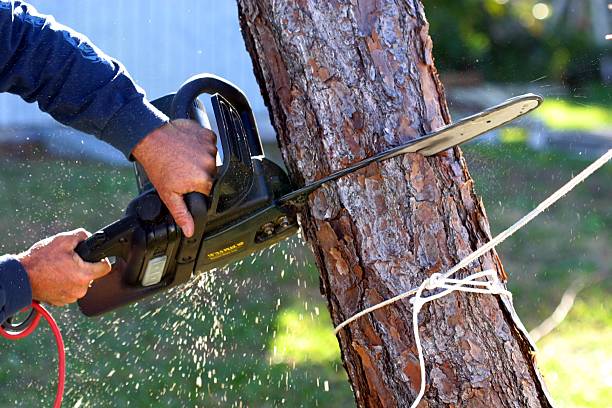
Trees can add shade, privacy, beauty, and value to a residential property. They can also create safety concerns when branches become dead, damaged, overgrown, or too close to a home. Regular tree care helps homeowners manage these issues before they become larger problems.
However, tree trimming is not simply a matter of cutting branches that look out of place. Where and how a branch is cut can affect the health, structure, and future growth of a tree. Working at height or around utility lines can also create serious hazards.
For homeowners searching for residential tree trimming near me, understanding the basics can make it easier to decide what work can be handled safely and when professional assistance is appropriate.
Kansas Tree Experts provides tree trimming services in Wichita and surrounding areas, with services that include pruning, cleaning, thinning, raising, and reduction. The company also provides other tree care services, including tree removal, stump grinding, and emergency tree services.
What Is Residential Tree Trimming?
Residential tree trimming is the selective removal of branches from trees located around homes and other residential properties. The purpose can range from removing deadwood and improving clearance to managing the tree’s structure and reducing conflicts with buildings or walkways.
Tree trimming is different from tree removal. Trimming retains the tree while selectively removing branches. Removal eliminates the entire tree when it is dead, hazardous, severely compromised, or otherwise unsuitable for its location.
Common tree trimming techniques include:
- Pruning: Removing selected branches to improve tree structure and health.
- Cleaning: Removing dead, broken, diseased, or otherwise unwanted branches.
- Thinning: Selectively reducing branches within the canopy to improve light and air movement.
- Raising: Removing lower branches to provide clearance above roofs, sidewalks, driveways, or other areas.
- Reduction: Carefully reducing the size or spread of a tree when appropriate.
The correct technique depends on the tree species, age, condition, location, and reason for the trimming.
Why Is Tree Trimming Important for Homeowners?
Tree trimming can serve several practical purposes. While appearance may be one consideration, safe tree maintenance is primarily about managing growth and maintaining healthy structure.
Protects Your Property
Branches that grow against a roof, siding, chimney, fence, or other structure can cause problems over time. Movement caused by wind can result in repeated contact, while large or weakened limbs can create a greater risk during severe weather.
Maintaining appropriate clearance can reduce unnecessary contact between branches and structures.
Supports Tree Health
Dead, broken, or diseased branches can affect the overall condition of a tree. Removing appropriate branches can help maintain a healthier canopy and reduce the presence of damaged wood.
However, more trimming is not necessarily better. Excessive pruning can stress a tree and expose it to additional problems. Tree trimming should therefore be based on the tree’s actual needs rather than a fixed idea that more branches should always be removed.
Reduces Hazardous Branches
A dead or weakened branch above a driveway, walkway, patio, or play area can become a safety concern.
Homeowners should pay particular attention to branches that are:
- Dead or visibly decayed
- Broken after a storm
- Hanging unusually low
- Cracked or split
- Growing over frequently used areas
- Showing signs of structural weakness
A professional evaluation may be appropriate when the condition or location of the branch is uncertain.
Improves Clearance
Trees often grow toward available sunlight. As a result, branches may eventually extend toward roofs, streets, sidewalks, driveways, or utility infrastructure.
Strategic trimming can maintain clearance while preserving as much of the healthy canopy as possible.
Maintains Tree Structure
Young and mature trees can develop competing, crossing, or poorly positioned branches. Selective pruning can help maintain a more balanced structure.
This is especially important for trees growing near homes because structural problems can become more significant as branches and trunks increase in size.
When Should You Trim a Residential Tree?
There is no single trimming schedule that applies to every tree. Species, age, condition, location, growth rate, and local weather all influence the appropriate timing.
Instead of trimming simply because a certain month has arrived, homeowners should first consider why the tree needs attention.
Trim When There Are Dead or Damaged Branches
Dead or broken branches should not be ignored, particularly when they are located above areas where people or property are regularly present.
Storms can also create sudden trimming needs. After high winds or severe weather, homeowners should inspect trees from a safe location for broken limbs, hanging branches, cracks, or significant changes in the tree’s structure.
Trim When Branches Interfere With Structures
Branches that consistently touch a roof, building, fence, or other structure may need attention.
Early maintenance can be easier than waiting until branches become large and difficult to manage.
Trim When Growth Becomes a Clearance Problem
Low branches over sidewalks or driveways can interfere with normal use of the property. Similarly, branches extending into areas where they obstruct visibility may require selective pruning.
The objective should be appropriate clearance without unnecessarily removing healthy portions of the tree.
Which Parts of a Tree Should Be Trimmed?
Not every branch that appears inconvenient should be removed. Before making a cut, homeowners should consider the branch’s position, size, condition, and role in the tree’s structure.
Branches commonly considered for removal include:
- Dead branches
- Broken branches
- Diseased branches
- Crossing or rubbing branches
- Weakly attached branches
- Low branches causing clearance problems
- Branches interfering with structures
- Unwanted water sprouts or suckers when appropriate
Large structural branches require particular caution. Removing a major limb can change the tree’s balance and create a large wound.
How to Safely Trim Small Trees
Some basic trimming tasks on small, healthy trees may be manageable for an experienced homeowner. Even then, safety should come first.
1. Inspect the Tree Before Cutting
Look at the entire tree before making a cut. Identify deadwood, crossing branches, damaged areas, and branches that may create clearance problems.
Do not start cutting without understanding how the removal of one branch could affect surrounding branches.
2. Use Appropriate Equipment
For small ground-level work, homeowners may use clean, sharp pruning tools suitable for the branch size.
Tools should be maintained properly. Dirty or damaged equipment can make cuts more difficult and increase the chance of poor pruning.
3. Stay on the Ground
A major safety rule is to avoid climbing trees with ladders or makeshift equipment for pruning.
Once trimming requires climbing, specialized equipment, or work near a structure, the risk changes significantly.
4. Avoid Cutting More Than Necessary
Removing excessive foliage can stress a tree and affect its natural growth.
The goal should be selective pruning rather than removing large portions of the canopy simply to make the tree look smaller.
5. Know When to Stop
If a branch is large, high, difficult to reach, close to power lines, or attached to a damaged tree, stop the DIY project and seek professional assistance.
Knowing when not to make a cut is an important part of safe tree care.
When Should You Hire a Professional?
Some tree trimming jobs should not be treated as DIY projects. Professional tree care is particularly appropriate when the work involves height, heavy branches, difficult access, structural concerns, or electrical hazards.
Consider professional assistance when:
- Branches are high above the ground.
- Large limbs need to be removed.
- The tree is close to a house or other structure.
- Branches are near utility lines.
- The tree is leaning significantly.
- The tree has visible decay or major cracks.
- Storm damage has created hanging limbs.
- A ladder would be required.
- You are unsure how a branch will respond when cut.
Tree work involves more than knowing how to operate a saw. A professional assessment considers the tree, surrounding property, access, potential falling paths, and the work required to safely control removed branches.
For example, Kansas Tree Experts describes its Wichita tree trimming service as including pruning, cleaning, thinning, raising, and reduction. Its broader tree services also include removal, stump grinding, and emergency tree care.
What to Look for When Searching for Residential Tree Trimming Near Me
A local search for residential tree trimming near me can produce many options. Homeowners should compare providers based on safety and scope of work rather than choosing solely on price.
Experience With Residential Trees
Ask whether the company regularly works on residential properties. Homes often have limited access and nearby structures, which can make tree work more complex.
Insurance and Safety Practices
Tree work can involve significant physical and property risks. Ask whether the company carries appropriate insurance and what safety procedures it follows.
Clear Scope of Work
A written estimate or clear description should explain what is being trimmed and whether cleanup is included.
This helps prevent misunderstandings about whether the project involves light pruning, crown work, hazardous limb removal, or a larger tree service.
Local Knowledge
Local tree professionals understand common regional weather conditions and the types of residential properties they routinely encounter.
Kansas Tree Experts states that it has more than 25 years of experience working with Kansas trees and provides tree services in Wichita.
Appropriate Equipment
Larger residential trees may require specialized equipment and controlled removal methods. The right equipment can make a significant difference when working around homes, fences, landscaping, and other property features.
Residential Tree Trimming Services from Kansas Tree Experts
Kansas Tree Experts provides residential tree care in Wichita and nearby areas. Its tree trimming service covers several forms of pruning and canopy management, including cleaning, thinning, raising, and reduction.
Kansas Tree Experts also lists tree removal, stump grinding, shrub shaping, land and bush clearance, commercial tree services, and emergency tree services among its offerings.
For homeowners, this means a tree trimming assessment can help determine whether the issue calls for routine pruning or a different type of tree service.
The company lists its Wichita address as 2117 S Custer Ave, Wichita, KS 67213, and provides a contact option through its website.
Tree Trimming vs. Tree Removal
Understanding the difference between trimming and removal can help homeowners ask the right questions.
| Situation | Tree Trimming | Tree Removal |
|---|---|---|
| Dead branch on otherwise healthy tree | Usually appropriate | Usually not necessary |
| Branch touching roof | May be appropriate | Usually not necessary |
| Overgrown canopy | May be appropriate | Usually not necessary |
| Large broken limb after storm | May be required | Depends on tree condition |
| Severely damaged tree | May not solve the problem | May be considered |
| Dead tree | Not sufficient | May be necessary |
| Hazardous tree with major structural failure | Usually insufficient | May be necessary |
| Small clearance issue | Often appropriate | Usually unnecessary |
A tree should not be removed simply because it has become inconvenient to maintain. At the same time, trimming is not always an appropriate solution when the entire tree presents a significant hazard.
A qualified evaluation can help determine the appropriate course of action.
Residential Tree Trimming Safety Checklist
Before arranging or beginning tree trimming, homeowners can use this checklist:
- Inspect the tree from a safe location.
- Look for dead, broken, or hanging branches.
- Check whether branches are touching the home.
- Identify branches near utility lines.
- Consider whether the tree is leaning or structurally compromised.
- Avoid climbing with a ladder for tree work.
- Do not work near electrical lines.
- Avoid cutting large branches without appropriate training and equipment.
- Keep people and pets away from the work area.
- Confirm what work will be performed.
- Ask about cleanup and disposal.
- Use a qualified tree professional for hazardous or difficult work.
This simple checklist can help homeowners recognize when routine maintenance has become a safety issue.
Conclusion
Safe residential tree trimming is about more than improving the appearance of a yard. Properly planned pruning can help maintain clearance, remove hazardous or damaged branches, support healthy tree structure, and reduce conflicts between trees and residential property.
Homeowners can handle some basic maintenance on small, accessible trees, but tree work becomes significantly more hazardous when branches are large, high, damaged, or located near structures and utility lines. In those situations, professional assessment is the safer approach.
If you are researching residential tree trimming near me in the Wichita area, Kansas Tree Experts provides tree trimming and related tree care services for residential properties. You can review the company’s services and contact us now to get the best results.
Frequently Asked Questions
How often should residential trees be trimmed?
There is no universal trimming schedule. Young trees, mature trees, fast-growing species, storm-damaged trees, and trees growing near structures may have different needs. An inspection can help determine when pruning is appropriate.
What is the best season for tree trimming?
The appropriate season depends on the tree species, local conditions, the purpose of the pruning, and whether the work involves removing hazardous or damaged branches. Safety concerns should not necessarily be postponed simply because the timing is not considered ideal for routine pruning.
Can I trim a tree myself?
Small, low branches on healthy trees may be manageable for some homeowners. However, large branches, high branches, damaged trees, and work near utility lines should be handled by qualified professionals.
How much of a tree can be trimmed?
The amount depends on the tree and the reason for pruning. Removing too much live growth can stress a tree and affect its structure. A professional can determine which branches should be removed and how much pruning is appropriate.
Should branches touching my roof be removed?
Branches that repeatedly contact a roof may need selective trimming to create appropriate clearance. The exact cut depends on the branch’s size, position, and relationship to the rest of the tree.
How do I find residential tree trimming near me?
Start by searching for local tree professionals and compare their experience, insurance, safety practices, services, and estimates. Look for a company that clearly explains what work is recommended instead of simply offering a one-size-fits-all trimming service.
Is tree trimming the same as pruning?
The terms are often used interchangeably, although pruning can refer more specifically to the selective removal of branches for tree health, structure, or safety. Residential tree trimming can include several pruning techniques depending on the property’s needs.

