7 Common Tree Trimming Mistakes That Can Damage Your Trees
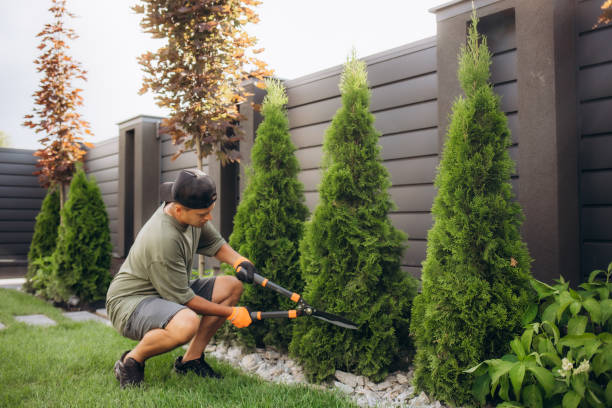
Tree trimming is one of the best investments you can make in the health and safety of your landscape, but only when it’s done correctly. Improper trimming can permanently weaken a tree, encourage rot and disease, shorten its lifespan, and even create dangerous conditions around your home.
At Kansas Tree Experts, we’ve worked on hundreds of trees throughout Wichita and Sedgwick County that were previously damaged by improper pruning. In many cases, the problems weren’t caused by storms or insects, they were caused by incorrect trimming techniques.
Whether you’re planning to trim your own trees or hire a contractor, understanding these seven common mistakes can help protect your property and keep your trees healthy for years to come.
1. Removing Too Much of the Tree at One Time
One of the most common mistakes homeowners make is removing too much of a tree’s live canopy during a single trimming session.
It may seem like cutting more branches now means less maintenance later, but over-pruning places severe stress on the tree. Leaves produce the energy a tree needs to survive; removing too much foliage limits its ability to recover, absorb nutrients, and fight off stress.
Professional Standard: ANSI A300 pruning standards recommend removing no more than 25% of a healthy tree’s live canopy during a single growing season.
Removing more than 25% weakens the tree, increases its susceptibility to insects and disease, and reduces its ability to survive drought and severe weather. This is especially critical for mature Pin Oaks, Silver Maples, Cottonwoods, and Hackberries across Wichita, which depend on a healthy canopy to endure Kansas heat, high winds, and frequent storms.
2. Topping a Tree
Tree topping is one of the most damaging pruning practices still performed today. Topping involves cutting off the upper main branches or trunk of a tree to force a height reduction.
While it may seem like a quick fix to control size, topping-
-
Exposes large, flat wood wounds directly to rot and fungal decay.
-
Triggers a panic response where the tree rapidly sprouts clusters of weak, shallow-rooted branches (water sprouts).
-
Destroys the natural structure and aesthetic of the tree.
We’ve seen many mature Silver Maples and Cottonwoods throughout Wichita that were topped years ago. Instead of solving a problem, topping creates dozens of weakly attached branches that snap easily during the next major storm. Given the strong spring winds, microbursts, and ice accumulation common to South Central Kansas, topped trees often become far greater hazards than they were originally.
3. Making Improper Pruning Cuts
How a branch is removed is just as important as deciding which branch to trim. Improper pruning cuts destroy the tree’s natural defense mechanisms.
Making Flush Cuts
A flush cut removes a branch flat against the main trunk. While it looks smooth, it removes the branch collar, the swollen area where the branch connects to the trunk. The branch collar contains specialized tissue that allows the tree to naturally seal over wounds and slow the spread of decay. Removing it leaves the tree vulnerable to fungi, wood-boring insects, and internal trunk rot.
Leaving Branch Stubs
Leaving several inches of dead wood past the branch collar prevents bark from closing over the cut. The stub rots over time, creating a open pathway for decay and insects to travel directly into the main body of the tree.
Skipping the Three-Cut Method
Large limbs should never be removed with a single top-down saw cut. As a heavy branch falls, its weight can tear a long strip of bark down the main trunk, creating a massive wound that takes years to recover.
The Solution: Professional crews always use the three-cut method on heavy limbs-
Undercut: An initial shallow cut on the underside of the branch to prevent bark tearing.
Relief Cut: A top cut further out on the limb to drop the heavy weight safely.
Final Cut: A clean cut made just outside the swollen branch collar.
4. Ignoring Dead or Damaged Branches
Many homeowners focus purely on cosmetic trimming while overlooking branches that present immediate structural hazards. Dead limbs, cracked branches, and storm-damaged wood should always be addressed before making cosmetic cuts.
After Wichita experiences severe thunderstorms, straight-line winds, or winter ice accumulation, mature Ash trees, Bradford Pears, Siberian Elms, and Silver Maples frequently develop split or hanging limbs that aren’t easily visible from the ground. Removing hazardous branches early prevents costly property damage to roofs, vehicles, and power lines.
5. Trimming at the Wrong Time of Year
While hazardous branches should be removed immediately regardless of season, routine maintenance should be aligned with the growth cycle of specific local species:
-
Pin Oaks & Red Oaks: Best pruned during winter dormancy (November through February). Dormant pruning minimizes stress and prevents the spread of Oak Wilt disease carried by sap beetles in warmer months.
-
Eastern Redbuds & Flowering Crabapples: Best pruned shortly after they finish blooming in late spring. Pruning early in spring cuts off flower buds before they open.
-
Silver Maples & Birch Trees: Known as “sap bleeders” because they produce heavy sap flow when cut in early spring. While not dangerous, trimming during late summer or winter produces cleaner results.
6. Trimming Near Power Lines
Trees growing near overhead electrical lines require specialized equipment, line-clearance training, and strict safety procedures.
Attempting to trim branches near utility lines yourself is extremely dangerous and can result in severe injury or electrocution. If limbs are interfering with power lines on your property, contact your local utility provider (like Evergy) or hire a licensed tree service certified in utility clearance work.
7. Choosing a Tree Company Based Only on Price
It’s natural to compare estimates, but the lowest bid isn’t always the best value.
Professional tree trimming requires experienced crews, proper pruning techniques, full liability and worker’s compensation insurance, specialized equipment, and complete property cleanup. An unusually low estimate often means a contractor is cutting corners, climbing live trees with damaging leg spikes, working without insurance, or leaving brush piles behind for you to clean up.
How to Spot Quality Tree Trimming vs. Bad Workmanship
Use this quick guide to evaluate work done on your property or to vet contractors:
| Quality Professional Pruning | Red Flag “Hack” Pruning |
| Preserves the branch collar with clean, precise cuts | Makes flat flush cuts or leaves long protruding stubs |
| Removes less than 25% of live foliage at once | Tops trees or strips all inner foliage (lion-tailing) |
| Uses the 3-cut method on heavy limbs to prevent bark tearing | Tears long strips of bark down the trunk while dropping limbs |
| Climbs with ropes, lifts, or bucket trucks on live trees | Uses climbing spikes/gaffs on live trees meant to be saved |
| Fully insured with complete cleanup included | Leaves debris behind, lacks verifiable insurance |
Why Proper Tree Care Matters in Wichita
Throughout Wichita and South Central Kansas, trees face intense summer heat, drought, severe spring microbursts, heavy snowfall, and sudden ice accumulation. Routine professional trimming builds a strong, wind-resistant canopy, removes safety hazards, and extends the life of your trees.
When performed correctly, tree trimming protects both your landscape investment and your property’s safety.
Frequently Asked Questions
What is the biggest tree trimming mistake homeowners make?
Removing too much of the canopy at one time and topping trees are the two most damaging mistakes. Both practices severely weaken the tree, deplete its energy reserves, and encourage dangerous, weakly attached regrowth.
What is the branch collar and why is it important?
The branch collar is the swollen area where a branch connects to the main trunk. Proper pruning preserves this tissue because it contains specialized cells that allow the tree to naturally seal over wounds and resist internal decay.
Why should large branches be removed using the three-cut method?
The three-cut method prevents heavy limbs from tearing bark down the main trunk as they fall. It removes the limb’s weight first before making the final cut at the branch collar.
When is the best time to trim trees in Wichita, KS?
It depends on the species. Oaks should generally be pruned during winter dormancy (Nov–Feb), spring-flowering trees right after blooming, and Maples or Birches in late summer or winter to avoid heavy sap flow.
Contact Kansas Tree Experts Today
Tree trimming is about much more than cutting branches, every cut should improve your tree’s long-term health, strengthen its structure, and protect your home.
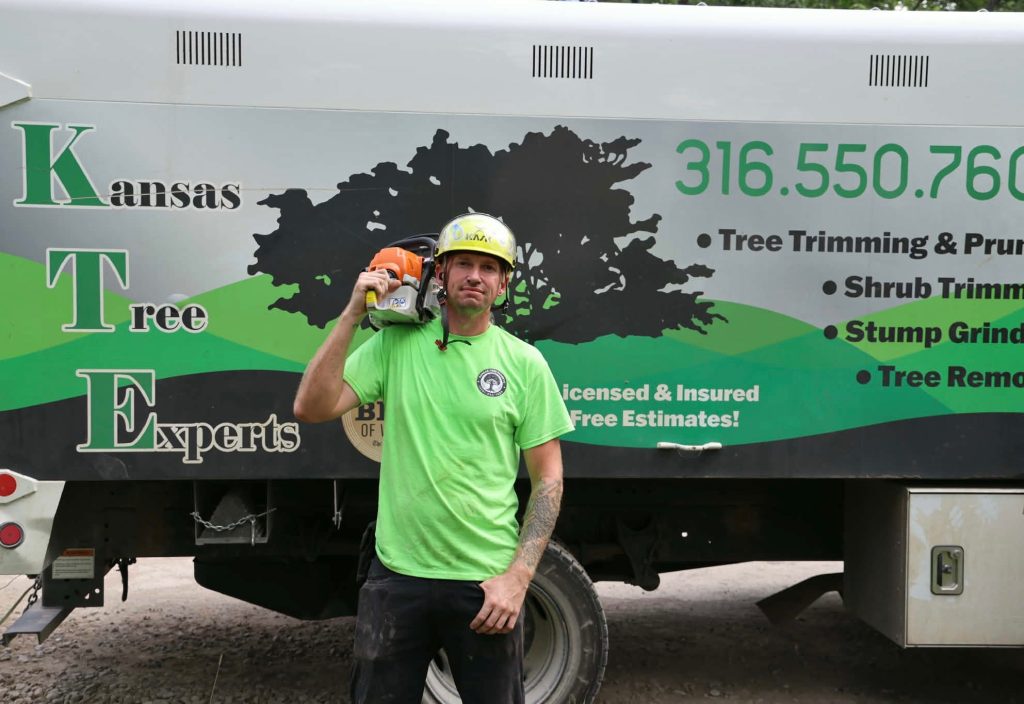
Whether your property needs routine maintenance, corrective pruning after past damage, or emergency storm cleanup, Kansas Tree Experts brings 25+ years of experience to every job across Wichita and Sedgwick County.
-
Call or Text Us: (316) 550-7609
-
Office Location: 2117 S Custer Ave, Wichita, KS 67213
-
Estimate Policy: Free, no-obligation on-site evaluations
Ready to give your trees the expert care they deserve? Contact Kansas Tree Experts today to schedule your free estimate!